Aion UT launches in September: Spacious electric hatchback targets Renault 5 and co.
Aion is bringing the UT to market in the United Kingdom. The nearly 4.3-meter-long electric hatchback promises more space than many superminis, but is not expected to start at quite as low a price as the Renault 5.
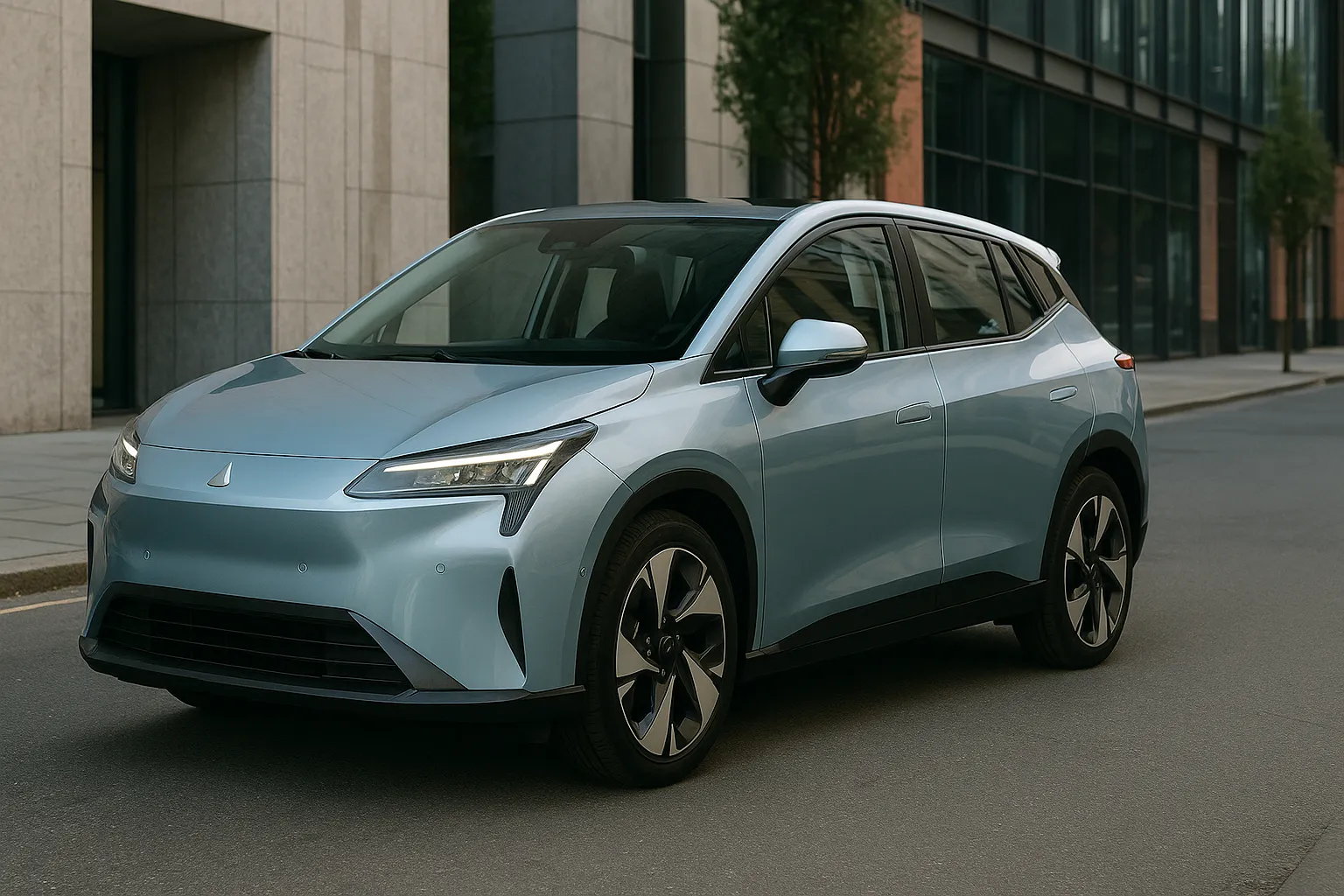
The Aion UT will go on sale in the United Kingdom in September, adding another Chinese challenger to the compact electric car offering. The model is positioned as a battery-electric hatchback and formally competes against small cars such as the Renault 5, Vauxhall Corsa Electric, the upcoming Volkswagen ID. Polo and the Cupra Raval, but at just under 4.3 meters long it is larger than many classic superminis.
For buyers, that is precisely the central point: although the UT is being marketed in a price-sensitive segment, it offers dimensions and utility that are more like a class above. Aion cites a boot capacity of 440 liters. That puts the car well above what many small electric cars offer and moves it closer to compact crossovers or larger hatchback models. Anyone looking for a city car that also has to cope with family life, weekend shopping or luggage for longer journeys is therefore likely to compare the UT not only with the Renault 5, but also with models such as the Renault 4, Mini Aceman, Ford Puma Gen-E, MG4 Urban or Geely EX2.
Price under 30,000 pounds, but not the cheapest entry point
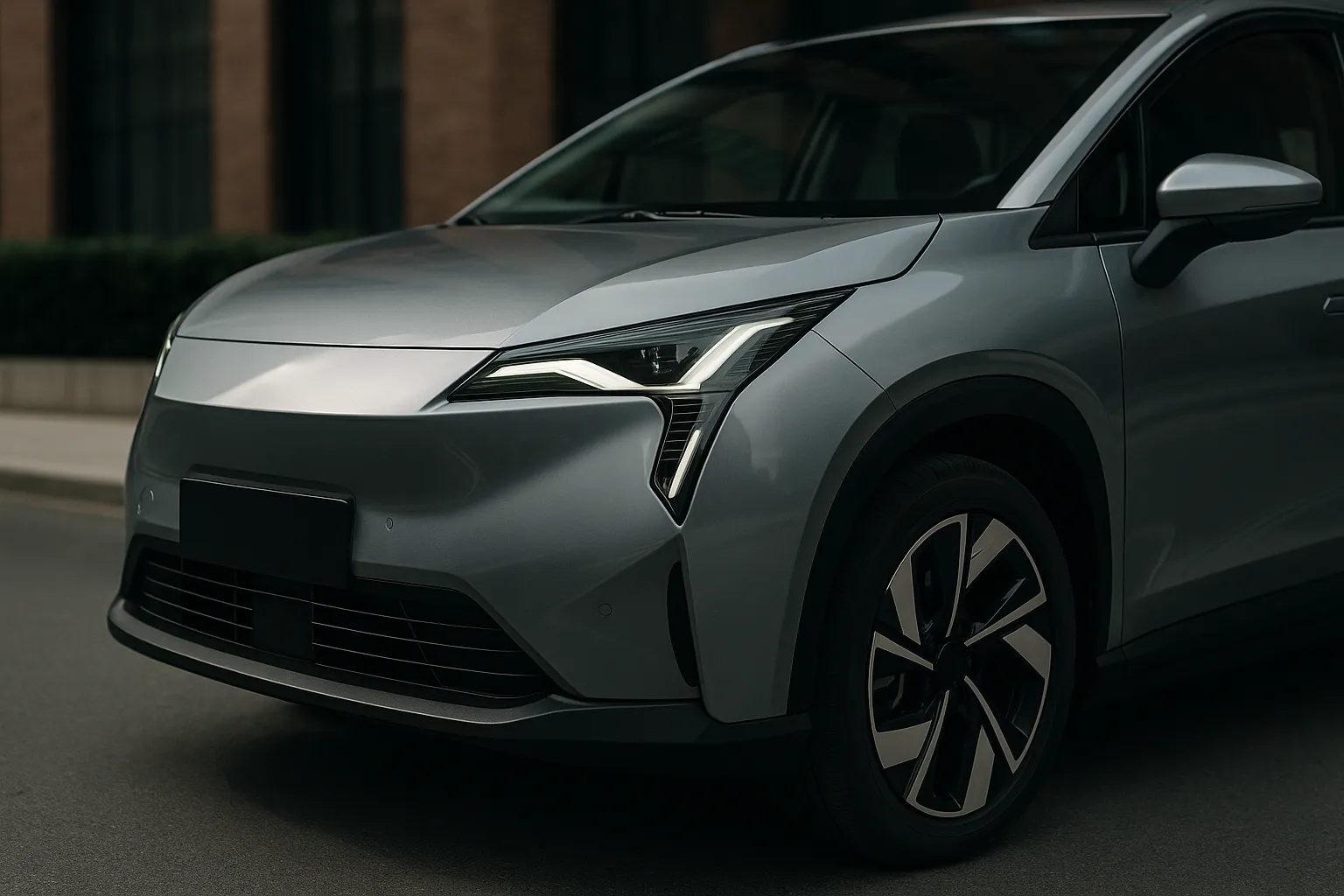
Aion is targeting an entry price of under 30,000 pounds for the UT. That keeps the car in a range that is relevant for many private EV buyers and leasing customers. At the same time, the Renault 5 is likely to start cheaper in the United Kingdom. So the UT is not primarily focused on the lowest list price, but on a combination of space, range, equipment and perceived quality.
That is an important distinction. The European market for small electric cars is currently strongly shaped by the question of whether manufacturers can lower prices far enough without cutting too deeply into utility, charging performance or interior quality. A car under 30,000 pounds is not automatically an affordable mass-market model, but with suitable finance rates and good standard equipment it can be an attractive alternative to smaller rivals.
Range as a selling point
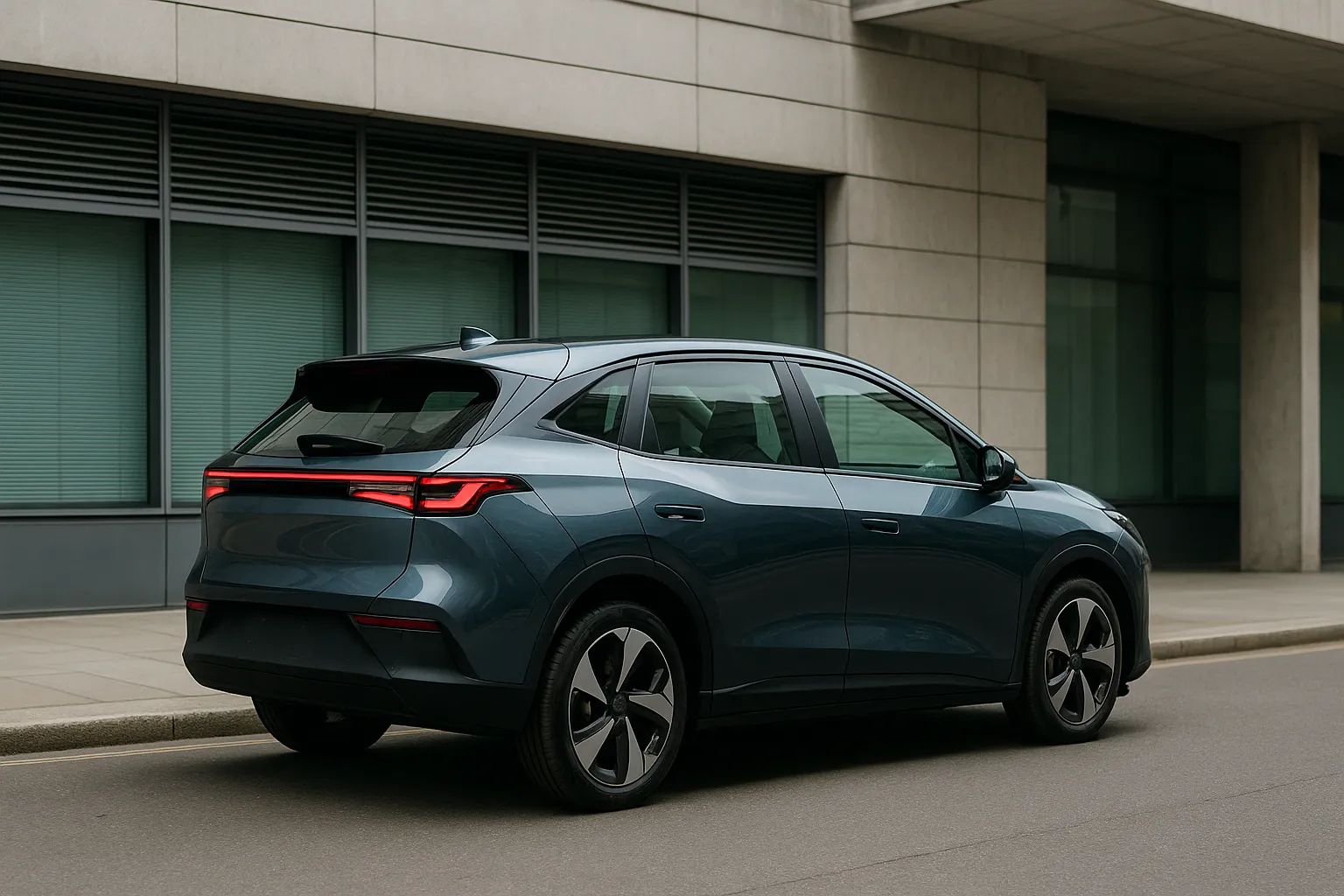
Aion is also holding out the prospect of strong range for the UT. Buyers should check concrete final UK specifications, battery sizes and WLTP figures before signing a contract, as figures may differ depending on market, equipment and homologation. What is clear, however, is that the UT is not intended to be understood only as a short-distance car. In its class, range is increasingly becoming the decisive purchase argument because many households no longer want to use a small electric car only as a second car.
The comparison with the Renault 5 is therefore interesting. The Renault scores with retro design, strong brand recognition and a low entry price. The Aion UT counters with more exterior length, a larger luggage compartment and the ambition to be competitive or better positioned on range. For customers, that means more choice – and more pressure on established manufacturers to make small electric cars convincing not only emotionally, but also practically.
Aion is new in Europe, but not a small manufacturer
Aion is still a young brand in the United Kingdom. The UT follows the Aion V, an electric SUV that was introduced to the market earlier. Behind Aion is the GAC Group, one of the major Chinese car groups. That is relevant for buyers because new brands are often associated with questions about dealer networks, spare-parts supply, software maintenance, warranty handling and resale value.
A large parent company can help with market entry, but it does not automatically replace the trust that European customers have built up over years with familiar brands. For Aion, the UT will therefore be more than just another model. It has to show whether the brand can deliver in everyday use: in build quality, infotainment, assistance systems, charging experience, service and customer support.
Between small car and compact class
The size of the UT makes it difficult to classify. Aion is targeting the electric supermini environment, but the exterior dimensions point more to a position between small car and compact class. That can be an advantage because many customers fear space problems especially with electric cars. Battery packs, high vehicle floors and aerodynamic body shapes do not automatically result in generous interiors. A larger footprint can help here.
At the same time, more size also brings disadvantages. In tight city centers, in multi-story car parks and when it comes to insurance or tire costs, a larger car can be less maneuverable or somewhat more expensive to run. Buyers should therefore look not only at the boot figure, but also check seating position, all-round visibility, turning circle and real-world parking suitability. The UT could be particularly interesting for households looking for a single compact electric car for the city and surrounding areas, but not wanting a classic SUV.
Stronger competition among small electric cars
The market launch of the Aion UT comes at a time when the range of small and more affordable electric cars is changing quickly. Renault 5, upcoming Volkswagen models, Cupra Raval, Vauxhall Corsa Electric and other new China models are targeting customers who have so far hesitated because of price, range or everyday usability. At the same time, expectations are growing: a modern small EV should not only drive emission-free, but also offer good software, usable charging times, solid assistance systems and a pleasant interior.
For the industry, the UT increases competitive pressure in a particularly important segment. Large electric SUVs have high margins, but the mass market is decided in smaller vehicle classes. If Chinese brands compete there with generous equipment and plenty of utility, European manufacturers will have to sharpen their calculations. That can lead to better leasing offers, more standard equipment or faster model updates.
What buyers should watch for
Before placing an order, interested parties should wait for the final technical data for the respective market. Important factors are not only the officially stated range, but also charging power, battery chemistry, warranty conditions, heat pump, real-world efficiency, software update policy and the availability of service operations. Safety equipment is also relevant, because in this segment base versions and higher-grade variants often differ significantly.
The price comparison should also be fair. A cheaper competitor may start with a smaller battery or less equipment, while a more expensive UT may offer more space or standard technology. The decisive factor will be how Aion packages the equipment lines and which monthly finance or leasing rates are actually offered in the market.
An important test for Aion
The Aion UT is not a radically new vehicle concept, but it touches a nerve: many buyers want a more affordable electric car, but do not want to do without boot space, range and everyday usability. With 440 liters of load volume, a body just below the compact class and a targeted price under 30,000 pounds, the UT positions itself as a pragmatic alternative to smaller, more lifestyle-oriented EVs.
Whether it really becomes a serious rival for the Renault 5 and co. in the United Kingdom depends on final prices, equipment, delivery capability and the first everyday impressions. But one thing is already clear: the UT shows how intense competition among small electric cars is becoming – and that is fundamentally good news for buyers.