Cadillac V-ONE: Hybrid V8 concept shows the next V-Series idea
Cadillac uses the V-ONE as a preview of the V-Series performance future: a concept not intended for customer drives, with a race-car basis, hybrid V8 and 830 hp.

Cadillac is sharpening the picture of its performance future: the V-ONE is a concept vehicle intended to hint at the next development direction of the V-Series. At its core are a hybrid V8 with 830 hp and technical proximity to the V-Series.R race car. This makes the V-ONE less a classic preview of a production model than a statement about how Cadillac could bring together motorsport technology, electrification and brand identity in the coming years.
The classification is important: the V-ONE is not a car that customers can simply order or drive. It is a concept, not a confirmed production model. Nevertheless, it is relevant for buyers, owners and fans of the brand because such vehicles often show which design, which drive ideas and which performance priorities may later appear in road-legal models.
Race-car basis instead of normal sports-car architecture
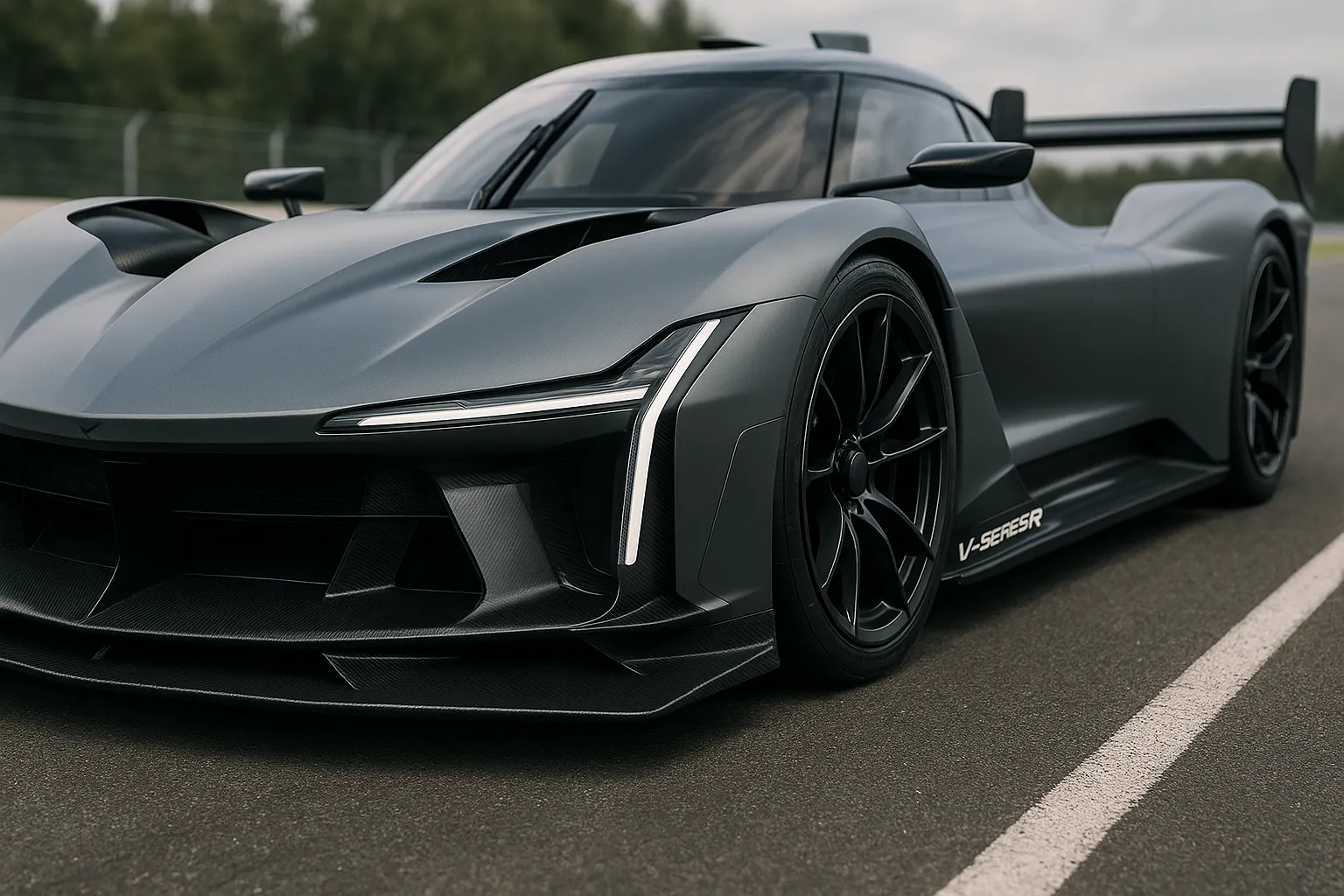
The most striking technical statement is the connection to the Cadillac V-Series.R. This race car stands for Cadillac's modern motorsport presence and combines endurance-racing technology with an electrified drive strategy. The V-ONE does not simply adopt an aggressive look, but shares its foundation with this race-car concept. That makes it a significantly more extreme design than an ordinary show car based on an existing road model.
For enthusiasts, this is a crucial point. Many performance concepts promise a racing feel, but technically remain closely tied to platforms from series production. The V-ONE reverses this logic: it starts closer to racing and asks which elements of it could shape the future V-Series. That does not automatically mean that a later production car will use the same structure or the same components. But it shows that Cadillac continues to see motorsport as a development laboratory and image carrier for its sportiest models.
830 hp from an electrified V8
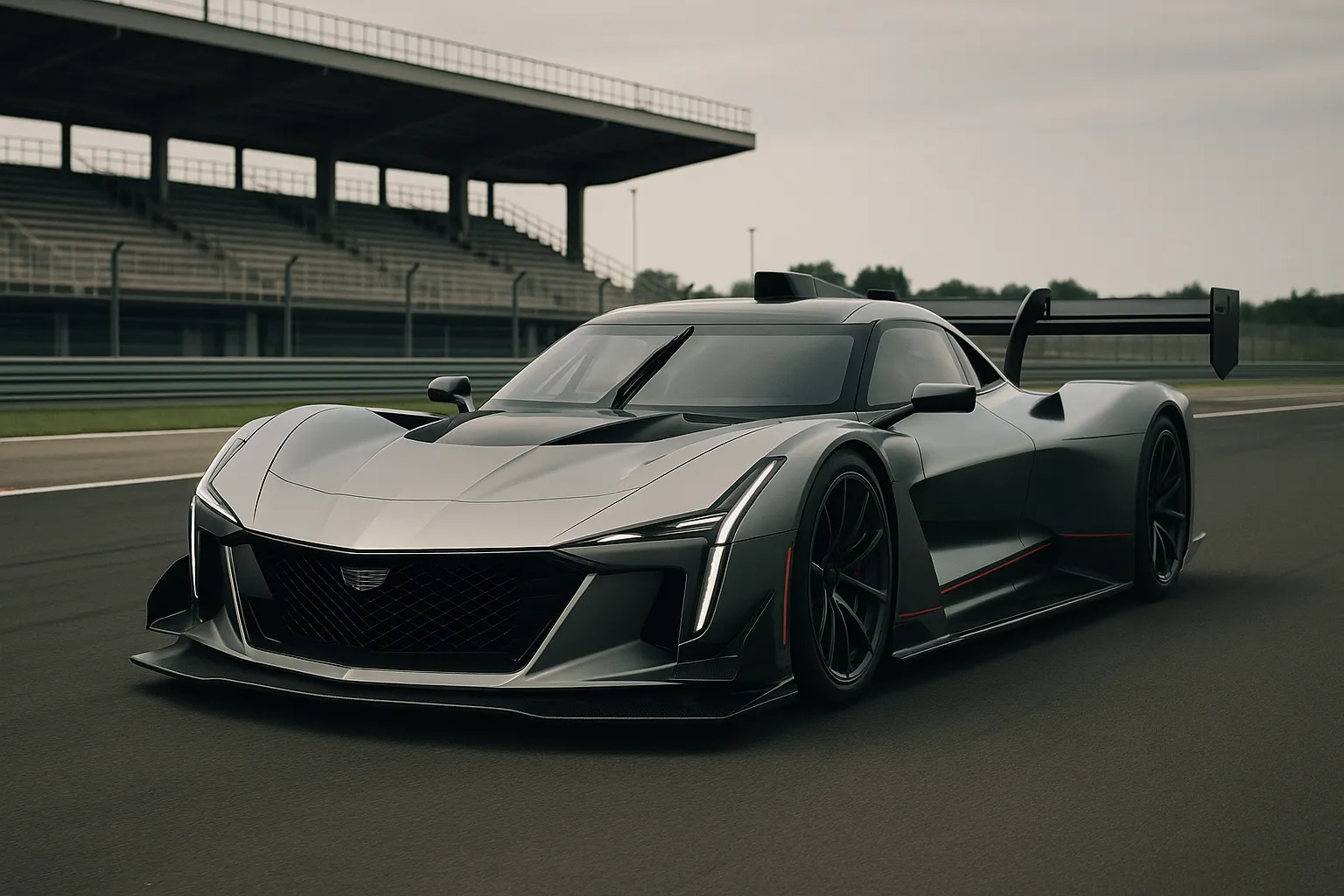
The V-ONE relies on a hybrid V8 with 830 hp. This figure clearly positions the concept in the high-performance zone, but at least as important is the way the power is generated. Cadillac is not demonstratively saying goodbye to the combustion engine, but is combining it with electric support. For a performance brand, this is an obvious path: electric motors can improve response, torque build-up and efficiency, while a V8 continues to provide sound, character and endurance-racing identity.
Precisely this mixed approach is likely to remain decisive for the future of many sports and luxury brands. Pure electric performance is already firmly established, especially in acceleration and software control. At the same time, there are still buyers who expect an emotional combustion-engine experience in a performance Cadillac. A hybrid V8 can connect both worlds, provided weight, cooling, packaging and durability are consistently addressed.
For possible later production models, therefore, it is less the exact output of the V-ONE that is decisive than the principle: Cadillac is signaling that V-Series performance is not necessarily conceived as only battery-electric or only conventional. Electrification can also serve as a tool for faster lap times, better drivability and more controllable power delivery.
Why this is relevant for buyers
Even though the V-ONE itself will not be standing in the showroom, it sends several messages to potential buyers. First, the V-Series remains important as a performance division. At a time when many manufacturers are electrifying their model ranges and redefining classic sporty variants, this is not a side issue. Buyers want to know whether a brand is continuing its sporty models merely out of tradition or is truly developing them further.
Second, the V-ONE suggests that future V models could be more strongly shaped by racing technology and hybridization. This does not only concern peak output. Brake-energy recuperation, traction management, torque fill when accelerating out of corners and complex driving modes could also play a larger role in the future. For drivers, that potentially means faster, but also technically more sophisticated cars.
Third, such a concept can influence the perception of existing and upcoming Cadillac models. Anyone looking today at a CT5-V Blackwing, an electric Cadillac or another performance-oriented model sees in the V-ONE an indication of where the brand wants to go: more motorsport connection, more electrified power and a stronger separation between ordinary luxury and genuine high-performance positioning.
Not a direct successor, but a guiding vision
The V-ONE should not be understood as the immediate successor to a specific road model. With the V-Series, Cadillac has historically covered different performance levels and vehicle types, from sporty sedans to particularly sharp Blackwing models. The V-ONE sits clearly above that and feels more like a technical guiding vision: a vehicle that shows which themes have priority internally.
These include aerodynamics, lightweight construction, cooling and the integration of electrified drive components into a high-performance vehicle. Especially with hybrid performance, the interaction of these areas is critical. More power alone is not enough if weight and thermal load limit consistency on the racetrack. A concept with proximity to the V-Series.R suggests that Cadillac is looking at these challenges from the perspective of endurance racing.
Significance for the industry
The V-ONE fits into a larger industry trend: performance brands are increasingly using motorsport programs to make electrification credible. A hybrid drive is not only an answer to emissions and efficiency requirements. It can also be a competitive advantage if electrical systems are used precisely for traction, balance and power delivery.
For the industry, Cadillac's approach is interesting because the brand has to bring together two identities. On the one hand, Cadillac stands for American luxury, comfort and presence. On the other, the V-Series is supposed to hold its own credibly against established performance brands. The V-ONE shows that Cadillac does not want to create this credibility only through design or horsepower figures, but through proximity to racing.
What remains open
It remains unclear which specific elements of the V-ONE will flow into a later production vehicle. Price, production plans, road approval, unit numbers or a possible timeline are also not confirmed. Nor has it been said whether future V-Series models will receive a similarly extreme hybrid V8 or whether the technology will be used in modified form.
This uncertainty is normal with concept vehicles. Their value lies not only in the question of whether they will be built one-to-one. They show which solutions a manufacturer considers important and which customers it wants to address. With the Cadillac V-ONE, the message is: the V-Series is meant to remain emotional, technically ambitious and close to motorsport even in an electrified future.
For enthusiasts, that is a positive signal. For buyers, it is an indication that upcoming performance Cadillacs are probably not simply meant to become quieter, heavier and more digital, but could use their electrification specifically to increase driving dynamics. And for the industry, the V-ONE is another example that the next performance era will not be defined only by electric cars, but also by intelligent hybrid systems with a strong motorsport connection.