Ruf Ehra: 650-bhp sports car with manual recalls the Yellowbird
Ruf has unveiled the Ehra, a new all-wheel-drive GT with a carbon monocoque, 3.6-liter biturbo boxer and seven-speed manual transmission. The model picks up on the CTR Yellowbird’s 211-mph record from 1987 in Ehra-Lessien.
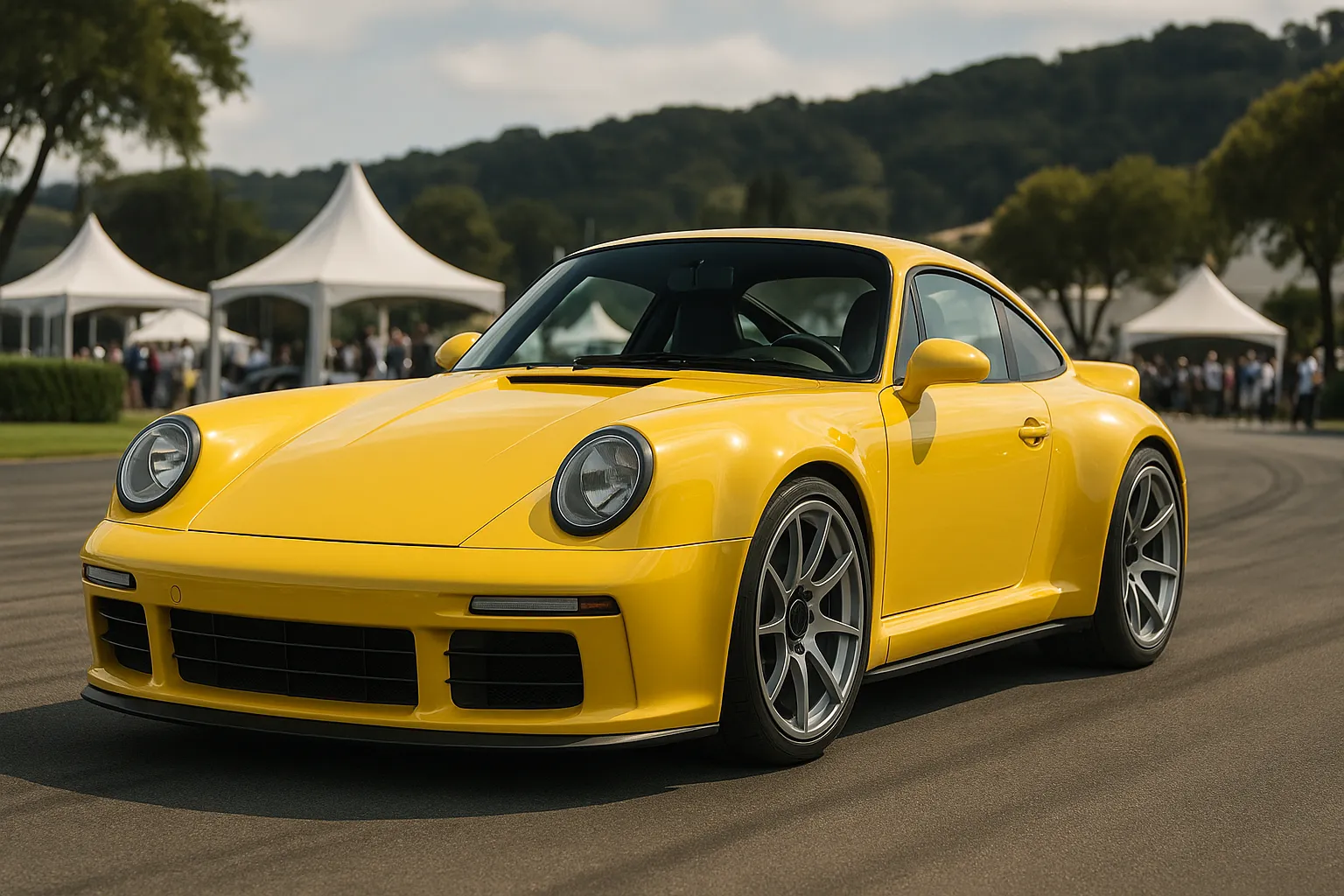
A new Ruf with a historic name
With the Ehra, Ruf has unveiled a new high-performance sports car that deliberately builds a bridge to one of the best-known moments in the company’s history. The name refers to Ehra-Lessien in Lower Saxony, the high-speed test track where the Ruf CTR “Yellowbird” reached a speed of 211 mph in 1987 – converted, around 340 km/h. That run made the narrow, yellow CTR an icon among road-legal super sports cars of the 1980s.
However, the new Ehra is not a pure retro exercise. While its silhouette clearly references the classic 911 design language, technically it is an independent Ruf model. That is important because Ruf has long since done more than modify Porsche models; as a manufacturer, it develops its own vehicles with their own structure. In the Ehra, the company relies on a self-developed carbon-fiber monocoque instead of a converted production body.
3.6-liter biturbo boxer with 900 Nm
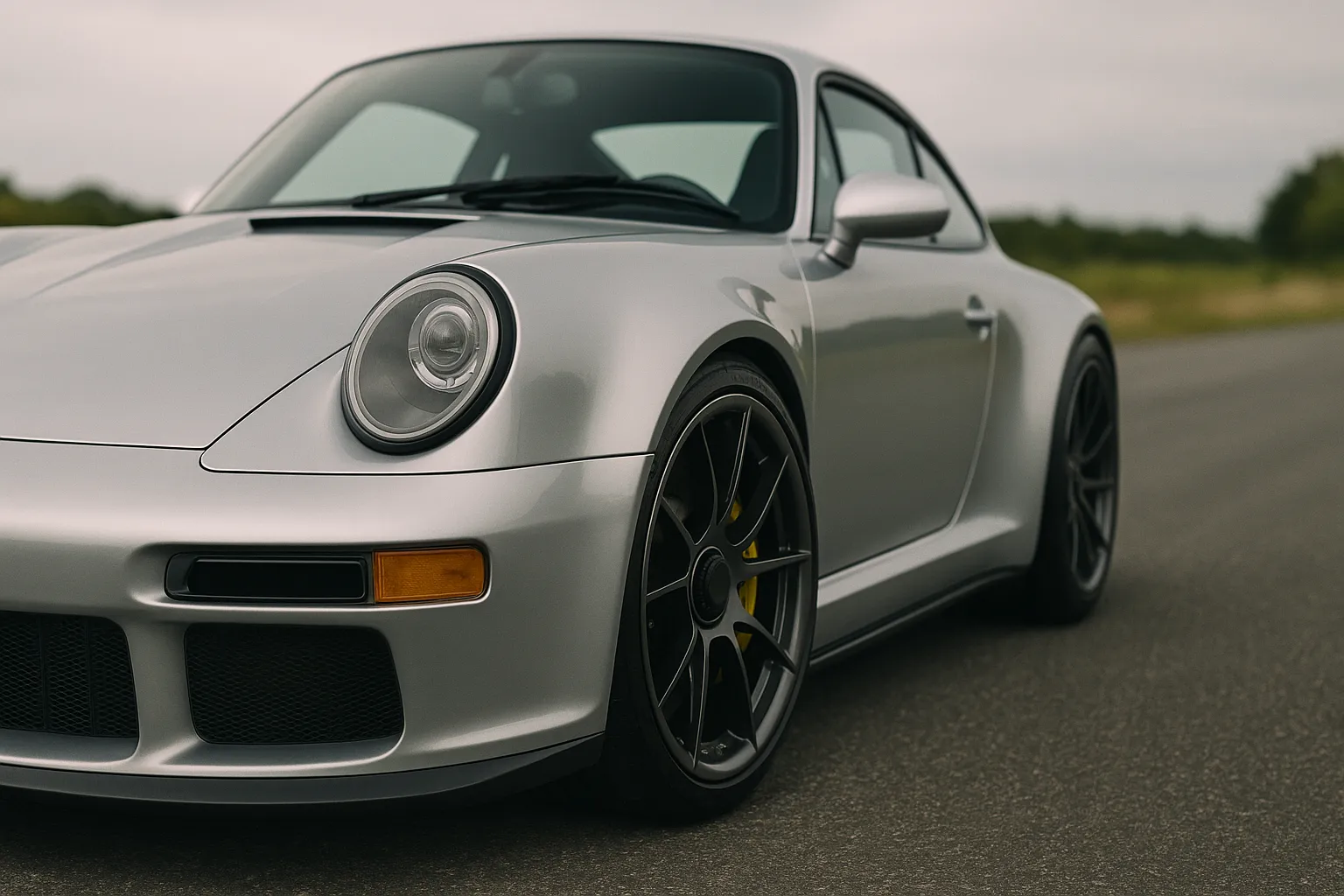
At the rear of the Ehra is a water-cooled 3.6-liter six-cylinder boxer engine with two turbochargers. Output is stated at 650 bhp, which corresponds to around 659 metric hp. Maximum torque is 900 Nm. This positions the Ehra well above classic sports cars, but not as a pure numbers machine in the style of modern electric hypercars. The technical message is different: low weight, mechanical operation and a tradition-rich boxer powertrain are at the center.
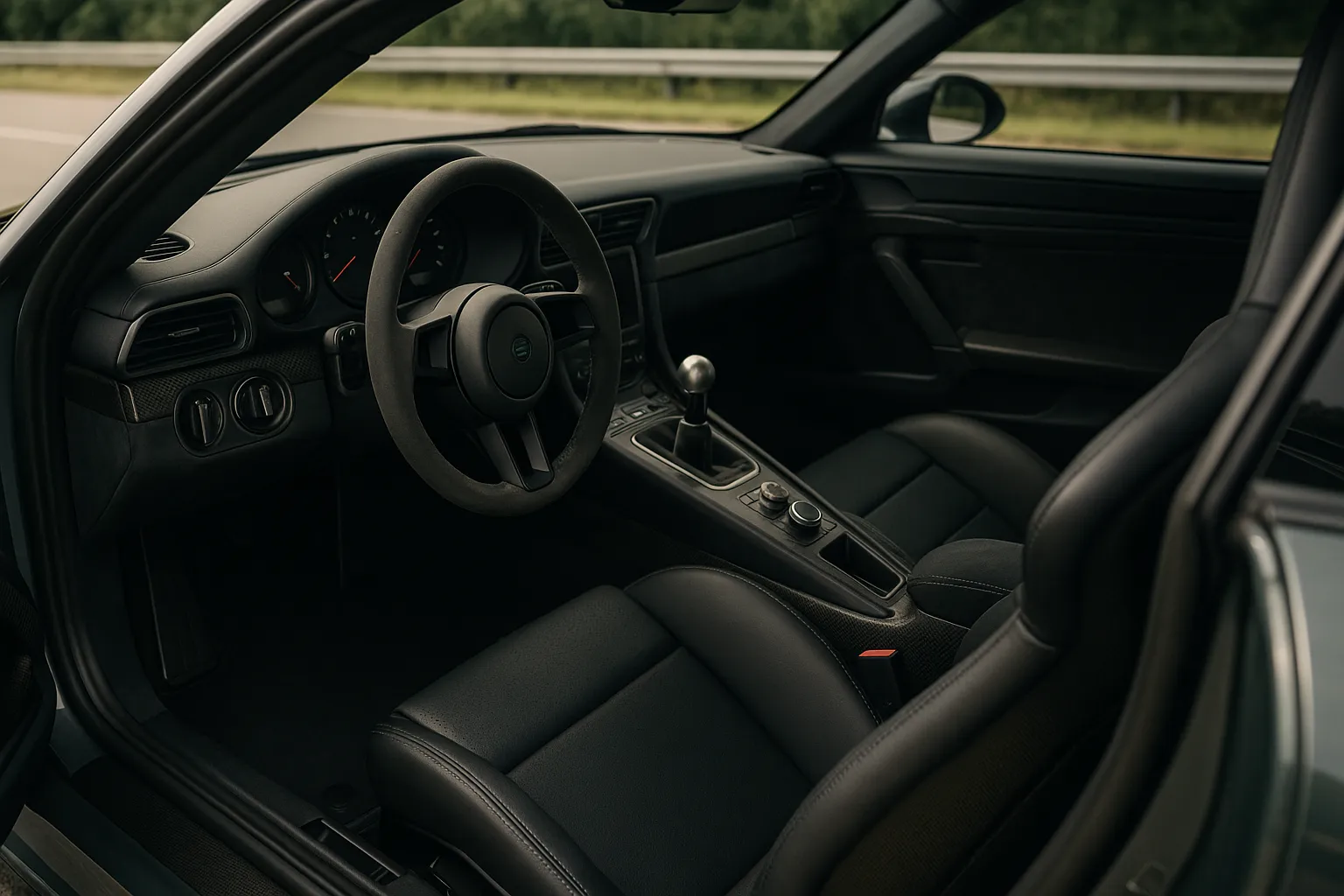
One striking detail is the power transmission. Ruf combines the engine with a seven-speed manual gearbox. In a segment where dual-clutch transmissions dominate because of their shift speed and everyday usability, this is a conscious decision in favor of driver engagement. Anyone buying a car of this kind is not only looking for acceleration figures, but also involvement in the process: clutch, shift travel, revs, load changes.
Power goes to all four wheels. A limited-slip differential is also part of the package. Specific data on acceleration, top speed, curb weight, price and planned production volume have not yet been published. Especially for a vehicle with this output, carbon structure and all-wheel drive, these values would be decisive for a final assessment. Until they are available, one thing remains clear: the Ehra is technically conceived as a very fast grand-touring sports car, not merely as a collector’s item for the display case.
Carbon instead of a donor body
The biggest difference from the historic CTR lies beneath the skin. In the 1980s, the Yellowbird was based on a narrow Carrera body of that era, which Ruf extensively reworked. By contrast, the Ehra uses its own carbon monocoque. For buyers and enthusiasts, that is more than a technical side note. An independent structure allows different stiffness, weight and packaging targets than a conversion based on a production car.
Carbon is expensive to develop and produce, but for small production runs and very sporty vehicles it can bring decisive advantages. A stiff monocoque improves chassis precision, reduces torsion and helps keep mass low. In combination with a powerful biturbo boxer and all-wheel drive, the Ehra could therefore cover a broad range of uses: fast country roads, long autobahn stages and occasional track days.
The chassis layout also shows that Ruf has not simply placed a nostalgic body over modern performance. The Ehra uses an elaborate design with horizontally arranged pushrod elements. Such solutions are popular in motorsport and in particularly ambitious road-going sports cars because they can enable precise wheel control and favorable packaging. How comfortable or uncompromising the tuning turns out to be cannot yet be judged without a driving test.
Why the Ehra is relevant for enthusiasts
The market for sports cars is changing quickly. Many manufacturers are electrifying their top models, relying on hybrid assistance or replacing mechanical operating concepts with highly automated drivetrains. The Ruf Ehra therefore represents a counterposition: combustion engine, manual transmission, compact classic proportions and a high proportion of technology shaped by craftsmanship.
For buyers, however, that also means the Ehra is likely to be a very exclusive and expensive car. Ruf models are not built in large series, and a carbon monocoque with its own powertrain and chassis concept is aimed more at collectors and very committed drivers than at the ordinary sports car customer. Anyone considering such a car should look not only at purchase price and value development, but also at service, spare parts supply, everyday usability and the question of how much a manual, high-performance car is really meant to be driven.
For owners of classic Ruf models and Porsche enthusiasts, the Ehra is nevertheless exciting because it shows how the idea of the Yellowbird can be translated into the present. The historic CTR was famous because it extracted what was then an exceptional top speed from relatively compact, analog technology. Today, the Ehra has to hold its own in a world where even heavy electric sedans deliver enormous acceleration figures. Its appeal therefore lies less in a single record promise than in the combination of tradition, in-house development and mechanical character.
Not a direct remake of the Yellowbird
The distinction is important: the Ehra is not a reissue of the CTR Yellowbird in the narrow sense. It recalls its record and bears the name of the test facility where Ruf became world-famous. But engine, body structure, drivetrain and safety requirements belong to another era. The water-cooled biturbo boxer replaces the air-cooled world of the 1980s, the all-wheel drive distinguishes it from the purist rear-wheel-drive character of many classic Ruf models, and the carbon monocoque makes it a modern low-volume sports car.
It is precisely this mixture that could make the Ehra interesting. It serves nostalgia without standing still technically. It offers modern performance without being committed to an automated driving experience. And it shows that there is still room for independent concepts in small-scale, high-priced sports car construction.
A signal from the niche
For the automotive industry, the Ruf Ehra is not a volume model and not a direct benchmark for future mass-produced products. Nevertheless, it has symbolic value. While large manufacturers standardize platforms and increasingly rely on electric drives, Ruf uses the freedom of a small manufacturer: its own structure, its own character, a clear target group.
Whether the Ehra can reach the legend of the Yellowbird will only be decided by performance figures, driving feel and real customer use. But it is already clear why its unveiling deserves attention. At a time when performance is often defined by software, battery output and launch control, the Ehra is a reminder that a fast sports car can also fascinate through weight, mechanics, steering feel and shifting work.