
Ferrari CZ26: One-off based on the SF90 unveiled at Monterey
The Ferrari CZ26 is a one-off from the Special Projects program: SF90 Stradale technology, a completely new body, and a clear indication of how important tailor-made models remain for the brand.
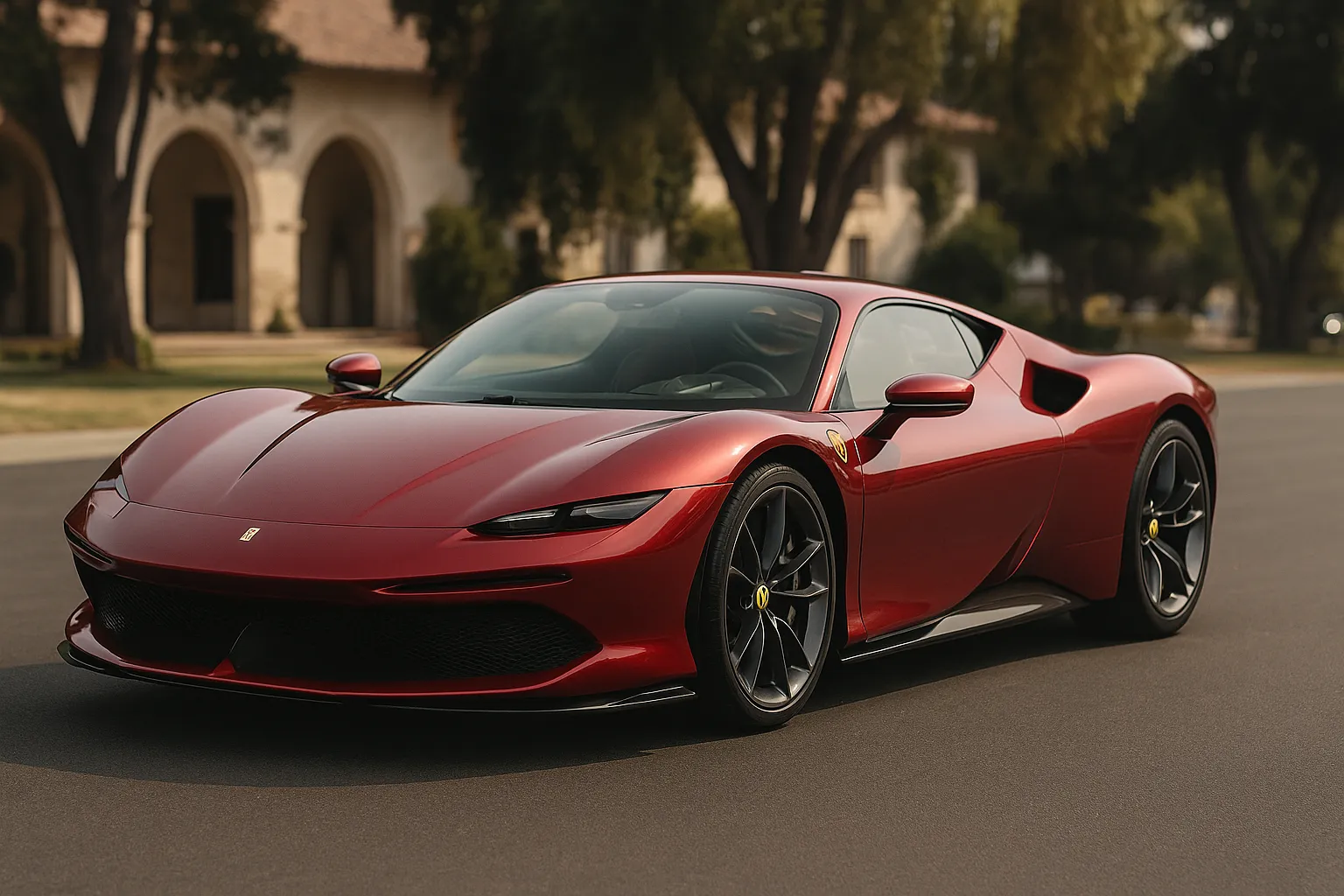
Ferrari CZ26: a one-off with familiar high-performance technology
Ferrari has presented the CZ26, a new one-off created as part of its in-house Special Projects program. The car was built for a customer from the USA and shown at Monterey Car Week – in other words, in a place where exclusive collector’s items, historic racing cars, and new supercars traditionally receive a great deal of attention.
Technically, the CZ26 is based on the Ferrari SF90 Stradale. This means the one-off uses the architecture and performance level of one of Ferrari’s most important modern models: a plug-in hybrid powertrain with a twin-turbo V8 and electric assistance. Ferrari has not communicated any different performance data for the CZ26. It can therefore be assumed that the key figures of the SF90 Stradale serve as the technical basis, without the CZ26 being classified as a new production model or as an independent performance variant.
What matters in this car is not a new lap time or an additional performance promise, but the bodywork. The CZ26 wears a completely newly drawn exterior, designed by the Ferrari Design Studio under the direction of Flavio Manzoni. In this way, it follows the logic of earlier Ferrari one-offs: the technical basis comes from an existing model, while the visible form, many details, and the character are newly interpreted for a single client.
New body instead of mere special paintwork
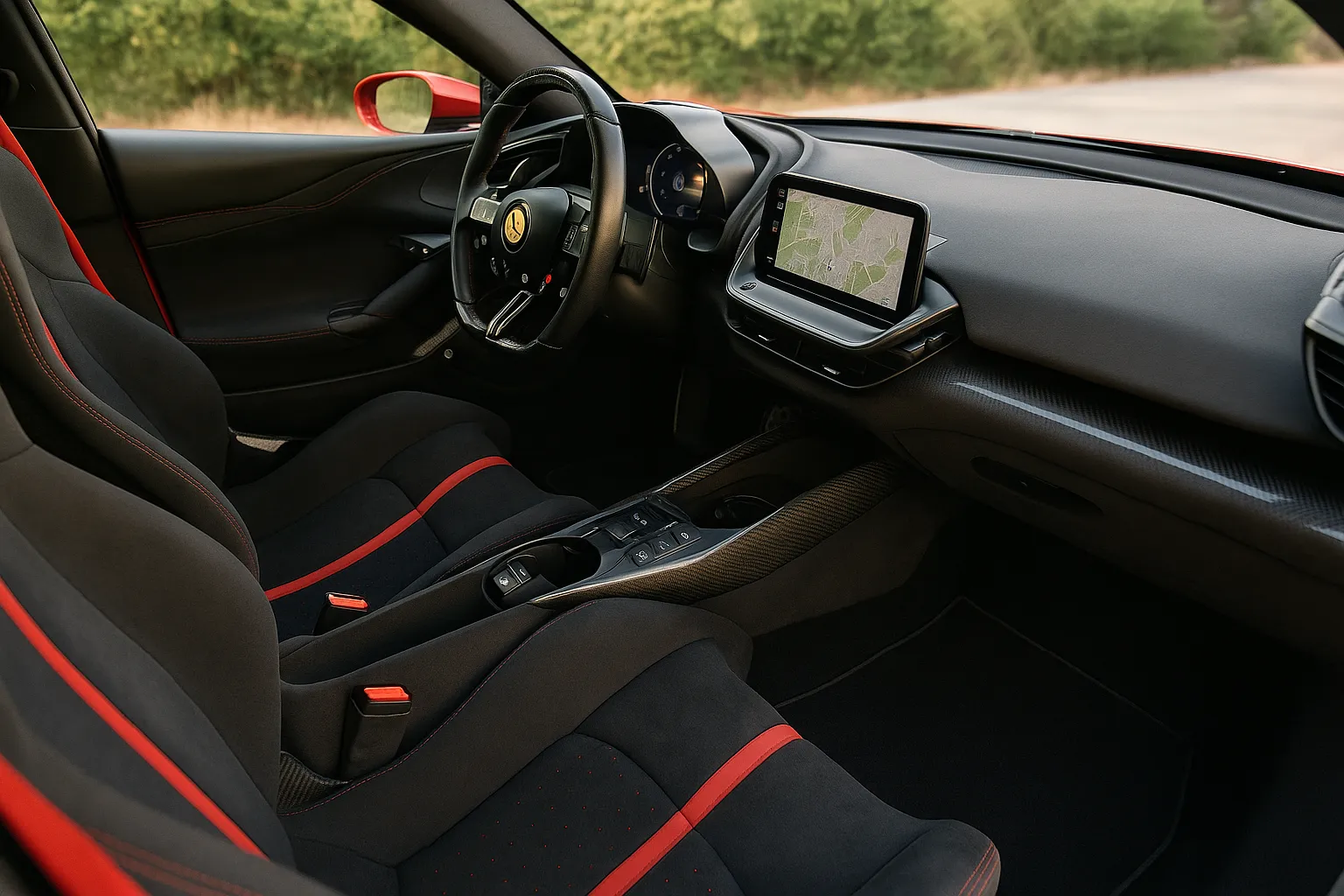
The CZ26 is not an SF90 with a different color and an individualized interior. The proportions may reveal the underlying mid-engine platform, but the outer skin has been comprehensively redesigned. The front end is particularly striking: a wide, dark band stretches across the nose of the vehicle and integrates the newly shaped headlights. As a result, the car appears more horizontal, more technical, and less strongly tied to the production front end of the SF90 Stradale.
Ferrari describes the design direction in essence as a combination of strength, precision, and formal clarity. In practice, that means: less decorative overload, more surface control, and a very deliberately set contrast between body color and dark functional elements. The CZ26 is intended to be immediately recognizable as a car in its own right, without losing its Ferrari DNA.
Also interesting is its visual proximity to newer Ferrari design ideas. The dark, closed-off impression of the front recalls the brand’s development toward electrified and more graphically defined vehicles. However, Ferrari itself does not position the CZ26 as a preview of a production model. With a one-off, caution is appropriate: such cars can hint at design directions, but they are primarily an expression of an individual customer commission.
Why the SF90 Stradale makes sense as a basis

The SF90 Stradale was a turning point for Ferrari. As a plug-in hybrid supercar, it combined a high-revving twin-turbo V8 with several electric motors and all-wheel drive. In the production model, the system produced a combined 1,000 PS according to the metric figure and made the SF90 one of the most technologically complex road-going Ferraris of its time.
For a Special Projects vehicle, this foundation is obvious. The platform offers extreme performance, a modern electronics package, and the possibility of implementing aerodynamic as well as design solutions on a proven substructure. At the same time, the risk for the client and the manufacturer remains lower than with a complete new development. Ferrari can draw on existing crash, powertrain, and chassis architecture, while the design team creates a largely independent appearance.
For enthusiasts, exactly this mixture is exciting: the CZ26 shows how far a familiar Ferrari model can be visually transformed without abandoning the technical basis. Anyone who knows the SF90 sees the kinship in the basic proportions. Anyone looking only at the CZ26, however, perceives an independent collector’s item.
Not a car for the price list – but relevant for the brand
For normal buyers, the CZ26 changes nothing at first. It will not be added to the configurator, there is no series production, and no public base price. Vehicles from the Special Projects program are created for a very small group of customers who already have a close relationship with the brand and are willing to invest significantly more than the price of a regular top model.
Nevertheless, the CZ26 is relevant to the market. First, Ferrari uses it to strengthen its business model at the upper end of the luxury and collector world. In an industry where many manufacturers talk about electric mobility, software, and economies of scale, Ferrari shows another form of value creation: individuality, exclusivity, and craft-industrial special development.
Second, such one-offs influence the perception of the production models. When a one-off based on the SF90 is created, the SF90 itself remains part of the conversation – even if the original model career is already advanced. For owners, this can strengthen the emotional significance of the base model. For collectors, it underscores that certain platforms can later serve as the basis for particularly desirable special commissions.
Third, Special Projects cars provide insight into Ferrari’s design latitude. Production vehicles must simultaneously meet global homologation rules, production processes, costs, aerodynamic targets, and brand strategy. A one-off may be more focused. Not every idea later reaches a production model, but form themes, light graphics, or surface treatments can have a long-term effect.
Electrification becomes the basis for exclusivity
The CZ26 also shows how natural electrified technology has now become even in the most exclusive Ferrari world. A few years ago, a tailor-made hypercar for a collector would almost automatically have been associated with a particularly emotional combustion-engine narrative. Today, the plug-in hybrid basis of the SF90 is not a contradiction to exclusivity, but part of its technical appeal.
This is also an important signal for the industry. High performance, individualization, and electrification are not mutually exclusive. Especially in expensive small series and one-offs, electric assistance can help bring performance, traction, and response to a level that would be significantly more difficult with purely conventional technology. At the same time, the combustion engine in the SF90 concept remains a central component of the driving experience.
For Ferrari, this balance is strategically important. The brand must appeal to its traditional customers with sound, form, and proximity to motorsport, while at the same time growing into a future with more electrification. The CZ26 answers this challenge not as a mass product, but as a high-priced statement: even the most individual Ferraris can be built on modern hybrid technology.
A collector’s item with signaling effect
The Ferrari CZ26 is therefore less a story about a new model program than about the role of individualization in the luxury car market. Its existence confirms that Ferrari continues to serve its most exclusive customers with genuine one-off builds – not just with limited series or special equipment.
For car buyers in the classic sense, the CZ26 remains unattainable. For enthusiasts, however, it is still relevant because it shows how versatile the SF90 platform is and which design ideas Ferrari is trying out in a freer framework. For the industry, it is an example of how manufacturers in the high-price segment combine margins, brand loyalty, and technical competence through tailor-made vehicles.
The CZ26 will probably never appear on roads in any quantity. That is exactly where its purpose lies: it is a personal Ferrari, but at the same time a publicly visible showcase for what is possible in Maranello when series-production logic and customer wishes meet at a very exclusive point.


