McMurtry Spéirling Pure Enters Production-Ready Form as a $1.3M Electric Fan Car
The track-only McMurtry Spéirling Pure has been shown in production-ready form, pairing nearly 1,000 hp with fan-generated downforce for private-circuit use.
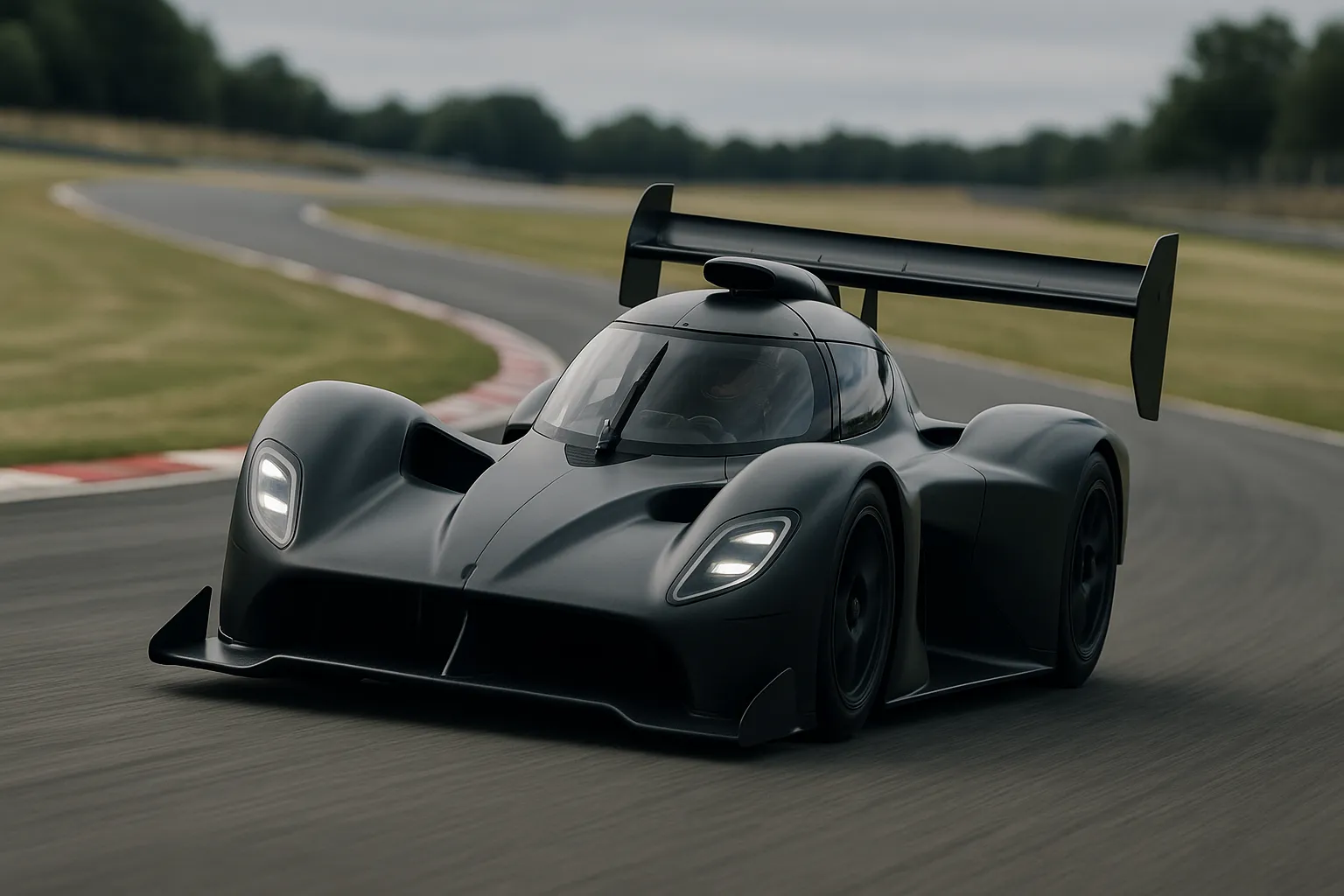
McMurtry has moved its Spéirling Pure from promise to production-ready reality, giving private track-day buyers a clearer look at one of the most unusual electric performance cars headed for customer hands.
The Spéirling Pure is not a road car and does not try to be one. It is a compact, single-seat, track-only electric hypercar built around a fan-assisted aerodynamic system, a power output described at nearly 1,000 hp, and downforce of more than 4,400 pounds. Pricing starts at roughly $1.3 million before options, placing it in the rarefied world of circuit-only customer machines rather than conventional supercars.
That price, and the limitations that come with a dedicated track car, will keep the audience small. But the Spéirling Pure matters well beyond the number of people who can buy one. It is a production-bound example of how electric propulsion, active aerodynamics, and motorsport-style engineering are beginning to create performance cars that no longer follow the familiar template of ever-larger engines and higher top-speed claims.
A production version of a radical idea
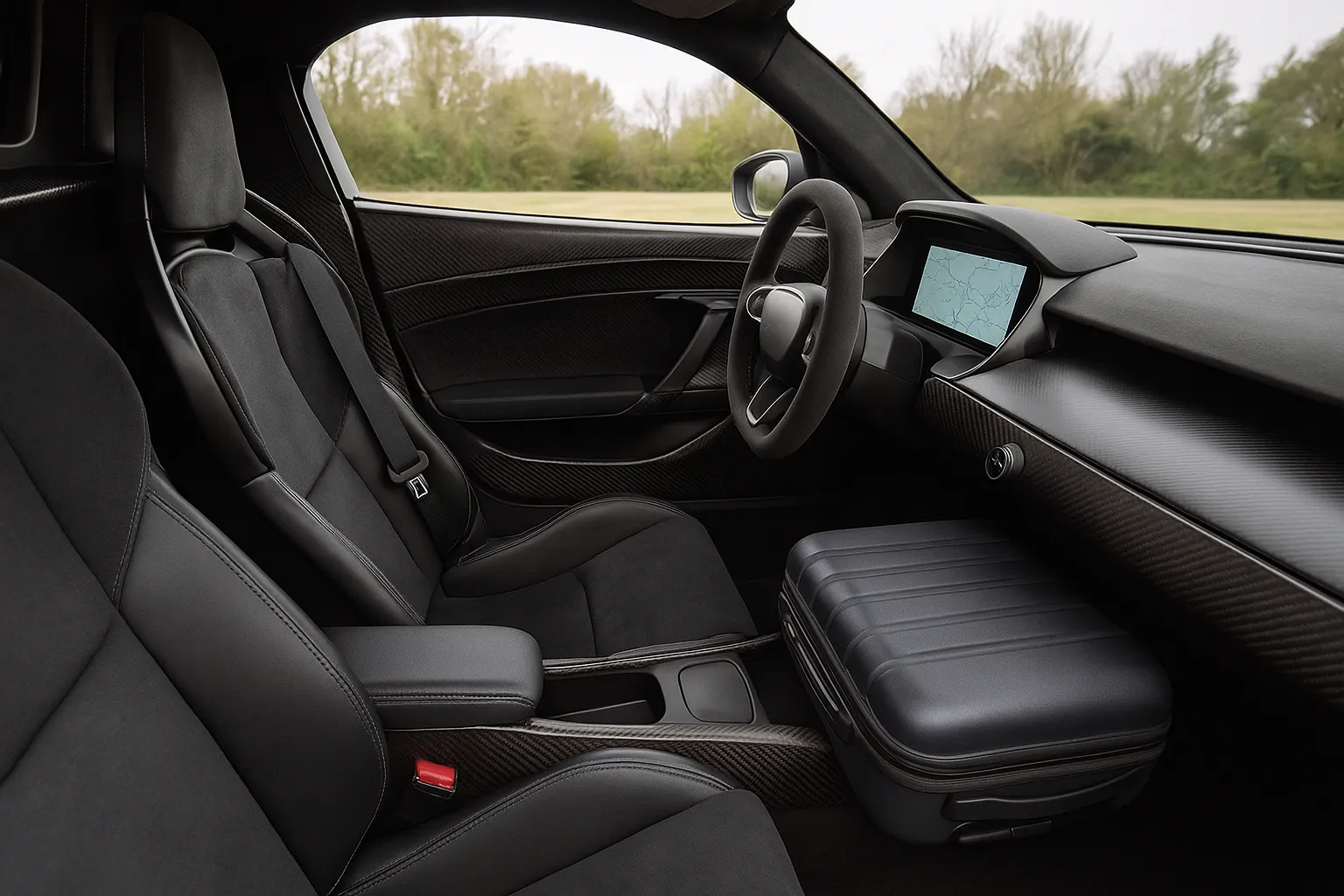
McMurtry first drew widespread attention with the Spéirling concept and its fan-generated grip. The core idea is simple to describe but difficult to execute: instead of relying only on wings, splitters, diffusers, and speed-dependent airflow, the car uses powered fans to help create low pressure beneath the body. That means it can generate substantial downforce even at lower speeds, where traditional aero devices are less effective.
For drivers, the benefit is not just straight-line acceleration. Fan-assisted downforce can help braking stability, turn-in response, mid-corner grip, and traction on corner exit. In theory, that makes the car fast where lap time is often won: in transitions, braking zones, and slower corners, not only on long straights.
The production-ready Spéirling Pure follows a development path that began with a dramatic prototype and led to a customer-focused version. The launch details describe the model as having nearly 1,000 hp and more than 4,400 pounds of downforce. Because track cars of this type can be tailored with options and set-up choices, exact customer specifications may vary, but those figures place the Pure among the most extreme privately available circuit machines.
Why the fan system is the headline
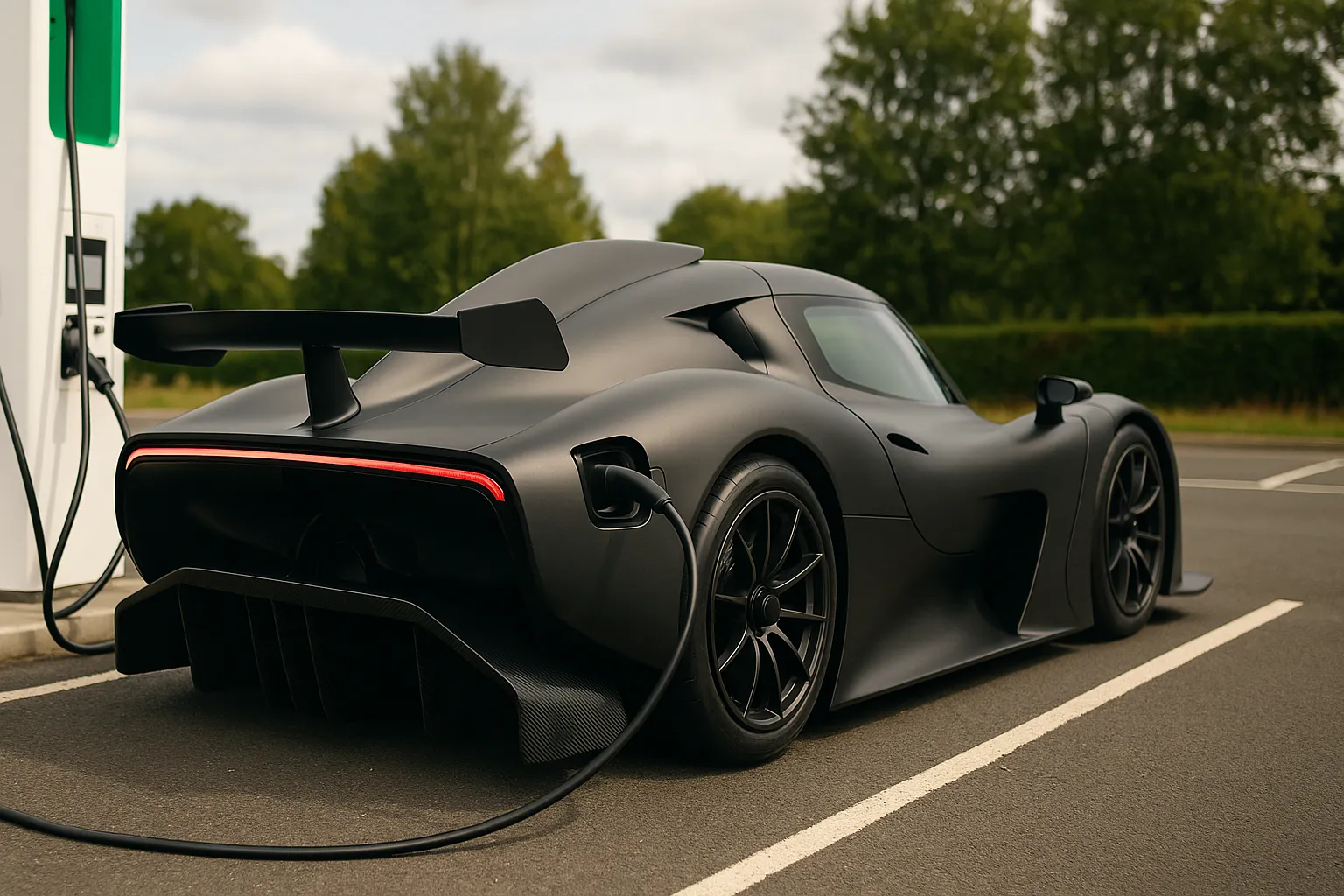
Downforce is central to modern performance, yet most road-legal cars must balance aero efficiency, cooling, pedestrian-impact regulations, noise limits, ride height, and usability. A track-only car has a much freer brief. McMurtry can prioritize lap performance, packaging, cooling, and downforce without needing to make the Spéirling Pure comfortable for commuting or compliant for public roads.
The fan system is also notable because it changes the usual relationship between speed and grip. Traditional aerodynamic downforce rises with vehicle speed, so a car typically gains grip as it goes faster. Fan assistance can provide meaningful grip before the car is moving quickly, making it especially relevant to tight circuits, short hillclimbs, and technical sections.
That is a different kind of performance story from the one electric hypercars have often told. Many high-end EVs emphasize huge horsepower and very quick 0-60 mph times. The Spéirling Pure is still extremely powerful, but its defining technology is the way it uses that power with controlled airflow and chassis grip. For enthusiasts, that makes it interesting not just as a fast EV, but as a different answer to the question of how to go quickly around a circuit.
What buyers get, and what they do not
At about $1.3 million before options, the Spéirling Pure is not a substitute for a Porsche 911 GT3 RS, a McLaren, or even most limited-production supercars. It is closer in purpose to an owner-operated prototype or high-end track special. Buyers should expect the ownership experience to revolve around circuits, support, transport, preparation, tires, charging logistics, and driver coaching rather than weekend road trips.
The track-only status is important. It means the Spéirling Pure is not designed for registration, daily usability, luggage space, or long-distance touring. That may sound obvious, but it also helps explain why the car can be so extreme. A road car must compromise. A private-circuit car can be built around lap time, repeatability, and driver engagement.
For the small pool of potential customers, the appeal is access to a machine with technology and performance normally associated with racing prototypes, without needing to enter a professional race series. For everyone else, the Pure is a signal of where the top end of electric performance engineering is heading.
An EV that does not lean on silence or luxury
Electric performance cars are often judged through the lens of refinement: instant torque, quiet running, smoothness, and low running emissions at the tailpipe. The Spéirling Pure represents a much more single-minded branch of EV development. Its job is not to make electric motoring calm or convenient. Its job is to extract speed.
That distinction matters for the industry. EV skepticism among enthusiasts has often focused on weight, sound, and emotional involvement. A fan-assisted single-seater will not solve every concern, and it will never be a mass-market product, but it does show that electric propulsion can be part of a focused driver’s car when the entire vehicle is engineered around performance rather than luxury-car expectations.
The compact packaging also highlights one of the advantages of electric design. Without a large combustion engine, gearbox, exhaust system, and fuel tank arrangement dictating the shape of the car, engineers have more freedom to concentrate mass, manage airflow, and package unconventional systems. The Spéirling Pure uses that freedom in an extreme way.
Why it matters beyond a few wealthy owners
The Spéirling Pure will not change what most buyers see in showrooms next year. Its cost and track-only mission put it far outside mainstream buying decisions. But high-end, low-volume projects often act as rolling laboratories. Technologies developed for extreme use can influence future thinking around aero control, cooling, battery discharge management, software calibration, and high-performance EV durability.
Not every idea will trickle down directly. A fan car for public roads would face major regulatory, cost, noise, safety, and maintenance hurdles. Still, the broader lesson is relevant: the next phase of electric performance is unlikely to be defined by horsepower alone. Managing grip, thermal load, airflow, and repeatable laps will matter more as EVs move from straight-line spectacle to serious circuit credibility.
For enthusiasts, the Spéirling Pure is one of the clearest examples yet of an electric car that is not trying to imitate a combustion-era supercar. It is short, specialized, aerodynamically radical, and unapologetically built for the track. For the industry, it is proof that the most interesting EV performance work may come not from chasing the highest top speed, but from rethinking how a car sticks to the ground in the first place.