Bugatti W16 Mistral Blanc Éternel Adds Porcelain Detail to the Final W16 Roadster
Bugatti’s latest one-off W16 Mistral uses real porcelain accents and a white-led design theme, linking the open-top hypercar to one of the brand’s earlier coachbuilt luxury experiments.
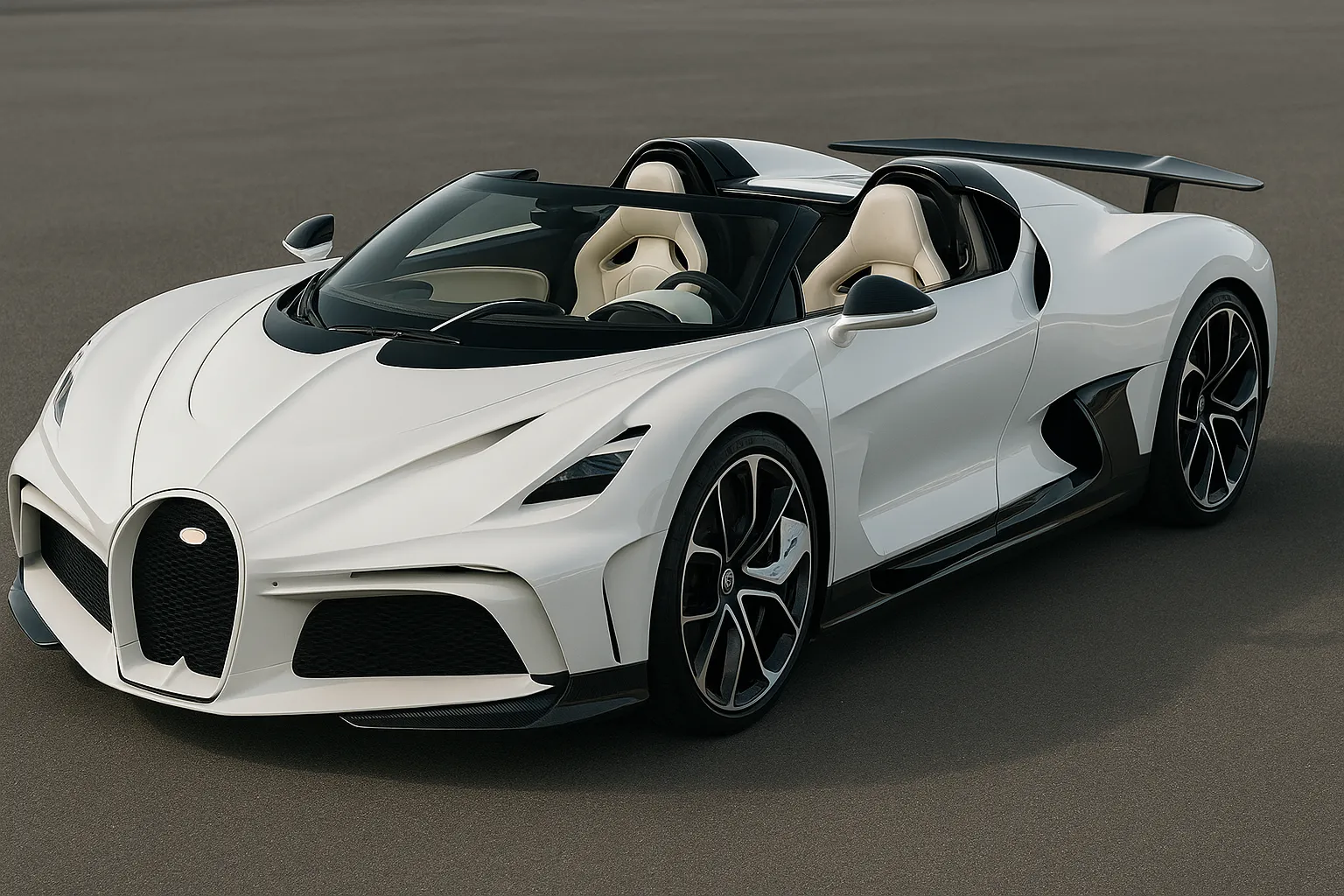
Bugatti has unveiled a one-off version of the W16 Mistral called the Blanc Éternel, a highly personalized open-top hypercar that adds real porcelain accents to one of the final applications of the company’s quad-turbocharged W16 engine.
The car is not a new series-production model or a mechanical update to the Mistral. Instead, it is a bespoke commission built around a specific visual and material theme. Its name, Blanc Éternel, translates roughly to eternal white, and the car uses that idea as the foundation for a restrained but unusually elaborate specification. The headline detail is the use of genuine porcelain components, a material rarely associated with modern performance cars because of its delicacy, cost, and the engineering challenges of placing it in an automotive environment.
For Bugatti, the idea is not entirely new. The Blanc Éternel revisits a concept the brand explored more than a decade ago with the Veyron Grand Sport L’Or Blanc, a special project that incorporated porcelain into both the exterior and cabin. That earlier car was developed with the German porcelain specialist Königliche Porzellan-Manufaktur Berlin, commonly known as KPM. The new Mistral brings that luxury craft link into Bugatti’s current design era, where one-off commissions and deep personalization have become central to the brand’s business model.
A one-off based on a sold-out roadster
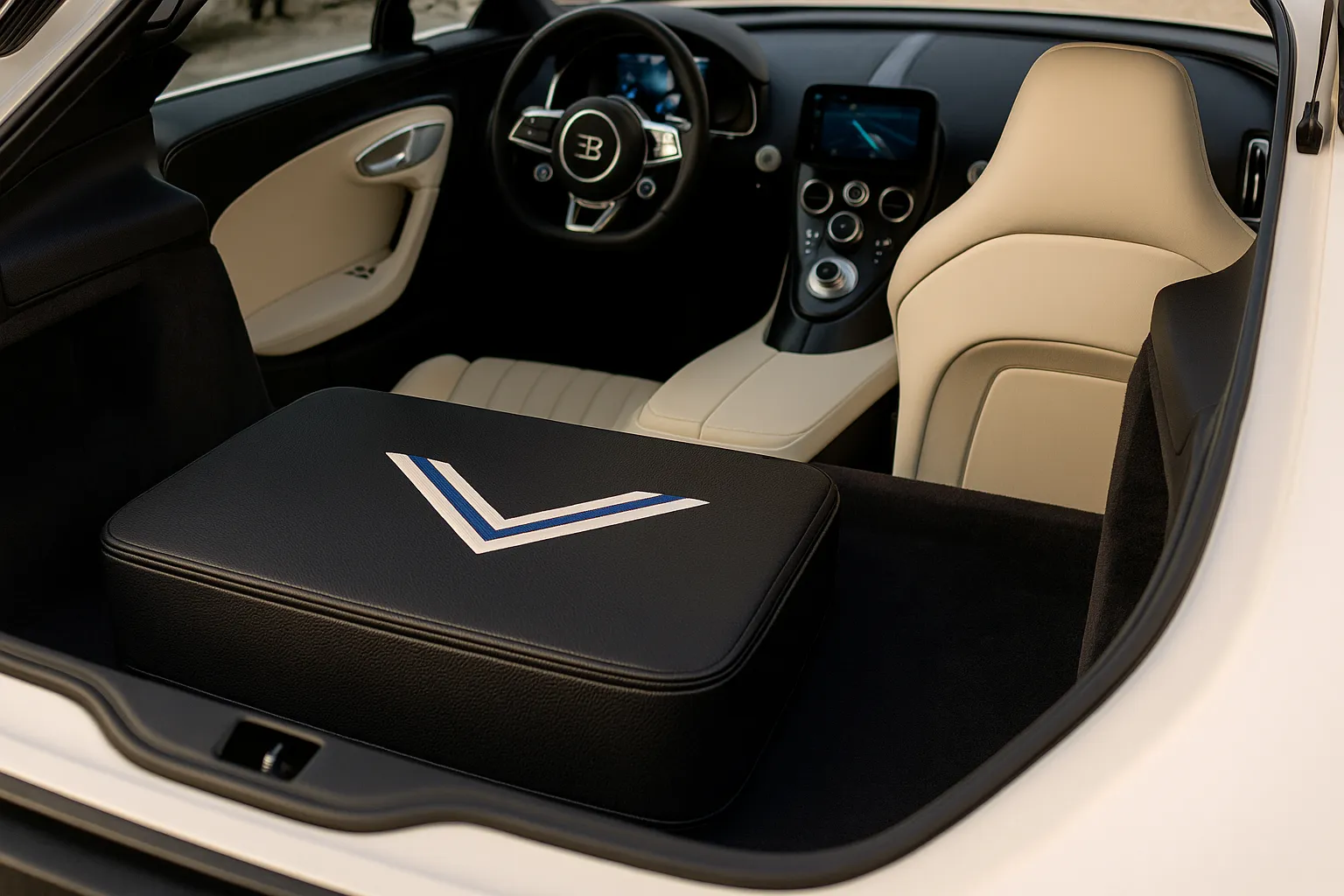
The W16 Mistral is already one of the most exclusive modern Bugattis. The model was announced as a limited-run roadster derived from the Chiron family, with production capped at 99 examples. It uses Bugatti’s 8.0-liter, quad-turbocharged W16 engine, tuned in Mistral form to produce 1,578 horsepower. That output matches the most powerful roadgoing versions of the Chiron lineage and gives the Mistral a special place in the brand’s history: it is the final roadgoing Bugatti planned around the W16 engine.
That context matters because the Blanc Éternel is not simply another color-and-trim exercise. The base car already represents the closing chapter for one of the most recognizable engines in modern exotic-car history. Bugatti’s future is moving beyond the W16, and its next generation will use a different powertrain philosophy. As a result, each special Mistral carries extra collector significance, especially when it is a one-of-one build.
Bugatti has not publicly detailed every piece of porcelain used on the Blanc Éternel, nor has it announced a price for this specific commission. That is typical for the brand’s highest-level personalization projects, where the final cost depends heavily on customer requests, development work, materials, and hand-finishing. A standard W16 Mistral was already priced in the multi-million-dollar range when announced, and a one-off treatment with special materials would sit above that.
Why porcelain is unusual in a hypercar

Porcelain is more commonly found in tableware, decorative objects, and architectural detailing than in cars capable of extreme speeds. Its appeal is visual and tactile: it can deliver a deep gloss, a crisp white tone, and a sense of permanence that painted plastics or conventional trim cannot fully replicate. It also brings an old-world craft association that fits the way brands such as Bugatti position their most expensive commissions.
The challenge is that cars move, vibrate, heat-cycle, and experience impacts in ways a display object does not. Any porcelain element used in a road car has to be designed, mounted, and protected so that it can survive real-world use. That makes the material less practical than carbon fiber, aluminum, leather, or machined metal. Its presence in the Blanc Éternel is therefore less about functional advantage and more about demonstrating the depth of Bugatti’s customization capability.
That distinction is important for buyers and enthusiasts. The Blanc Éternel is not intended to make the Mistral faster, lighter, or more dynamically advanced. Its value lies in rarity, craftsmanship, and the execution of an idea that few carmakers would attempt. In the hypercar market, those qualities can matter as much as acceleration figures, especially when almost every available example is already spoken for before public delivery.
Bespoke commissions are becoming the real battleground
The Blanc Éternel also reflects a broader shift at the top of the car market. Ultra-luxury manufacturers increasingly use one-off and few-off programs to deepen relationships with clients and create vehicles that cannot be duplicated by a standard options catalog. Ferrari, Rolls-Royce, Bentley, Aston Martin, and Lamborghini all operate in this space in different ways. Bugatti’s version leans heavily on extreme performance, historical references, and materials that reinforce the idea of automotive art.
For the industry, these cars serve several purposes. They keep attention on models that are already sold out, they showcase what a brand’s design and craft departments can do, and they generate high-margin work from customers who want exclusivity beyond limited production. The business case is clear: when volumes are tiny, personalization becomes a major part of profitability and brand identity.
For regular car buyers, a porcelain-trimmed Bugatti may seem remote from reality. Still, these projects often influence design language, materials thinking, and personalization strategies further down the market. Features that begin as hand-built experiments in the ultra-luxury segment can eventually shape how mainstream premium brands package special editions, color programs, interior themes, and customer customization tools.
A symbolic farewell to the W16 era
The W16 Mistral’s mechanical package remains the core of its appeal. The 16-cylinder engine has been central to Bugatti’s modern identity since the Veyron, helping define the brand around enormous power, high-speed stability, and engineering excess. The Mistral adapts that formula to an open-top body, giving the engine’s final roadgoing chapter a more emotional character than a coupe alone could provide.
The Blanc Éternel adds another layer to that farewell. Rather than emphasizing lap times or aerodynamic claims, it frames the Mistral as a collectible object: part hypercar, part design commission, and part rolling display of craft. That approach fits the moment. As electrification, hybridization, and emissions rules reshape the supercar world, combustion-era flagships are increasingly being treated as historical milestones before they even leave production.
For owners and collectors, that can make provenance and specification especially important. A one-off car tied to a recognizable design concept and rare material treatment will likely stand apart from the rest of the Mistral run. For enthusiasts, it is another reminder that the end of the W16 era will not be marked by a single final car, but by a series of highly individual commissions that celebrate different parts of Bugatti’s identity.
The Blanc Éternel is not a car that changes the practical buying landscape. The Mistral allocation was limited from the beginning, and this example is a singular creation. Its significance is instead symbolic: it shows how Bugatti is using the last W16 roadsters to reinforce its place at the intersection of engineering spectacle, historic luxury, and customer-led design.