BYD Extends Its Global Battery-Electric Sales Lead Over Tesla
BYD delivered 557,090 fully electric vehicles in the second quarter, while Tesla is expected to land near 396,500 deliveries, widening the gap in the global EV race.
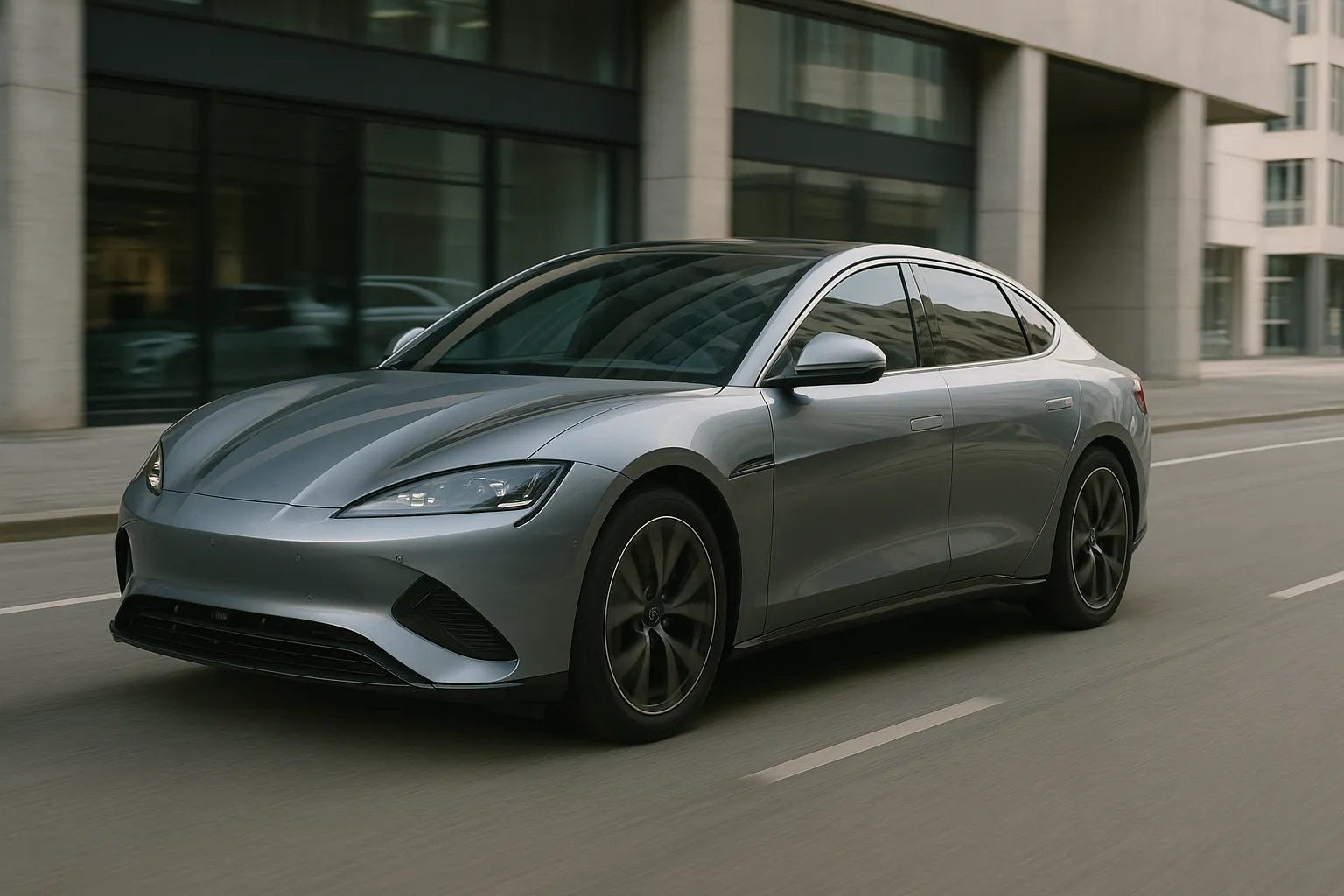
BYD has opened a wider gap over Tesla in the global battery-electric vehicle market, turning what was recently a close contest into a clearer second-quarter advantage.
The Chinese automaker delivered 557,090 fully electric vehicles from April through June. Tesla’s official quarterly delivery figure had not been released at the time of the latest market estimates, but Wall Street expectations were clustered around roughly 396,500 vehicles. If Tesla lands near that level, BYD’s battery-electric lead for the quarter would be about 160,000 units.
That matters because this comparison excludes BYD’s large plug-in hybrid business. BYD sells both battery-electric vehicles and plug-in hybrids, but the 557,090 figure counts only fully electric models. Tesla, by contrast, sells only battery-electric vehicles. On a like-for-like EV basis, BYD is no longer just catching Tesla in periodic bursts; it is building scale that could influence prices, product planning, battery sourcing, and investor expectations across the industry.
A one-quarter Tesla rebound appears to be fading
Tesla had briefly returned to the top of the global EV sales ranking in the first quarter. The second-quarter picture suggests that comeback was short-lived, though the final size of the gap still depends on Tesla’s official delivery number.
A result around 396,500 vehicles would be a soft total by Tesla’s recent standards and would put pressure on a company that has relied heavily on the Model Y and Model 3 for global volume. Tesla has refreshed the Model 3 in many markets and continues to sell the Model Y at high volume, but its lineup is narrower than BYD’s, and some of its newer products serve more limited parts of the market.
BYD’s advantage is different. It competes across a broad price range with vehicles such as the Seagull city car, Dolphin hatchback, Atto 3/Yuan Plus crossover, Seal sedan, Han sedan, and several China-market models. That spread gives BYD more ways to capture buyers who want an EV but are not shopping in the same price bracket as a Tesla Model Y or Model 3.
Why BYD’s scale is important
The headline sales gap is only part of the story. BYD’s growth reflects a vertically integrated strategy that has become a major competitive advantage. The company builds many of its own batteries, develops key electric-drive components internally, and has pushed aggressively into both mainstream and value-oriented EV segments.
That helps BYD compete on price without relying solely on discounting. In markets where affordability is the main barrier to EV adoption, smaller and lower-cost models can move volume faster than premium crossovers and sedans. BYD has also benefited from China’s enormous domestic EV market, where consumer acceptance is high, charging access has improved, and local brands have become formidable.
For car buyers, the practical effect is straightforward: more competition generally means more choice and more pressure on prices. Even shoppers who never buy a BYD may see the impact if rival automakers adjust incentives, trim prices, add equipment, or accelerate the launch of cheaper EVs.
For owners, the shift is also relevant because scale can affect service networks, parts availability, software support, and resale values. A brand that sells hundreds of thousands of EVs per quarter gains leverage with suppliers and builds a larger installed base, but it also faces the challenge of supporting a rapidly expanding customer fleet.
Tesla still has strengths BYD has not fully matched
The widening sales lead does not mean Tesla has lost its importance in the EV market. Tesla remains one of the world’s most recognized EV brands, and in many countries it still benefits from a strong charging ecosystem, efficient drivetrains, mature over-the-air software updates, and a simple product structure.
Tesla’s Supercharger network remains a significant customer draw in markets where access is broad and reliable. The Model Y continues to be a benchmark for electric crossover efficiency and packaging. Tesla also has manufacturing operations in the United States, China, and Europe, giving it a global footprint that many EV rivals are still trying to match.
But Tesla’s challenge is becoming more visible. The company’s core models now face far more competition than they did several years ago. In China, buyers can choose from a dense field of domestic EVs with fast charging, advanced driver-assistance features, large screens, and aggressive pricing. In Europe, traditional automakers and Chinese entrants are competing for the same customers. In the United States, Tesla still has a stronger position than BYD because BYD passenger cars are not broadly sold there, but Tesla’s global ranking is shaped by much more than the U.S. market.
Trade barriers could shape where the rivalry matters
BYD’s global growth is not evenly distributed. The company is expanding outside China, but tariffs, local regulations, safety certification, and brand awareness will determine how quickly it can gain ground in major regions.
In the U.S., high tariffs and political concerns around Chinese-built vehicles make a direct BYD-Tesla sales battle unlikely in the near term. In Europe, BYD faces a more open but increasingly scrutinized market, with regulators and policymakers watching Chinese EV imports closely. In Latin America, Southeast Asia, Australia, and parts of the Middle East, BYD has more room to expand and may find buyers especially receptive to affordable EVs.
That regional split is important for consumers. A buyer in California may see Tesla’s main competition coming from Hyundai, Kia, Ford, General Motors, Rivian, Volkswagen, or Mercedes-Benz rather than BYD. A buyer in Thailand, Brazil, or parts of Europe may see BYD as one of the most visible alternatives to Tesla and legacy brands.
The industry takeaway
If Tesla’s final second-quarter delivery number lands near current expectations, BYD will have outsold it in battery-electric vehicles by a margin large enough to be strategically meaningful. It would show that global EV leadership is no longer defined only by early-mover advantage, brand recognition, or software reputation. Manufacturing scale, price coverage, battery control, and local market strength are now just as important.
The result also reinforces a broader industry trend: the EV market is fragmenting. Instead of one company setting the pace everywhere, regional leaders and product specialists are emerging. Tesla remains central to the conversation, but BYD’s volume shows how quickly the center of gravity can move when an automaker pairs low-cost production with a wide electric lineup.
For shoppers, that means the next few years should bring more affordable EVs, more aggressive leasing and financing offers, and faster improvements in range, charging speed, and standard equipment. For automakers, it raises the stakes. Competing with Tesla is no longer enough. Competing with BYD’s scale and cost structure may be the next defining test of the electric-vehicle era.