BYD Overtakes Ford as Chinese Automakers Reshape the Global Top 10
BYD moved ahead of Ford in first-half 2026 global market-share rankings, underscoring how quickly China’s largest carmakers are gaining scale beyond their home market.
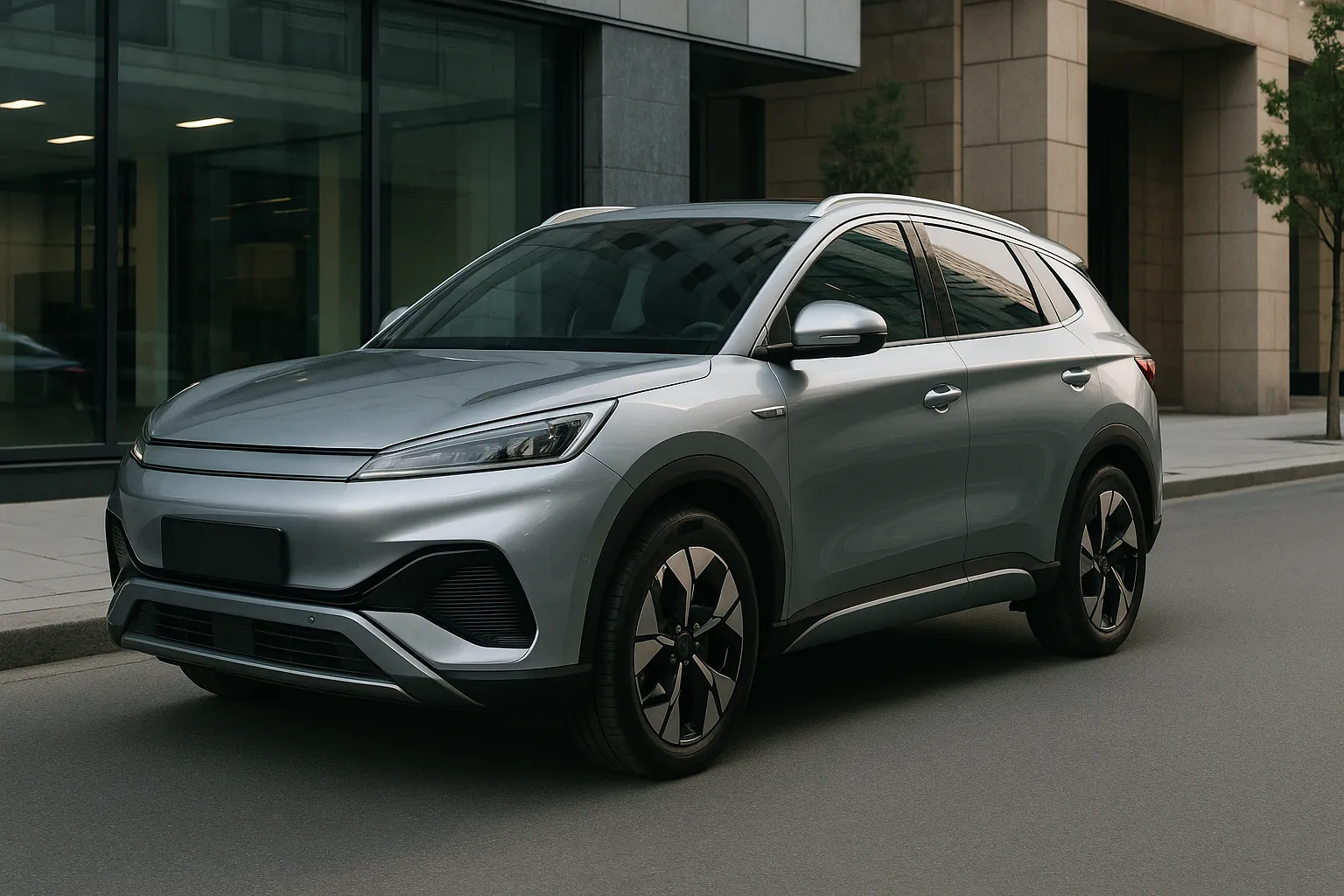
BYD has moved ahead of Ford in global automaker market-share rankings for the first half of 2026, a milestone that highlights how quickly the industry’s center of gravity is shifting toward China.
The change is not simply a one-company story. First-half 2026 global volume data shows three Chinese manufacturers inside the worldwide top 10, reflecting gains in domestic scale, export growth, and strong demand for electrified vehicles. Rankings can vary depending on whether they count retail sales, wholesale deliveries, joint ventures, or commercial vehicles, but the broader direction is clear: China’s largest automakers are no longer regional players looking outward. They are now central competitors in the global volume race.
For Ford, the development is symbolic more than catastrophic. The company remains one of the most recognizable names in the business, with profitable strengths in pickups, SUVs, vans, fleet sales, and North America. But BYD’s move past Ford illustrates a very different kind of scale: rapid model turnover, aggressive pricing, deep battery supply-chain control, and a product mix heavily weighted toward battery-electric and plug-in hybrid vehicles.
Why BYD’s rise matters

BYD’s growth has been built on two related trends. First, China remains the world’s largest car market, giving its biggest domestic brands a massive base from which to scale. Second, BYD has become one of the industry’s most important electrified-vehicle manufacturers, selling both full EVs and plug-in hybrids in high volumes.
That combination matters because the global auto industry is in a transition period. Carmakers are still selling millions of gasoline and diesel vehicles, yet governments, fleets, and many consumers are moving toward lower-emission options. BYD has positioned itself across that spectrum with affordable EVs, family crossovers, sedans, small city cars, and plug-in hybrids that reduce fuel use without requiring every buyer to rely entirely on public charging.
Models such as the Dolphin, Seal, Atto 3/Yuan Plus, Song-family SUVs, Qin sedans, and Seagull city car have helped give BYD unusually broad coverage. Not every model is sold in every market, and safety rules, tariffs, local incentives, and consumer tastes still shape where each vehicle can compete. Even so, BYD’s lineup shows why traditional automakers are under pressure: it can attack several price points at once.
Ford is strong, but its footprint is different

Ford’s business is concentrated in areas where it still has considerable power. In the United States, the F-Series pickup remains a core profit engine. The Bronco, Explorer, Escape, Transit, Ranger, Maverick, and Super Duty families also give Ford a broad truck-and-utility portfolio. In commercial vehicles, Ford has brand recognition and fleet relationships that many newer global competitors do not.
The comparison with BYD, however, exposes the different pace of change by region. Ford’s North American truck business is highly profitable but not as globally scalable as a lineup of smaller, lower-cost cars and crossovers aimed at high-volume markets. Ford has also recalibrated parts of its EV strategy after slower-than-expected demand growth in some segments and heavy development costs. The Mustang Mach-E, F-150 Lightning, and E-Transit remain important, but Ford is being more selective about where EV investment can generate sustainable returns.
That is a rational business decision, yet it also creates room for fast-moving competitors. Chinese brands have used shorter product cycles, lower manufacturing costs, and battery expertise to expand rapidly, especially in markets where affordability is the deciding factor.
The global top 10 is becoming less predictable
For decades, the top tier of global automakers was dominated by Japanese, American, European, and South Korean groups. Toyota, Volkswagen Group, Hyundai Motor Group, General Motors, Stellantis, Ford, Honda, Nissan, and others regularly occupied the upper ranks, with positions shifting based on economic cycles, exchange rates, supply disruptions, and regional demand.
China’s automakers are now changing that pattern. Their rise has been helped by intense domestic competition, which has forced companies to cut costs, improve software, expand electrified powertrains, and move quickly on design. That competition can reduce margins, but it also creates companies that are battle-tested before they enter export markets.
The result is a new type of global pressure. Established automakers are no longer competing only against each other on brand loyalty, dealer networks, horsepower, warranty coverage, and financing. They are also competing against manufacturers with strong battery sourcing, fast development cycles, and willingness to price vehicles aggressively.
What this means for buyers
For car shoppers, the immediate impact depends heavily on location. In Europe, Latin America, Australia, Southeast Asia, the Middle East, and parts of Africa, Chinese brands are becoming more visible in showrooms. Buyers may see more EVs and plug-in hybrids at lower prices, often with generous standard equipment. That can put downward pressure on competitors or force established brands to add features, improve warranties, or offer better financing.
In the United States, the effect is less direct. Tariffs, trade policy, regulatory hurdles, and limited distribution mean BYD passenger vehicles are not broadly available to American retail buyers. Even so, U.S. shoppers are affected indirectly. Global competition influences battery costs, supplier investment, software development, and the pricing strategies of brands already in the market. If Chinese automakers continue gaining share elsewhere, legacy automakers may have to sharpen their EV and hybrid offerings at home.
For owners, the shift raises practical questions about parts availability, service networks, resale values, software support, and battery warranties. A low purchase price is only one part of the ownership equation. Newer brands entering export markets must prove they can support vehicles over many years, not merely sell them quickly.
What it means for enthusiasts and the industry
Enthusiasts may see this as another sign that the performance and technology conversation is broadening. Chinese automakers are no longer known only for low-cost transportation. Some are building high-output EVs, advanced driver-assistance systems, premium interiors, and increasingly sophisticated chassis packages. BYD itself spans affordable cars and more upscale products through related brand families in China.
For the industry, BYD passing Ford is a warning against assuming that legacy scale guarantees future position. Manufacturing heritage, dealer networks, and established nameplates still matter, but they are no longer enough on their own. Battery integration, software capability, cost discipline, and speed to market are becoming just as important.
The most important takeaway is not that Ford is suddenly weak or that BYD’s path will be effortless. Ford remains a major global automaker with profitable strengths that BYD does not fully replicate. BYD, meanwhile, faces challenges as it expands: regulatory scrutiny, tariffs, brand-building costs, local safety expectations, and the difficulty of maintaining quality while growing quickly.
Still, the first half of 2026 marks a notable moment. When a Chinese electrified-vehicle specialist moves ahead of one of America’s defining automakers in global market share, it shows that the auto industry’s competitive map is being redrawn in real time.