Fiat Topolino EV Arrives in the U.S. as a $13,995 Micromobility Runabout
Fiat’s tiny electric Topolino is now in the United States, aimed at short urban trips rather than highway driving. Its $13,995 price puts it in a different shopping lane from mainstream EVs.
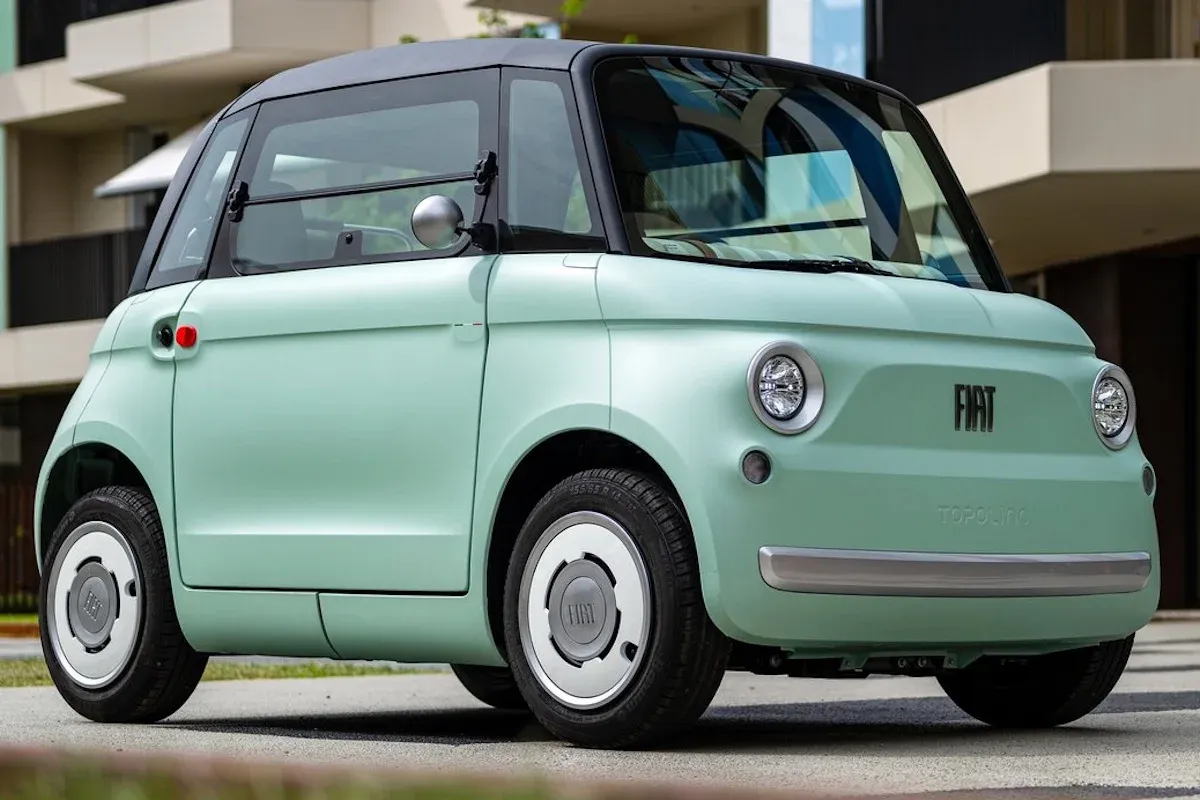
Fiat has brought the Topolino EV to the United States, giving American shoppers a new option at the very small, very short-range end of the electric-vehicle market. Priced from $13,995, the Topolino is not intended to compete with conventional electric hatchbacks or crossovers. It is aimed at micromobility: quick local trips, dense urban streets, campus-style environments, resort communities, and neighborhoods where a full-size car can feel like more vehicle than the job requires.
That distinction matters. The Topolino may wear a familiar Fiat badge, but buyers should not approach it like a smaller 500e. It is a tiny electric runabout with a narrow mission: move one or two people over short distances while using minimal space and energy. For the right buyer, that can be appealing. For the wrong buyer, it could be frustrating if expectations are based on normal passenger-car capability.
A very different kind of EV

The Topolino name has deep roots at Fiat. It was the nickname attached to the original Fiat 500 of the 1930s, a small people’s car that helped define affordable European mobility. The modern Topolino revives that idea in electric form, but with a 21st-century focus on ultra-compact travel rather than broad family-car utility.
In Europe, the Topolino is closely related to the Citroën Ami, another tiny electric vehicle built around simple construction, modest performance, and easy maneuverability. The formula is intentionally basic: a small battery, low operating speeds, compact dimensions, and a cabin designed for short errands rather than long commutes.
The U.S. arrival places Fiat in a space that sits between e-bikes, golf carts, neighborhood electric vehicles, and traditional cars. That segment has grown more visible as cities rethink parking, congestion, delivery access, and low-speed transportation. The Topolino gives Fiat a product that speaks to those changes without requiring the cost, size, or complexity of a mainstream EV.
The $13,995 price is the headline, but context is everything
At $13,995, the Topolino is far cheaper than most new battery-electric cars sold in the United States. That makes it easy to see why it will attract attention. New EV transaction prices remain well above what many budget-minded drivers can justify, and even used EVs can come with uncertainty around battery condition, charging needs, and long-term ownership costs.
But the Topolino’s price should be judged against its actual role. It is not a substitute for a compact crossover, a commuter sedan, or even a conventional subcompact car. Its value depends on whether a buyer has a use case built around short, local driving. Think grocery runs, beach-town travel, gated communities, college campuses, dense downtown neighborhoods, or second-vehicle duty where daily mileage is low and speeds are limited.
That is why shoppers will need to look beyond the sticker. Insurance classification, local road access, state registration rules, safety requirements, charging setup, and weather protection could all affect the real ownership experience. Low-speed electric vehicles are governed differently than normal passenger cars in many places, and road eligibility can vary by jurisdiction. Buyers should verify local rules before assuming the Topolino can go everywhere a car can.
What buyers should expect
The Topolino’s appeal starts with size. Small vehicles are easier to park, cheaper to charge, and less intimidating in crowded environments. If Fiat can make the Topolino simple to buy and easy to service, it could become an attractive urban tool for households that already have a primary vehicle or for buyers who rarely need highway capability.
The tradeoffs are equally important. Vehicles in this micromobility class generally prioritize low speed, short range, and simplicity over crash protection, cargo flexibility, and all-weather refinement. That does not make the concept flawed; it means the product has to be matched carefully to the driver’s environment.
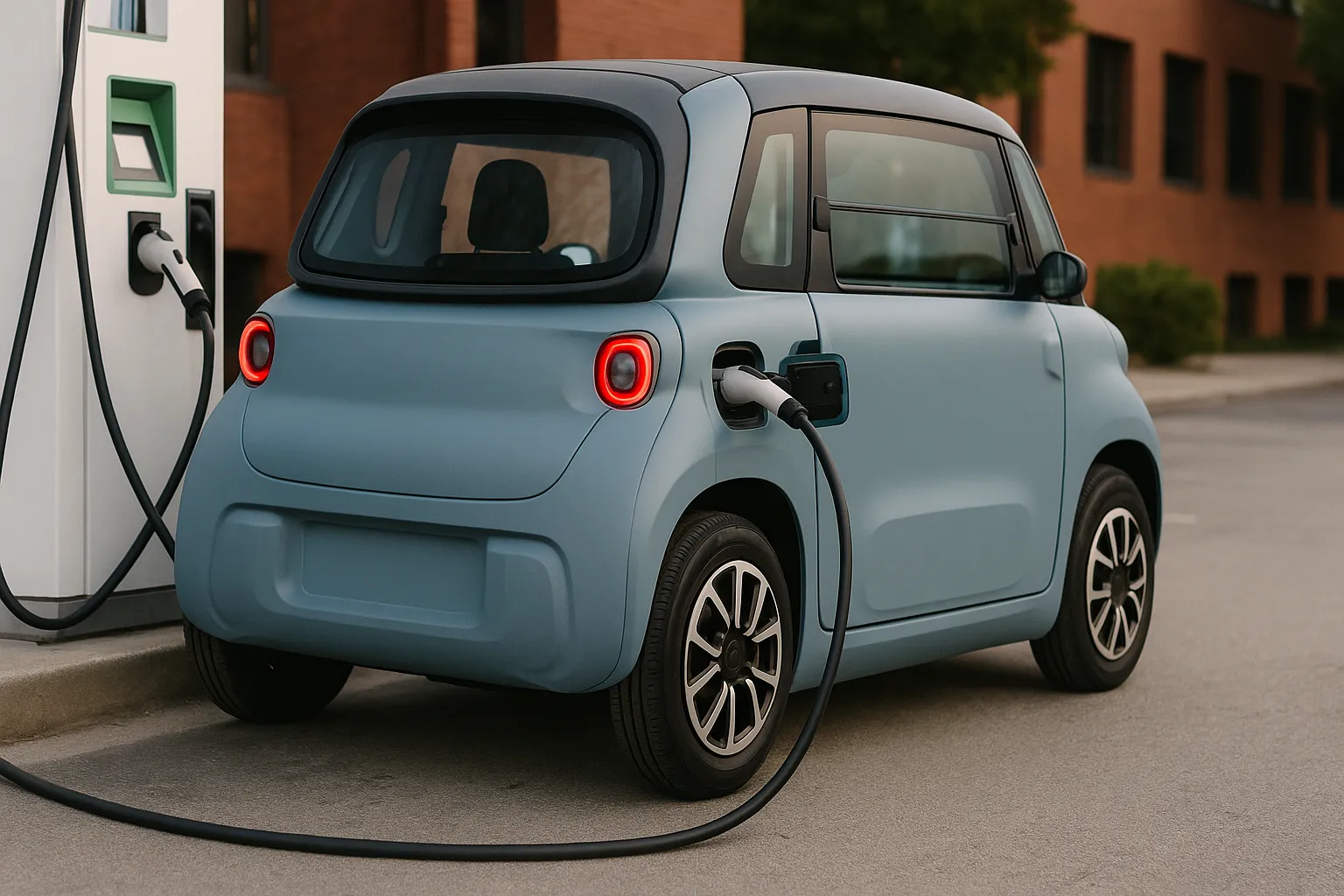
For apartment dwellers, charging could be a key question. A tiny EV with a small battery may not require the same infrastructure as a full-size electric car, but access to an outlet still matters. For suburban owners, the Topolino may make sense if local streets connect home, shops, parks, and schools without requiring high-speed roads. For rural buyers or highway commuters, it is unlikely to be a practical primary vehicle.
Why Fiat is doing this
Fiat’s U.S. lineup has been narrow for years, and the brand has leaned heavily on small-car identity. The latest 500e gives Fiat a conventional electric city car, while the Topolino lets it explore an even smaller category. That could help Fiat stand apart in a market where many EVs have become larger, heavier, and more expensive.
The Topolino also reflects a broader industry experiment. Automakers are trying to understand whether American buyers are ready for vehicles that are not simply smaller versions of regular cars, but entirely different mobility products. The market has room for pickup trucks, three-row SUVs, performance EVs, and luxury crossovers. The unanswered question is how much room exists for tiny electric runabouts that challenge traditional ideas of what a car should be.
If the Topolino finds an audience, it could encourage other manufacturers to revisit low-cost urban EVs, especially as battery prices fluctuate and affordability remains a major barrier. If it struggles, it may reinforce the idea that Americans like the concept of tiny city vehicles more than they actually buy them.
Enthusiast appeal in an unexpected package
The Topolino is not a performance car, but enthusiasts may still find it interesting. It represents a kind of minimalism that has largely disappeared from the U.S. new-vehicle market. Modern cars have become safer, quicker, more connected, and more capable, but also larger, heavier, and more expensive. The Topolino moves in the opposite direction.
That makes it notable beyond its sales potential. It is a reminder that electrification does not have to mean 600 horsepower, enormous battery packs, or luxury pricing. Electric power can also support very small, low-energy transportation. For cities and communities trying to reduce congestion and emissions at low speeds, that may be more relevant than another long-range SUV.
The bottom line
The Fiat Topolino’s U.S. launch is important because it gives American buyers a factory-backed micromobility option from a recognizable automaker. Its $13,995 price makes it accessible compared with mainstream EVs, but its limitations must be understood from the start.
For households that need a primary car, the Topolino will not be enough. For owners who want a simple local runabout, a parking-friendly second vehicle, or a cleaner alternative to a gas golf cart or scooter, it could be exactly the kind of niche product the market has been missing.
The real test will not be whether the Topolino can impress on a spec sheet. It will be whether American buyers are ready to treat mobility as something more varied than one full-size vehicle for every task.