Ford and Geely to Build New Valencia SUVs, Including a Kuga Successor
Ford’s Valencia factory is set for a major reset through a manufacturing partnership with Geely, bringing four new models to Spain and a multi-energy family crossover expected around 2029.
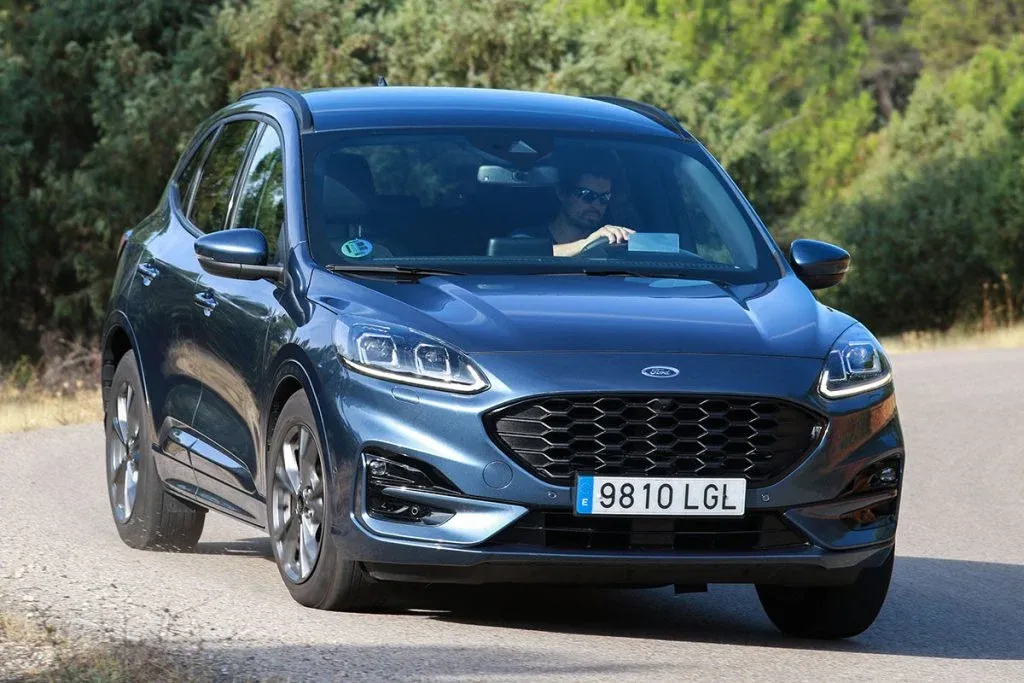
Ford’s next European product cycle is taking shape around a new manufacturing partnership with Geely, and the biggest beneficiary appears to be the company’s Valencia plant in Spain. The factory is set to build four new vehicles under the arrangement: two Ford models and two Geely electric SUVs.
For buyers, the headline model is an all-new Ford family crossover expected to replace or continue the role of the Kuga. It is being positioned in Europe’s high-volume midsize SUV class, where models such as the Volkswagen Tiguan set the benchmark for size, practicality and broad market appeal. Timing is not pinned down to a single date: the current Kuga is expected to remain in production until the new crossover is ready, with launch timing described around late 2028 and into 2029.
A new Kuga-sized Ford, but not just an EV

The future Ford crossover is planned as a “multi-energy” vehicle rather than a battery-electric-only model. That means Ford intends to offer more than one type of electrified powertrain to suit different markets, charging habits and price points.
The first version is expected to be electric, but the broader lineup is set to include plug-in hybrid technology and extended-range electric vehicle powertrains. An EREV typically drives its wheels using electric motors while carrying a combustion engine that acts as a generator when the battery needs support. That setup can appeal to drivers who want daily electric running but are not yet comfortable relying entirely on public charging for long trips.
For Kuga owners, this matters because Ford’s current European SUV has long relied on hybrid and plug-in hybrid options as a major selling point. A successor that keeps multiple powertrain choices could make the transition less abrupt for families, company-car users and rural drivers who may not be ready for a pure EV.
Valencia gets a clearer future
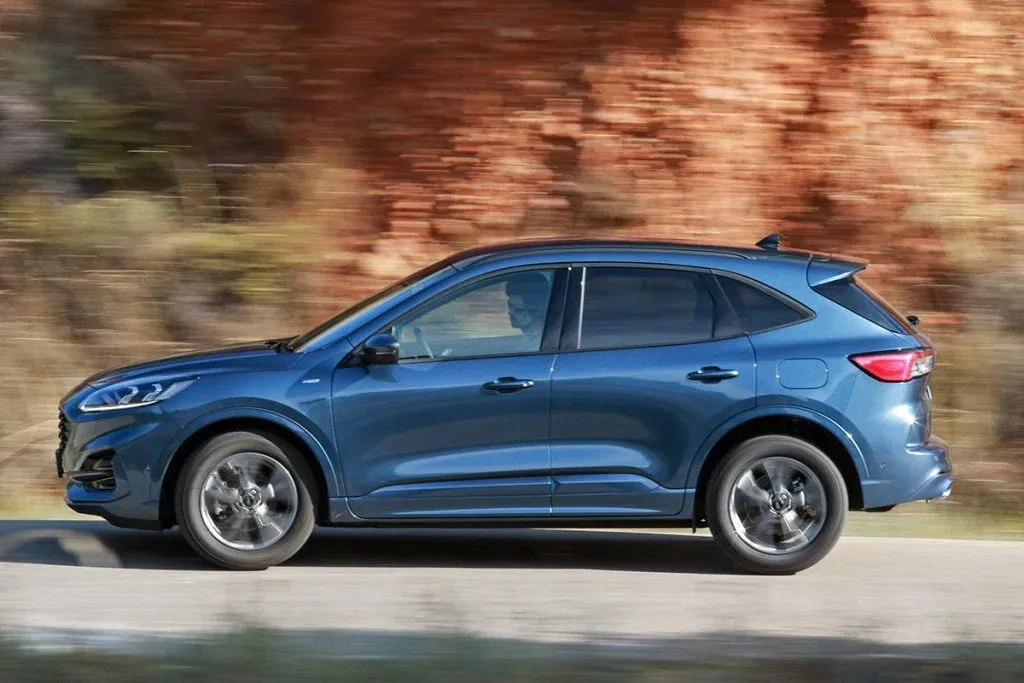
The Valencia factory has been operating well below its theoretical capacity. The plant can build up to about 500,000 vehicles a year, but its current Ford output is centered on the Kuga. That left questions over its long-term role as Ford reworked its European lineup and moved away from several traditional nameplates.
The Geely partnership gives Valencia a broader production plan. Alongside the new Ford family crossover, the site will assemble a compact SUV linked to the Bronco family. It will also build two Geely electric SUVs that share components with Ford’s new crossover architecture.
That shared manufacturing base is significant. Europe’s car market is increasingly expensive to serve, particularly for mainstream brands that must balance stricter emissions rules, EV investment, software development and pressure from lower-cost entrants. By sharing production and components with Geely, Ford can spread costs across more vehicles and use existing supplier scale rather than developing every element alone.
Why Geely is an important partner
Geely is already deeply involved in Europe through brands and partnerships spanning electric cars, hybrids and shared platforms. For Ford, the attraction is not simply extra production volume for Valencia. The collaboration potentially opens access to electrified hardware and supply chains that could help Ford move faster and reduce development cost.
One possible area is petrol-electric powertrain supply. Geely is linked to Horse, the drivetrain venture formed with Renault, which focuses on combustion and hybrid systems for a market that is not moving to battery EVs at one uniform pace. That could be relevant for the plug-in hybrid and extended-range versions of Ford’s future crossover, although final technical details have not been confirmed.
The two Geely SUVs to be built in Valencia are described as electric models. That means the Spanish plant is being prepared not just for Ford’s transition products, but also for dedicated EV output from another global manufacturer. In industry terms, it is a pragmatic answer to the uneven pace of electrification in Europe: build EVs, but keep hybrid options in the mix.
Ford’s wider Europe reset
The Valencia plan is only one part of Ford’s broader European product renewal. The company has lost substantial sales volume in the region in recent years and has already ended or wound down several familiar passenger cars. Rather than exit key segments, Ford is leaning on partnerships to rebuild its lineup with lower costs.
A separate collaboration with Renault is set to support smaller Ford models, including replacements in the space once occupied by the Fiesta and Puma. Those vehicles are expected to use small EV platform and manufacturing resources related to Renault’s latest compact electric architecture.
Taken together, the Renault and Geely arrangements point to a new Ford Europe strategy: fewer standalone engineering programs, more shared platforms, and a product range aimed at the segments where demand remains strongest. Small cars and family SUVs are still crucial in Europe, but profit margins are tight and regulation is demanding. Partnerships may be the only realistic way for some mainstream brands to compete against both established rivals and fast-growing Chinese manufacturers.
What it means for buyers
For European car buyers, the most immediate takeaway is choice. Ford is not planning to make its next Kuga-sized model an EV-only proposition. A lineup with electric, plug-in hybrid and extended-range options could allow customers to pick a vehicle based on charging access, tax rules, commute distance and towing or holiday use.
A family living with driveway charging may prefer the full EV. A company-car driver may find a plug-in hybrid attractive if taxation and electric commuting stack up. A high-mileage driver who wants electric drive without charging anxiety may be drawn to an EREV, depending on pricing and real-world efficiency.
There are still important unknowns. Ford has not confirmed the production name, final specifications, battery sizes, electric range, power outputs, pricing or market-by-market availability. The Kuga name is a logical continuation because it is already established in the segment, but the vehicle is being described more broadly as a new family crossover for now.
What enthusiasts should watch
The compact Bronco-family SUV may be the more emotional model in the Valencia plan. If it carries enough of the Bronco design language and off-road attitude, it could give Ford a distinctive alternative to softer urban crossovers. The challenge will be balancing rugged branding with European expectations for efficiency, price and compact dimensions.
The Kuga successor, meanwhile, is likely to be judged less on drama and more on execution. Interior packaging, charging performance, hybrid efficiency, software quality and towing capability will matter more than headline acceleration. In the midsize SUV segment, buyers are rarely short of options.
A strategic bet on flexibility
Ford’s deal with Geely is not just about filling a factory. It is a response to a European market that no longer rewards one-size-fits-all product planning. EV demand is growing, but unevenly. Plug-in hybrids remain popular in some countries. Range-extender technology is gaining renewed attention as carmakers look for a middle ground between combustion familiarity and electric driving.
If Ford can use the Valencia partnership to deliver competitive pricing, modern electrified powertrains and dependable production, the next Kuga-sized crossover could become one of its most important European models of the decade. If not, the crowded SUV market will offer buyers plenty of alternatives.
For now, the clearest conclusion is that Valencia has a future, Ford’s European lineup is being rebuilt through partnerships, and the next family SUV from the Blue Oval is being designed for a market that is electrifying—but not all at the same speed.