Ford Pushes for USMCA Changes That Favor U.S.-Built Vehicles
As the USMCA enters its 2026 review, Ford is pressing for trade rules that better reward automakers investing in U.S. assembly plants, workers, and supply chains.
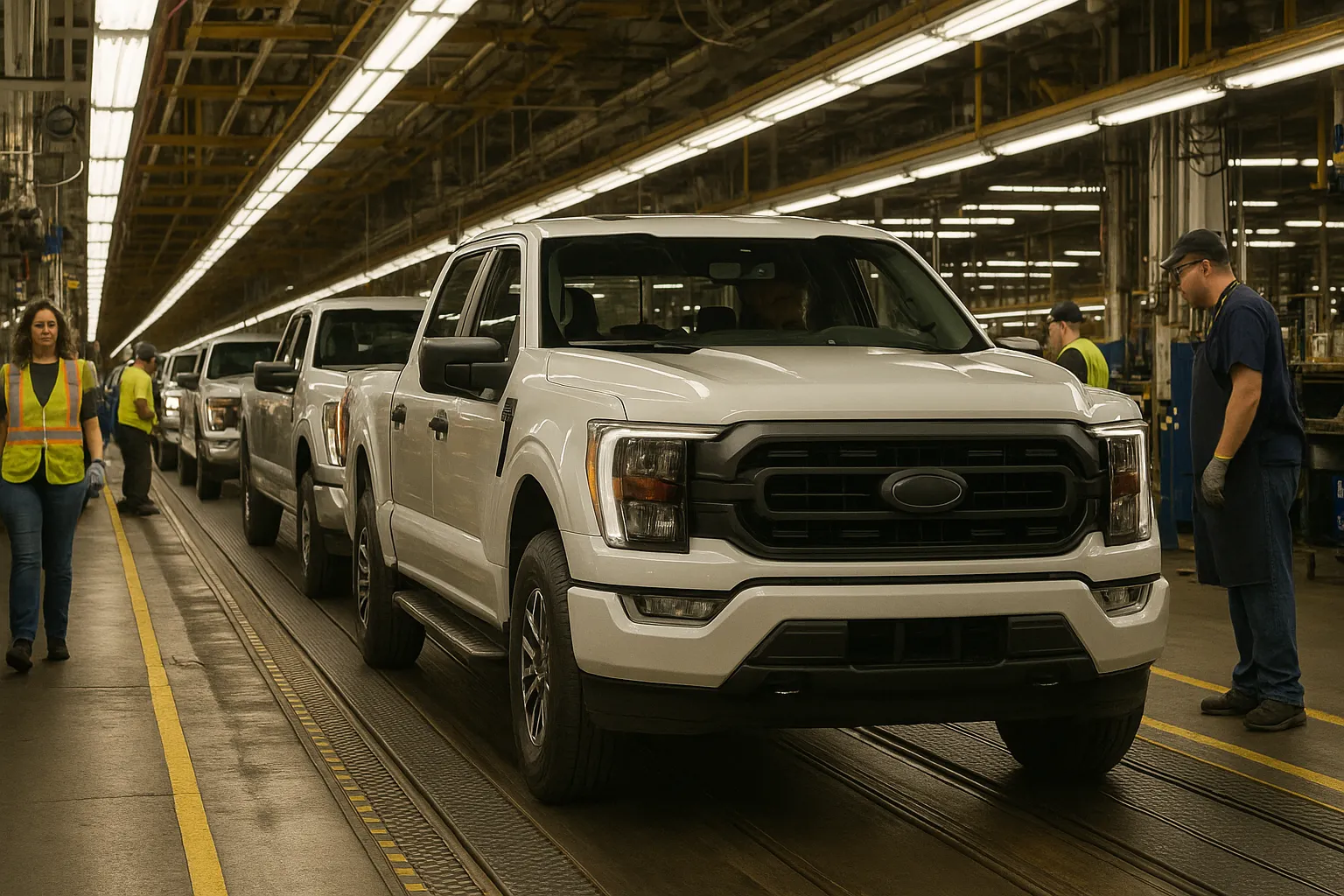
Ford is using the 2026 review of the United States-Mexico-Canada Agreement to press a familiar but consequential argument: automakers that build more vehicles in the United States should receive clearer benefits under North American trade rules.
The company’s position, voiced by CEO Jim Farley, centers on the idea that trade policy should not treat every North American production footprint the same if some companies are committing more capital, jobs, and vehicle output to U.S. plants. Ford wants a revised agreement to more directly reward manufacturers that invest heavily in American assembly operations and domestic supply chains.
The request arrives at an important moment. USMCA, which replaced NAFTA and took effect in 2020, includes a scheduled six-year review in 2026. That process gives the U.S., Mexico, and Canada a chance to reassess the pact, raise objections, and potentially reshape rules that affect everything from vehicle sourcing to parts content and labor requirements.
For automakers, the stakes are high because North American manufacturing is deeply intertwined. A pickup assembled in Michigan, Missouri, Kentucky, or Ohio may use parts from Canada, Mexico, and multiple U.S. states. A vehicle built in Mexico may rely on engines, transmissions, software, stampings, or engineering work based in the United States. Any meaningful change to USMCA can affect factory planning years before a vehicle reaches a showroom.
What Ford is asking for

Ford’s message is not simply that it wants protection from imports. The company already operates across all three USMCA countries and relies on the regional production network. Its position is more specific: if an automaker chooses to build vehicles in the United States and absorb the higher labor, regulatory, and capital costs that can come with that decision, the trade system should recognize it.
The precise mechanism remains unclear. A revamped agreement could theoretically provide benefits through tariff treatment, content calculations, government procurement rules, compliance credits, or other incentives tied to U.S. assembly and sourcing. No final policy language has been established, and any change would require negotiation among governments with competing interests.
That uncertainty matters. Automakers make plant and product decisions on long cycles. A new truck program, battery plant, engine line, or electric vehicle platform can require billions of dollars and years of lead time. If the rules are likely to change, companies want to shape them before those investment decisions are locked in.
Why USMCA already matters to cars

USMCA includes stricter automotive rules than NAFTA did. Passenger vehicles and light trucks generally must meet a 75 percent regional value content threshold to qualify for tariff-free treatment, up from the prior NAFTA standard. The agreement also includes labor value rules requiring a portion of a vehicle’s content to come from facilities where workers earn at least $16 per hour, along with requirements involving steel and aluminum sourcing.
Those provisions were designed to encourage more North American production and reduce the incentive to use the region mainly as a low-cost export base. They also made compliance more complex. Automakers now track the origin and value of parts in far greater detail, and suppliers must structure their own sourcing around those requirements.
Ford’s push suggests the company believes the current rules do not go far enough in distinguishing between automakers with major U.S. assembly commitments and those with more production concentrated outside the country.
Ford’s U.S. footprint gives it a strong argument
Ford has a significant U.S. manufacturing base. The F-150 is built at plants including Dearborn Truck Plant in Michigan and Kansas City Assembly in Missouri. Super Duty production is tied to Kentucky and Ohio operations. The Bronco and Ranger come from Michigan Assembly. The Mustang is assembled in Flat Rock, Michigan. The Explorer and Lincoln Aviator are built in Chicago. Ford also builds commercial vans and electric vehicles in U.S. plants, including the E-Transit in Missouri and the F-150 Lightning at the Rouge Electric Vehicle Center in Michigan.
That gives Ford a clear reason to argue for rules that place a premium on American assembly. The company’s most profitable products, especially large trucks and commercial vehicles, are closely linked to U.S. factories and U.S. hourly employment.
At the same time, Ford is not a purely domestic manufacturer. It builds the Mustang Mach-E in Mexico, along with high-volume products such as the Maverick and Bronco Sport. It also has major Canadian ties, including engine and future truck-related manufacturing plans. That makes Ford’s position more nuanced than a simple U.S.-versus-Mexico argument. The company benefits from regional integration but wants the agreement to tilt more favorably toward U.S. production.
What could change for car buyers
For shoppers, trade negotiations can feel distant until they show up in prices, availability, or product decisions. If USMCA rules become more favorable to U.S.-built models, automakers could have a stronger incentive to allocate future vehicles to American plants. That might help support domestic jobs and could influence where next-generation trucks, SUVs, EVs, and commercial vehicles are assembled.
There is also a possible cost angle. More complex or stricter trade rules can raise compliance costs, and those costs can eventually appear in vehicle pricing. Conversely, incentives that reward domestic production could help offset some investment costs for automakers that already build heavily in the U.S. The impact on window stickers would depend on the final rules, exchange rates, labor contracts, supplier costs, and tariff policy.
Availability could be affected as well. If trade rules make some production locations less attractive, automakers may shift future capacity. That does not happen overnight, but it can shape which plants receive new models and how quickly companies can respond to demand.
Why enthusiasts and owners should care
Enthusiasts often focus on horsepower, range, towing, chassis tuning, and design, but manufacturing policy can decide which vehicles get built in the first place. The business case for a new performance model, off-road trim, hybrid pickup, or affordable EV depends partly on plant capacity and trade economics.
Owners also have a stake in the health of the manufacturing network. Parts availability, supplier stability, and long-term support can all be influenced by where vehicles and components are produced. A more stable regional supply chain can help reduce disruptions, though no trade agreement can eliminate risks from strikes, shortages, logistics problems, or sudden demand swings.
The broader industry fight
Ford’s position will not be the only one at the table. Automakers with larger Mexican production footprints may resist changes that penalize their current investments. Suppliers may worry about added complexity or cost. Canada and Mexico will seek to protect their own manufacturing bases. U.S. policymakers may be divided between rewarding domestic production and preserving the integrated North American system that keeps many vehicles cost-competitive.
That balancing act is the core issue. The modern auto industry is regional, not purely national. A rule designed to favor one country can ripple across plants, suppliers, and consumers in all three.
Ford’s push signals that the 2026 USMCA review could become a major battleground for future vehicle investment. The outcome may not immediately change what is on dealer lots, but it could influence the next decade of North American production decisions — including where automakers build trucks, EVs, batteries, engines, and the high-value components that define tomorrow’s vehicles.