Gordon Murray Special Vehicles Plans F1-Inspired Supercar Reveal at Monterey
A new low-volume Gordon Murray creation will debut on August 14, with teaser imagery pointing to a more road-focused take on the McLaren F1 lineage.

Gordon Murray Automotive’s ultra-low-volume Special Vehicles division is preparing to reveal a new supercar at Monterey Car Week on August 14, and the first clues point strongly toward another machine shaped by the legacy of the McLaren F1.
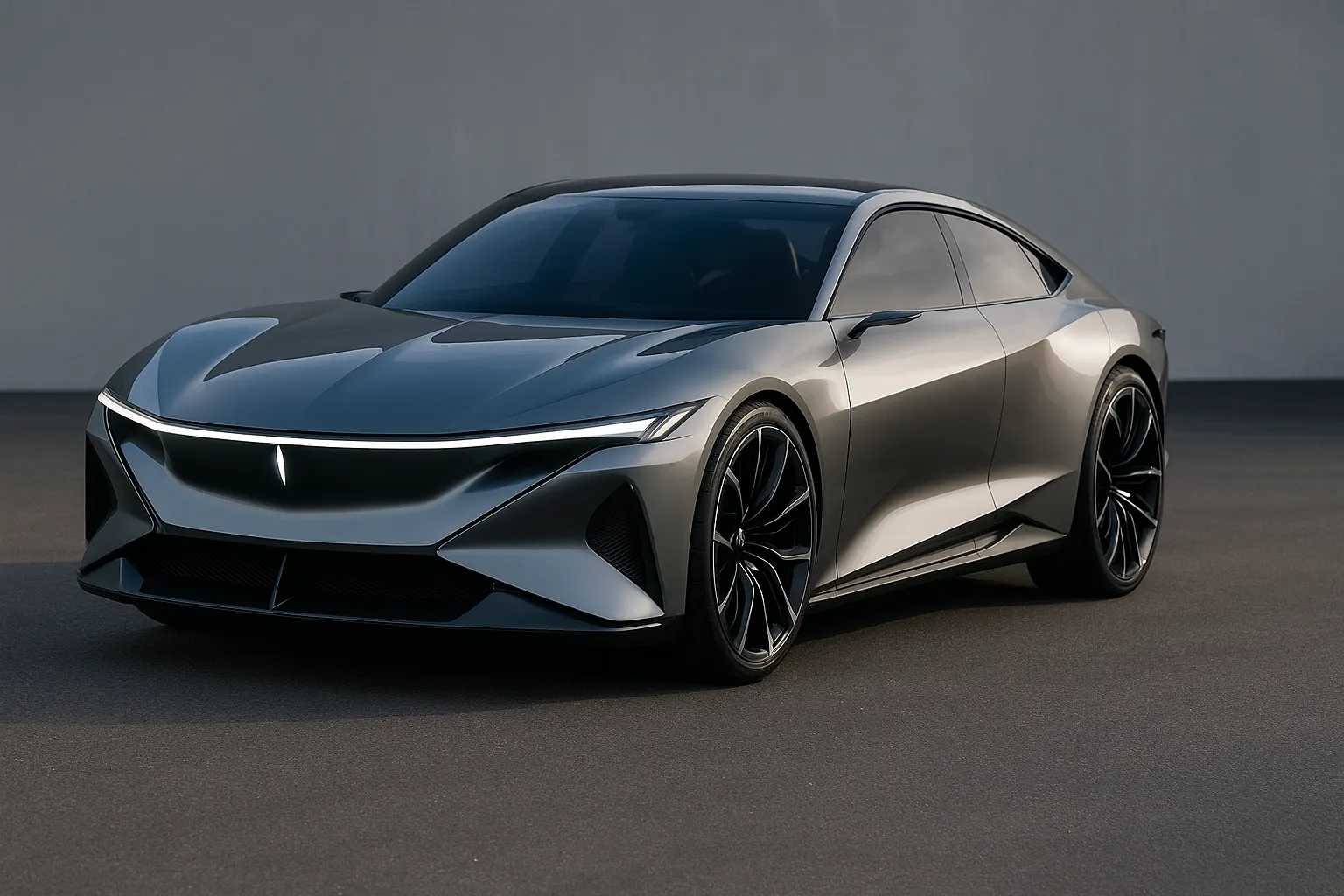
The company has not yet released the car’s name, production total, price, powertrain specification or customer allocation details. What it has shown is enough to frame the debut: a low, cleanly surfaced supercar with cues that appear to link it to Gordon Murray’s most famous road and racing work. The teaser suggests a car that is less visually extreme than last year’s S1 LM, with no large rear wing visible, but still shaped around classic F1-era proportions.
That makes the Monterey reveal more than just another boutique supercar launch. For enthusiasts, collectors and the industry, the car is likely to continue one of the most closely watched design threads in modern performance cars: how Murray’s original McLaren F1 philosophy is being reinterpreted three decades later for customers who want lightness, mechanical clarity and rarity rather than simply the highest possible output number.
What the teaser shows

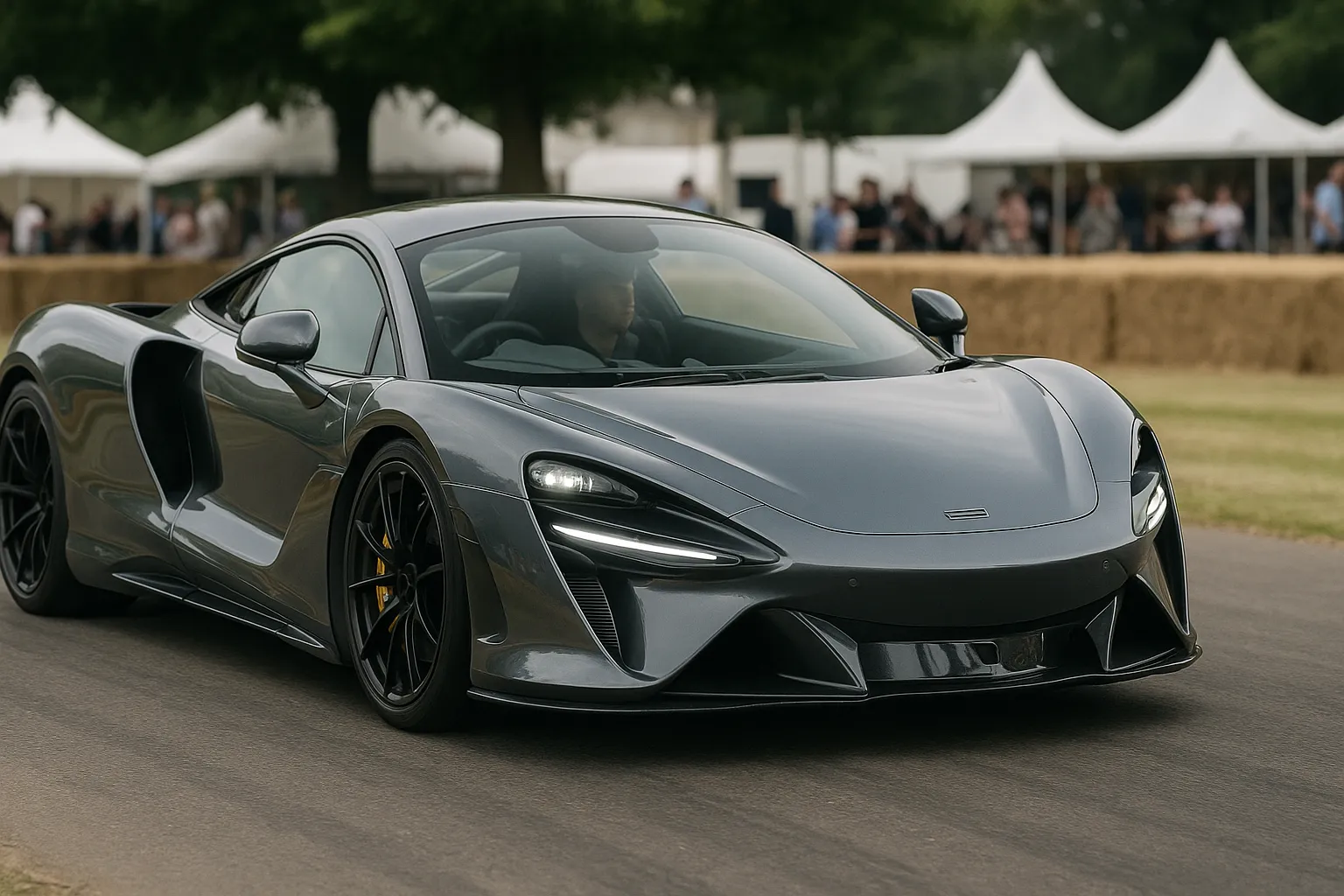
The preview image points to a smoother, more road-biased design than the track-influenced S1 LM. Visible details include rounded rear haunches, an elegant roof-mounted intake, a NACA duct in the nose area and additional ducting along the doors. Those elements naturally invite comparisons with the McLaren F1 and with Murray’s more recent creations, including the T.50 and S1 LM.
The absence of a prominent rear wing in the teaser is significant, though not definitive. It suggests the new car may sit closer to the grand touring end of the spectrum than the Le Mans-inspired models shown previously by the Special Vehicles division. If that proves correct, the car could be positioned as an intimate, highly tailored road car rather than a track-first collector special.
There are still major unknowns. The company has not confirmed whether the new model will use a central driving position, what engine it will carry, whether it will be road legal in all major markets, or whether it will be based mechanically on an existing Gordon Murray Automotive platform. Those questions are likely to define how closely the car follows the McLaren F1 template in practice, rather than just in appearance.
Why the McLaren F1 connection matters

The McLaren F1 remains one of the most influential supercars ever built. Designed under Gordon Murray’s direction, it established a formula that still resonates: low weight, a compact footprint, a driver-focused cabin and a naturally aspirated V12 engine rather than a dependence on forced induction or hybrid complexity. The F1 GTR’s overall victory at the 24 Hours of Le Mans in 1995 only deepened that reputation.
Gordon Murray Automotive has already built its modern identity around some of those principles. The T.50 is often discussed as a spiritual successor to the F1 because of its central driving position, lightweight construction and naturally aspirated V12 character. The T.33 took a somewhat different route, packaging similar values into a two-seat format. The Special Vehicles division then used Monterey last year to show the Le Mans GTR and S1 LM, both of which drew from the F1 GTR story.
This new car appears to extend that sequence. The distinction is important: an F1-inspired Gordon Murray model is not a McLaren product, and there is no indication here of a formal tie to McLaren’s current road-car operation. Instead, the connection is through Murray’s authorship of the original F1 and his continuing use of the ideas that made it famous.
A different kind of supercar moment
The timing also says a lot about the market. Monterey Car Week has become one of the key global stages for limited-run supercars, continuation-style projects, one-off commissions and collector-focused performance cars. Manufacturers use the event not just to show new products, but to speak directly to the kinds of buyers who can commission them.
That makes Gordon Murray Special Vehicles a natural fit. The division’s role is not to chase volume. It exists for highly specialized cars, often with historical or personal significance for clients. In that sense, the August 14 debut is less about showroom traffic and more about brand definition: it shows what the company thinks its most exclusive customers want from an analog supercar in an era increasingly defined by electrification, active systems and immense power outputs.
For regular car buyers, a new Gordon Murray special will be financially out of reach. But it still matters. Halo cars influence design language, engineering priorities and enthusiast expectations well beyond their tiny production runs. When a respected engineering-led company continues to emphasize weight reduction, visibility, packaging and driver involvement, it offers a counterpoint to the industry’s broader trend toward heavier, more complicated performance cars.
What buyers and collectors will be watching
The biggest questions now are practical ones. Production volume will determine just how collectible the car becomes. Pricing will reveal whether it is positioned near other limited Gordon Murray models or pushed further into one-off commission territory. Powertrain details will matter, especially if the car retains the naturally aspirated V12 character that has become central to the company’s recent identity.
The cabin layout will also be closely scrutinized. A central driving position would make the F1 reference far more explicit, while a conventional two-seat configuration would suggest a different mission. Transmission choice, curb weight, aerodynamic approach and road legality will all help clarify whether this is a tribute, a new model derivative or a more personal coachbuilt-style special.
The design shown so far suggests restraint rather than visual shock value. If the final car follows that direction, it could appeal to collectors who see the McLaren F1 not only as a performance landmark, but as an example of disciplined engineering and timeless proportion. That is a different pitch from many modern hypercars, which often rely on enormous wings, complex hybrid systems and aggressive surfacing to signal performance.
The bigger picture
Gordon Murray Special Vehicles’ Monterey debut reinforces a growing split in the top end of the performance market. On one side are electrified hypercars chasing extreme acceleration and technical novelty. On the other are small-batch machines built around tactility, heritage and a sense of mechanical purity. This new Gordon Murray project appears likely to sit firmly in the second camp.
Until the covers come off on August 14, the details remain deliberately limited. Still, the available design clues are clear enough to set expectations: this is set to be another exclusive Gordon Murray supercar with a strong visual and philosophical link to the McLaren F1 era, likely aimed at collectors who value lineage and execution as much as outright performance numbers.