Hennessey Blackbird brings a naturally aspirated V8 and manual gearbox to the hypercar class
Hennessey’s new Blackbird takes a deliberately low-tech route for a seven-figure hypercar, pairing a bespoke 6.2-liter V8 with rear-wheel drive, a six-speed manual and no hybrid assistance.
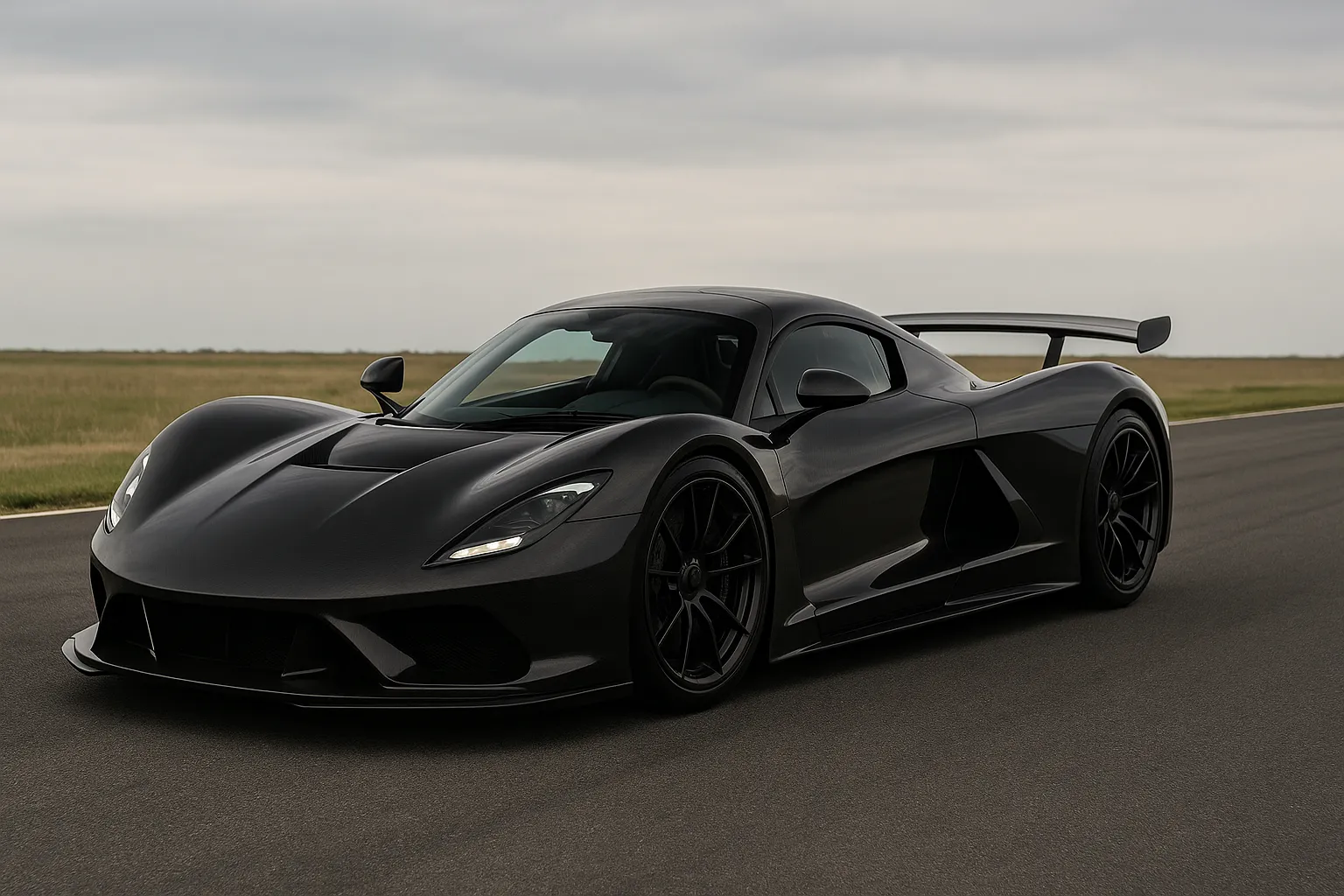
Hennessey has revealed the Blackbird, a limited-production hypercar that moves against one of the strongest trends in the modern performance-car world. Instead of using hybrid boost, turbocharging, all-wheel drive or a complex digital interface to chase the largest possible numbers, the Blackbird is built around a naturally aspirated V8, a six-speed manual gearbox and rear-wheel drive.
The car is scheduled for a public appearance during Monterey Car Week in California, where it will arrive as Hennessey’s third bespoke hypercar project. Production is planned to be capped at 71 cars, with pricing announced from £1.86 million. Final market-by-market pricing and delivery timing have not been fully detailed.
A hypercar built around driver involvement
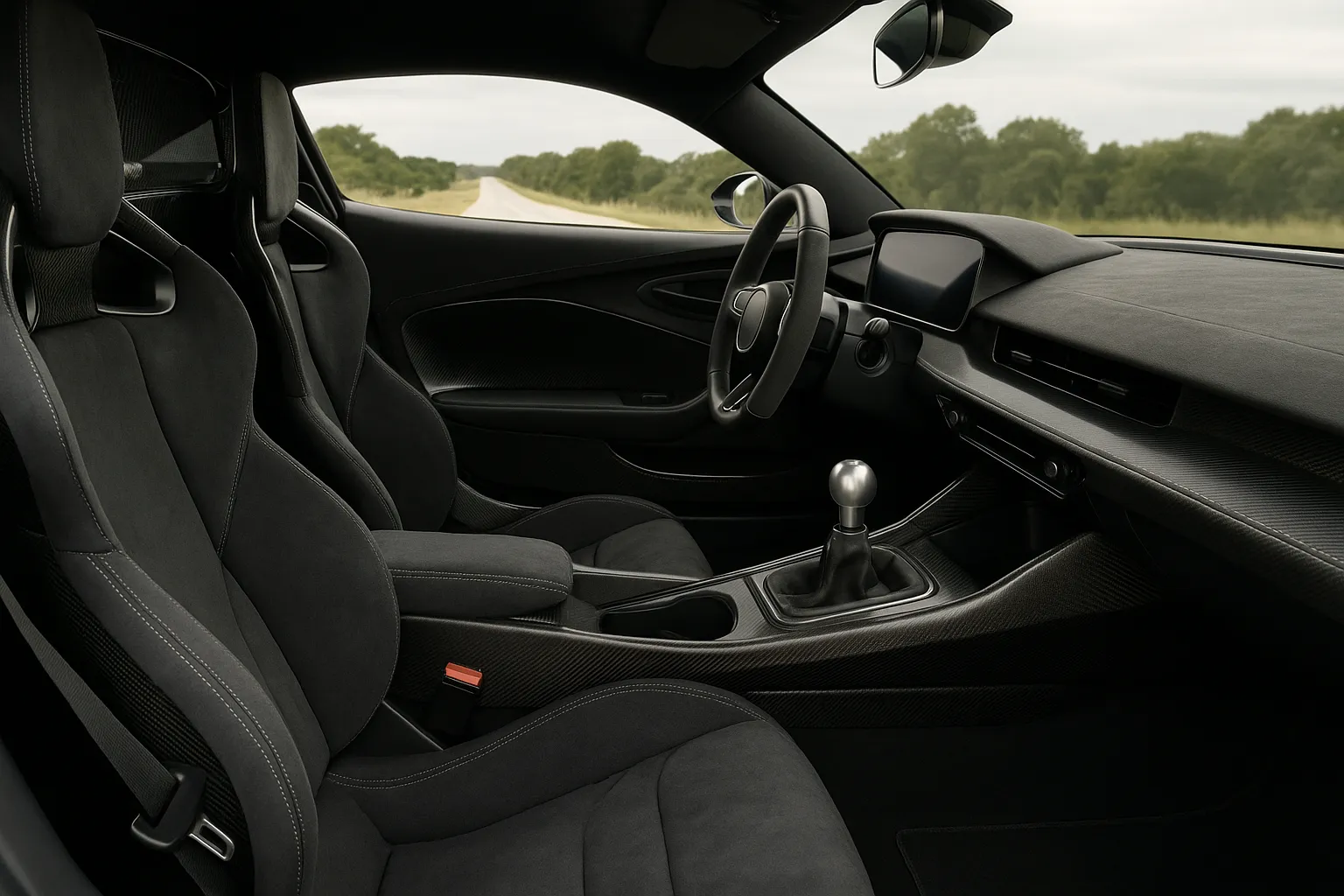
The Blackbird’s core layout is deliberately traditional: engine in the middle, power sent to the rear wheels, driver changing gears manually. In a segment increasingly defined by electrified torque fill, multi-motor all-wheel drive and active software systems, that makes the Blackbird unusual before its final acceleration or top-speed figures are even confirmed.
The engine is a 6.2-liter V8, but it is not being presented as a borrowed crate motor. Hennessey says the unit is a bespoke design developed with Ilmor, a company known for high-performance racing and specialty powertrains. The V8 is expected to rev as high as 9,000 rpm and produce roughly 800 to 850 bhp, although final output has not yet been locked down publicly.
That output would not put the Blackbird at the very top of the horsepower table among current hypercars. That appears to be the point. Hennessey is positioning this car less as a headline-number machine and more as a response to buyers who want mechanical feel, engine response and a more direct connection between driver and car.
No hybrid assist, no turbochargers
The absence of hybrid hardware is one of the Blackbird’s defining choices. Electrification has become common at the top end of the market because it offers clear benefits: instant torque, better low-speed response, torque vectoring possibilities and enormous combined power outputs. The trade-off is added weight, greater packaging complexity and a different kind of driving character.
Hennessey’s approach removes that entire layer. There is no electric motor filling gaps in the powerband and no turbocharger building boost. In theory, that should give the Blackbird sharper throttle response and a more linear connection between the accelerator and the rear tires. It also allows the car to target a relatively low weight for a modern hypercar.
The company is quoting a mass of around 1,360 kg, helped by a carbon-fiber chassis and the decision to avoid heavy hybrid components. For context, that weight is closer to lightweight supercar territory than the heavier end of the electrified hypercar field. The final curb weight may vary depending on specification, but the target suggests Hennessey is prioritizing power-to-weight ratio and agility rather than relying solely on outright power.
Manual gearbox as a statement
The six-speed manual transmission is likely to be one of the Blackbird’s biggest talking points. Manual gearboxes have nearly disappeared from the hypercar category because automated dual-clutch transmissions are faster, easier to calibrate for launch control and better suited to the extreme torque outputs of modern electrified powertrains.
A manual is slower in a laboratory sense, but speed is not the only reason people buy cars at this level. For collectors and serious drivers, a gated or conventional manual shift can be part of the appeal because it demands participation. It turns gear selection into an event and makes the driver responsible for timing, smoothness and mechanical sympathy.
That choice also gives the Blackbird a clearer identity. Many ultra-expensive performance cars now deliver astonishing speed with similar underlying ingredients: carbon structure, hybridized powertrain, advanced aerodynamics and computer-managed traction. The Hennessey instead leans into scarcity, sound, revs and mechanical interaction.
What remains unknown
Several important specifications are still unconfirmed. Hennessey has not publicly finalized the Blackbird’s exact power output, performance figures, aerodynamic data or full interior specification. The available details describe an intentionally analog cabin direction, with minimal digital distraction, but the complete production layout has not been fully outlined.
That means comparisons with cars from Ferrari, McLaren, Lamborghini, Aston Martin, Koenigsegg, Pagani or Bugatti should remain cautious for now. Without verified acceleration, braking, lap-time or top-speed data, the Blackbird is better understood at this stage as a design and engineering statement rather than a fully quantified rival.
It is also worth separating the Blackbird from Hennessey’s best-known history in modified American performance cars. The company built its name on high-output tuning packages, but its bespoke hypercar projects have moved it into a different arena. With the Blackbird, the brand is not simply adding more power to an existing platform; it is presenting a purpose-built carbon-fiber car with its own powertrain brief.
Why it matters
For car buyers, the Blackbird is not relevant in the normal sense. A seven-figure, 71-unit hypercar is not a shopping-list competitor for even the most expensive mainstream sports cars. But cars like this influence the performance market in ways that go beyond sales volume.
First, it shows there is still demand at the top of the market for non-electrified performance. Regulations and emissions targets are pushing the broader industry toward electrification, and that shift is not slowing. Yet the Blackbird suggests a small group of wealthy buyers still places high value on naturally aspirated engines, manual transmissions and relatively low mass.
Second, it highlights a split forming among enthusiast cars. One path uses technology to make cars faster, more stable and more accessible at extreme speeds. The other path treats involvement as the luxury item. Hennessey is betting that, for a limited number of customers, the sound of a high-revving V8 and the effort of shifting gears are worth more than an additional few hundred horsepower.
Finally, the Blackbird could become part of a broader collector trend. As manual, naturally aspirated performance cars become rarer, especially at the hypercar level, limited-run examples may carry significance beyond their raw specifications. That does not guarantee long-term value, but it does explain why manufacturers continue to build analog halo cars even as the industry moves toward electrified performance.
The Hennessey Blackbird is therefore more than another exotic car announcement. It is a deliberate counterpoint to the current hypercar formula: lighter rather than more complex, mechanical rather than heavily electrified, and focused on the driver’s role rather than reducing it. Whether that makes it quicker than its rivals is still unknown. What is already clear is that Hennessey wants the Blackbird to be judged by more than numbers alone.