Honda, Nissan and Mitsubishi Keep Collaboration Alive After Merger Talks Collapse
Honda, Nissan and Mitsubishi are still pursuing cooperation on future vehicle technology after earlier Honda-Nissan merger discussions fell apart over control of the combined business.
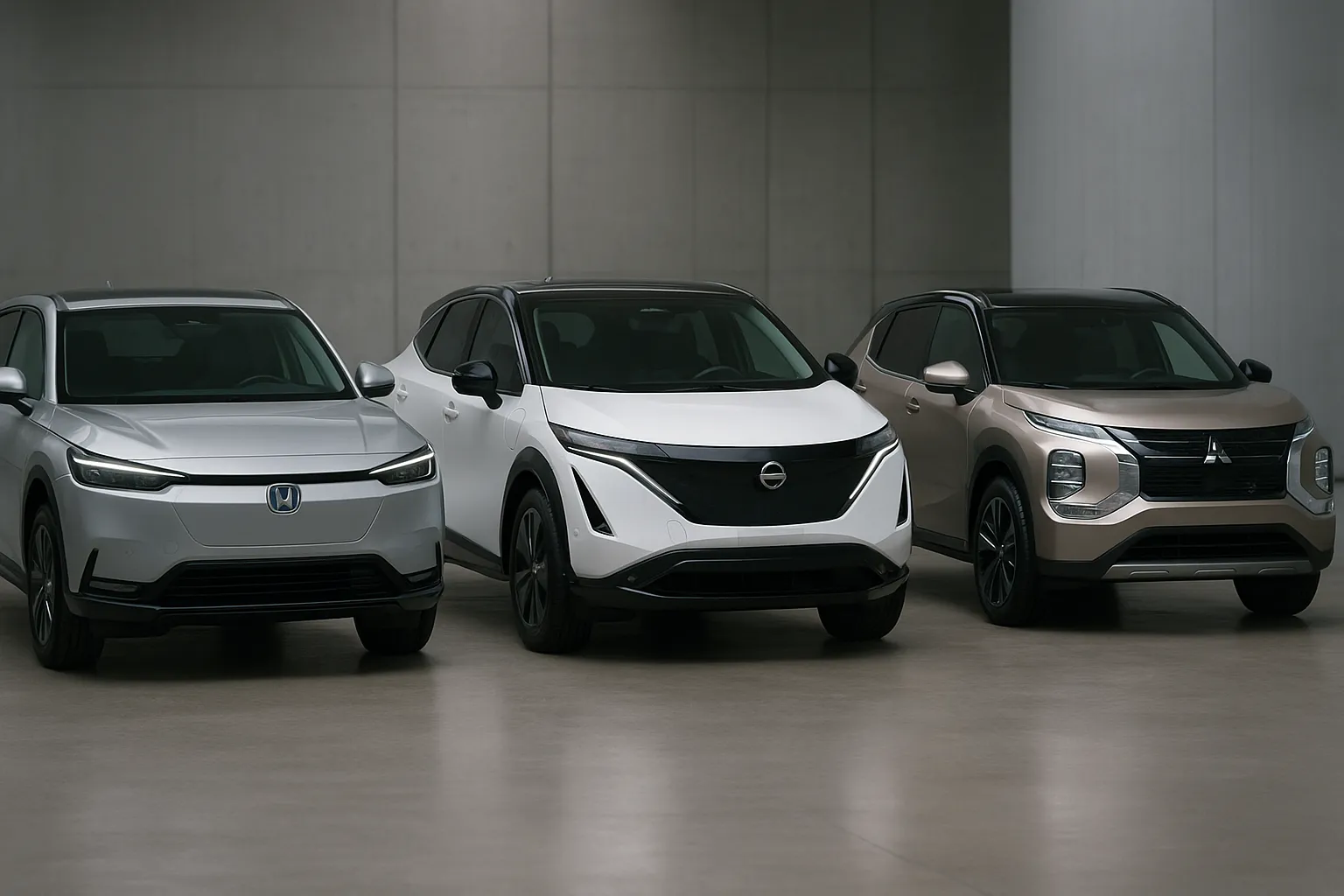
Honda, Nissan and Mitsubishi are not merging, but they are not walking away from each other either.
After earlier talks about a broader Honda-Nissan business combination fell apart, the three Japanese automakers are still moving ahead with cooperation where it makes the most sense: future vehicle technology. The continued collaboration keeps open a path for shared development in areas such as electrification, software and other next-generation systems, without forcing the companies into a single corporate structure.
That distinction matters. A merger would have reshaped two of Japan’s biggest carmakers and potentially altered everything from product planning to factory strategy. A collaboration is more limited, but it can still affect what buyers see in showrooms over the next several years.
The merger did not survive the control question
The most important context is that Honda and Nissan had explored a much deeper business integration after discussions emerged in late 2024. The idea was significant because it would have brought together two major global automakers facing similar pressures: heavy investment demands for electric vehicles, tougher software expectations, rising competition from China, and the cost of meeting emissions regulations in multiple markets.
The talks did not progress into a completed deal. A key sticking point was control. The proposal was widely understood to involve Honda taking the lead in the future structure, with Nissan potentially becoming subordinate rather than an equal partner. Nissan resisted that outcome, and the plan collapsed before the companies could create a combined enterprise.
That leaves the automakers in a more familiar position: independent companies looking for ways to reduce development costs and accelerate technology without giving up corporate identity.
Collaboration is different from consolidation
For car buyers, the difference between a merger and a partnership can be practical.
A full merger might eventually lead to shared dealerships in some markets, fewer overlapping models, consolidated manufacturing, revised brand positioning and deeper platform sharing. It could also create uncertainty for owners if brands reorganized product lines or regional operations.
A collaboration is narrower. Honda, Nissan and Mitsubishi can still pool work in select areas while continuing to compete in showrooms. A future Honda and Nissan may share a component family, battery strategy, software architecture or supplier relationship, yet still be engineered, tuned and sold as distinct products.
That approach is already common across the industry. Automakers increasingly cooperate on expensive back-end systems while preserving brand character at the customer-facing level. The reason is straightforward: software platforms, battery technology, driver-assistance hardware and connected-car systems are expensive to develop, and the financial return is uncertain unless they are deployed at scale.
EVs and software are the likely center of gravity
The continuing Honda-Nissan-Mitsubishi cooperation is most relevant in electrification and vehicle software. Those are the areas where scale is becoming essential.
EV development requires major spending on batteries, power electronics, thermal management, vehicle platforms and manufacturing processes. Software-defined vehicles add another layer of complexity, including operating systems, over-the-air update capability, cybersecurity, digital cockpit integration and advanced driver-assistance functions.
No specific jointly developed model, launch date or market rollout has been confirmed in the available information. That uncertainty is important. A technology partnership does not guarantee that a Honda-badged vehicle and a Nissan-badged vehicle will share a showroom-ready platform in the near term. It may begin with less visible work: common software modules, shared research, battery procurement discussions or component-level cooperation.
Even so, that kind of behind-the-scenes work can eventually influence vehicle pricing, reliability, feature availability and update support.
Why Mitsubishi is part of the picture
Mitsubishi’s role adds another layer. Nissan and Mitsubishi already have an established corporate relationship through their alliance structure, and Mitsubishi has strengths in small vehicles, plug-in hybrids and certain regional markets. Honda brings a different customer base, engineering culture and global footprint.
For Mitsubishi, participation in a wider technology study could help spread development cost and keep its future products competitive. For Nissan, it helps preserve optionality after the failed merger talks. For Honda, it provides a way to access scale benefits without taking on the complications of absorbing a rival automaker.
The three companies do not need identical goals for the collaboration to be useful. One may be looking for software scale, another for EV component savings, and another for regional product flexibility. The challenge is aligning enough of those needs to produce real vehicles and systems, not just statements of intent.
What changes for current owners?
For current Honda, Nissan and Mitsubishi owners, nothing immediate changes. Existing warranties, service networks, parts support and model lineups remain brand-specific. There is no indication that vehicles already on the road will be affected by the failed merger or the continuing partnership.
Owners should not expect a sudden blending of dealer operations or service procedures. A Honda dealer remains a Honda dealer, and the same applies to Nissan and Mitsubishi retailers.
The possible benefits would arrive later. If the companies successfully share development work, future owners could see more competitive EV pricing, broader availability of driver-assistance features, improved infotainment systems or faster deployment of connected services. The downside is that shared technology can also spread common problems if execution is poor, as seen elsewhere in the industry when multiple brands rely on the same software or electronic architecture.
What it means for shoppers
Car shoppers should view the collaboration as a long-term signal rather than a reason to delay a purchase today.
If you are shopping for a current Honda CR-V, Nissan Rogue, Mitsubishi Outlander, Honda Civic, Nissan Sentra or any other existing model, this news does not change the vehicle’s specifications, warranty coverage or expected ownership experience. Purchase decisions should still be based on price, reliability history, safety ratings, fuel economy, charging needs and dealer support.
Where it becomes relevant is for shoppers planning around future EVs or plug-in hybrids. A continued partnership could help the brands bring more competitive electrified vehicles to market, especially if shared components reduce cost or speed development. That could matter in segments where Japanese automakers have faced increasingly strong competition from Tesla, Hyundai, Kia, Chinese automakers in global markets, and established European brands.
Buyers should still wait for confirmed product details before drawing conclusions. Partnership announcements are not the same as production plans.
Why the industry is watching
The collaboration reflects a broader industry pattern: automakers are trying to stay independent while admitting that independence is becoming more expensive.
Electrification and software have shifted the economics of car development. Traditional strengths such as engine engineering, manufacturing quality and dealer networks still matter, but they are no longer enough. Automakers now need battery supply strategies, cloud infrastructure, in-car app ecosystems, automated-driving roadmaps and the ability to update vehicles after sale.
That pressure is especially intense for companies that sell globally but do not have unlimited capital. Honda, Nissan and Mitsubishi all have strong name recognition, but each faces different challenges in future technology investment. Working together in targeted areas may be a more realistic solution than forcing a merger that one party does not want.
The bottom line
The failed Honda-Nissan merger talks closed the door on a sweeping corporate combination, but not on cooperation. Honda, Nissan and Mitsubishi still see value in working together on the expensive technologies that will define future vehicles.
For buyers, the near-term impact is limited. For the industry, the message is larger: even major automakers are looking for partners as EVs, software and connected services raise the cost of staying competitive. The success of this collaboration will not be measured by announcements. It will be measured by whether the companies can turn shared development into better, more affordable and more reliable vehicles.