Japan Earthquake Forces Honda and Toyota Production Pauses, With Possible U.S. Inventory Effects
A 7.1-magnitude earthquake in Japan’s Kyushu region has led Honda and Toyota to halt some production, creating a potential ripple effect for Japan-built vehicles bound for the U.S.
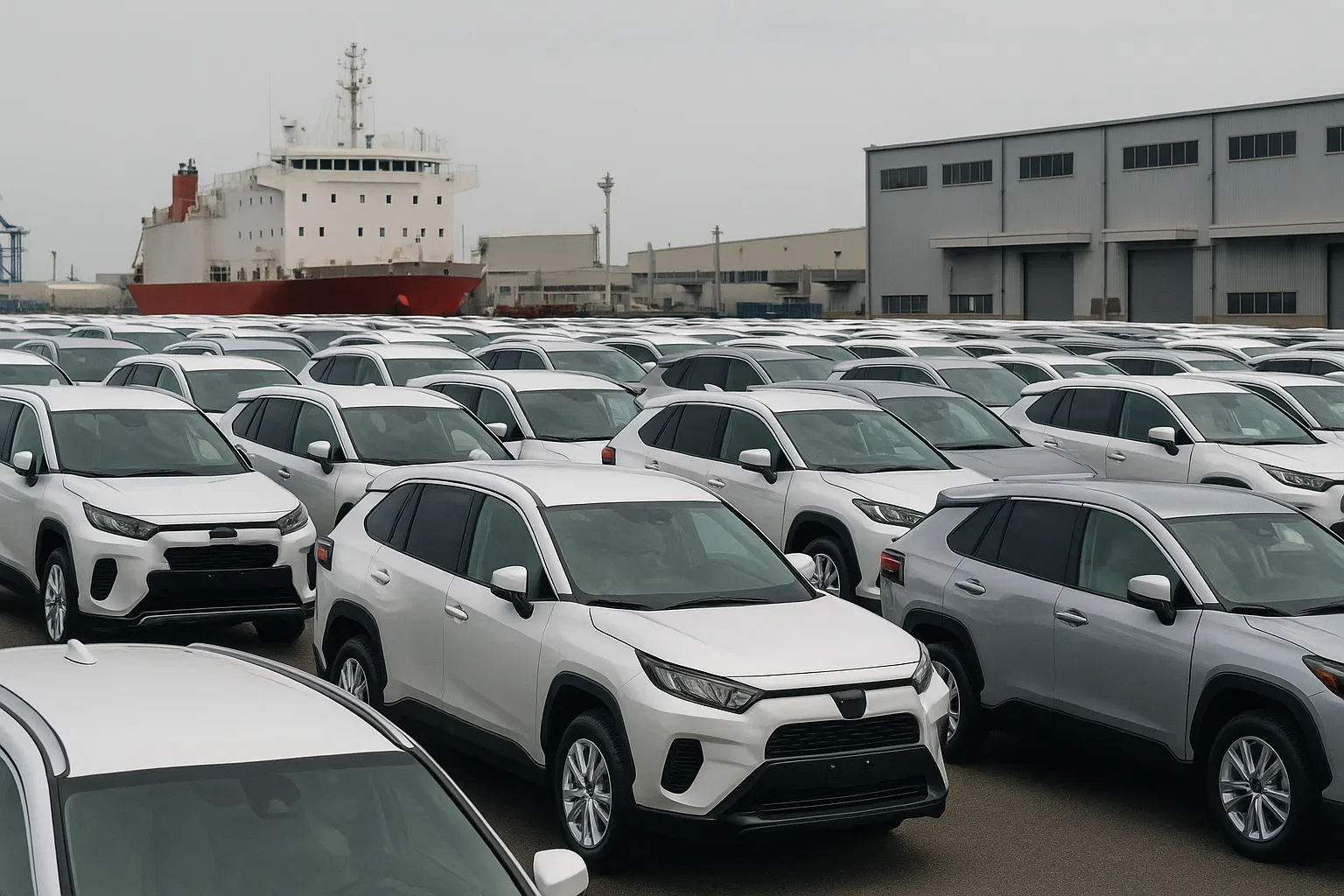
A 7.1-magnitude earthquake that struck Japan’s Kyushu region on July 28 has interrupted production at parts of the country’s auto industry, with Honda and Toyota among the manufacturers announcing temporary shutdowns.
The immediate impact is centered in Japan, but the effects may not stay there. Some plants affected by the disruption build vehicles that are exported to the United States, which means American dealers and shoppers could see changes in availability if production pauses last long enough or if logistics networks take additional time to recover.
At this stage, the most important point for buyers is also the least dramatic: this is a developing supply-chain issue, not a confirmed across-the-board shortage. Automakers routinely pause production after major earthquakes to inspect buildings, equipment, roads, rail lines, ports, and supplier operations. Even when a vehicle assembly plant avoids major damage, a missing component from a nearby supplier can stop final assembly.
Why Kyushu matters to the car business
Japan’s auto industry is highly integrated. Vehicle plants, engine and transmission facilities, electronics suppliers, stamping operations, and logistics hubs often operate on tightly coordinated schedules. That efficiency helps automakers control quality and cost, but it can also make the network vulnerable when a natural disaster affects one region.
Kyushu is especially important because it is home to major manufacturing and supplier operations. For export markets such as the U.S., vehicles built in Japan must also move through ports and shipping channels before reaching dealers. A disruption therefore has several potential pressure points: factory output, supplier parts flow, inland transportation, port handling, and ocean shipping.
Honda and Toyota both have broad North American manufacturing footprints, so most vehicles sold by those brands in the U.S. are not necessarily exposed to a Japan-only disruption. Many high-volume models are built in the United States, Canada, or Mexico. However, certain Japan-built models and trims can be more vulnerable to production interruptions overseas. That distinction matters for shoppers comparing vehicles on dealer lots.
What could change for U.S. shoppers
For buyers, the most likely near-term effect would be uneven inventory rather than a sudden marketwide shortage. A dealer may have normal stock of North American-built models while seeing tighter supply of specific Japan-built vehicles, specialty trims, performance variants, hybrids, or low-volume configurations.
If the shutdowns are brief and inspections conclude quickly, the effect may be limited to delayed arrivals or minor allocation adjustments. If production or supplier interruptions stretch on, the impact could become more visible in dealer inventory several weeks later. Vehicles already built and in transit may continue arriving, while cars scheduled for future production could be delayed.
That timing gap is important. Factory disruptions do not always show up immediately at U.S. dealerships. Vehicles moving from Japan to America typically pass through export staging, ocean shipping, port processing, and domestic distribution before reaching the sales floor. A production pause in late July could therefore influence retail availability later, depending on model, region, and shipping schedules.
Shoppers with flexible preferences may notice little change. Those looking for a specific color, trim, drivetrain, or limited-production model could face longer wait times if that vehicle is sourced from an affected plant. Buyers with a pending factory order or allocation should ask their dealer for updated timing rather than assuming the original delivery estimate still applies.
Owners are less likely to see immediate service problems
For current Honda and Toyota owners, the situation is less likely to affect routine maintenance in the short term. Service parts supply chains are separate from new-vehicle production in many cases, and dealers typically carry common maintenance items such as filters, fluids, brake components, and wear parts.
That said, specialized parts, body panels, electronics, or components for lower-volume Japan-built vehicles can be more sensitive to overseas disruptions. Owners waiting on collision repairs or uncommon replacement parts should stay in contact with their service department or body shop for realistic arrival estimates.
The practical advice is simple: do not delay critical maintenance because of headlines about factory shutdowns, but do ask for an update if a repair already depends on a backordered Japan-sourced part.
Why automakers pause after earthquakes
Production stoppages after a major quake are not only about visible damage. Automakers must confirm that factory structures, paint shops, robotics, tooling, conveyors, test equipment, and safety systems are operating correctly. Precision manufacturing depends on extremely tight tolerances, and even small alignment issues can create quality problems.
Suppliers face the same challenge. A plant making electronic modules, castings, fasteners, interior components, or hybrid-system parts may need to inspect equipment before restarting. Roads and rail lines may also require checks before parts and finished vehicles can move normally.
For automakers, a short pause can be preferable to rushing production and risking quality defects. Honda and Toyota have spent decades building reputations around durability and consistency, so post-earthquake inspections are part of protecting that reputation as well as worker safety.
Industry lesson: resilience still matters
The disruption is another reminder that global auto production remains exposed to regional shocks. The industry has spent years trying to improve resilience after semiconductor shortages, shipping bottlenecks, natural disasters, and pandemic-era interruptions. Even so, just-in-time manufacturing and globally specialized supply chains can still be affected by a single major event.
Automakers have several tools to limit damage: shifting some production, using alternate suppliers, adjusting shipping schedules, prioritizing higher-demand models, and drawing from existing inventory. But those options depend on the specific parts, plants, and vehicles involved. Not every model can be easily moved from one factory to another, especially when specialized tooling or Japan-specific suppliers are involved.
For enthusiasts, the models most worth watching are often the ones built in smaller numbers. Performance cars, niche imports, premium trims, and certain hybrid or electrified configurations can have less buffer in the system than mainstream vehicles assembled in multiple regions.
What to watch next
The key questions now are how long the Honda and Toyota shutdowns last, whether supplier operations in the Kyushu region recover quickly, and whether export logistics experience lingering delays. Clearer model-by-model effects should emerge only after automakers complete inspections and update production plans.
Until then, buyers should avoid assuming that every Honda or Toyota vehicle will be affected. The smarter approach is to identify where a specific vehicle is built, ask dealers about incoming allocations, and be prepared for delivery estimates to shift on Japan-built inventory.
For the broader industry, the earthquake underscores a familiar reality: even the most disciplined manufacturing systems can be interrupted by events outside the factory gates. For consumers, the impact may range from invisible to meaningful depending on the vehicle they want, where it is assembled, and how quickly production in Japan returns to normal.