Mazda 6e Targets Tesla Model 3 as the Electric Family Car Field Gets Tougher
Mazda’s new 6e brings the Mazda 6 nameplate into the EV era with Chinese production, a five-door body and ambitions to challenge the Tesla Model 3.
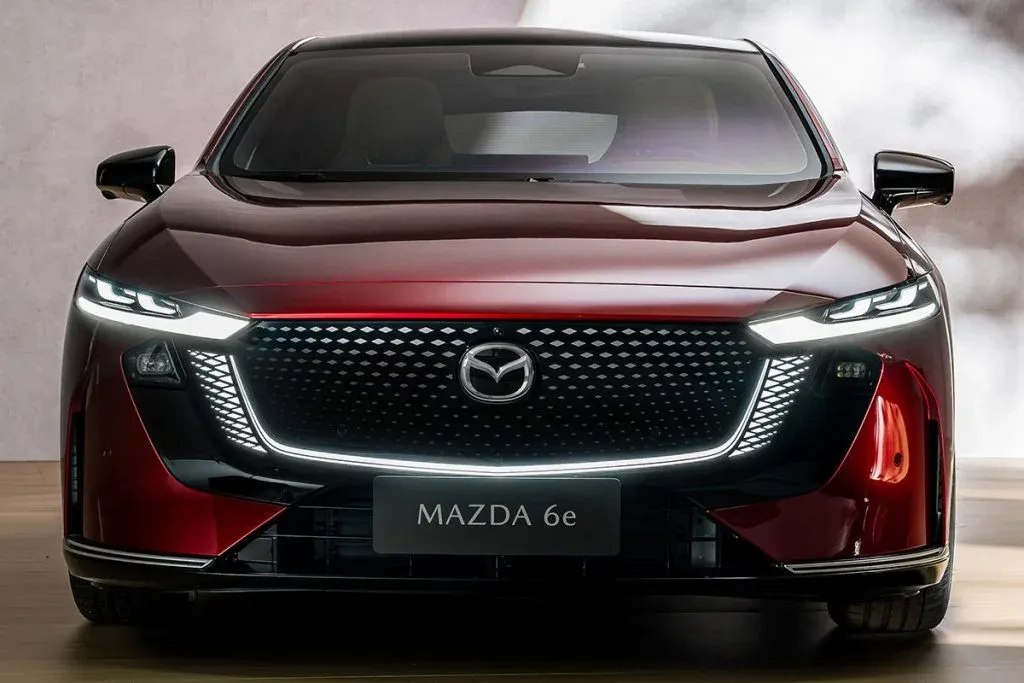
Mazda’s electric return to the family-car class puts Tesla on notice
The Tesla Model 3 has spent years as one of the easiest electric cars to recommend to private buyers, company-car drivers and fleets. It combined long range, rapid charging access, strong performance and relatively simple ownership at a time when many mainstream rivals were still finding their feet.
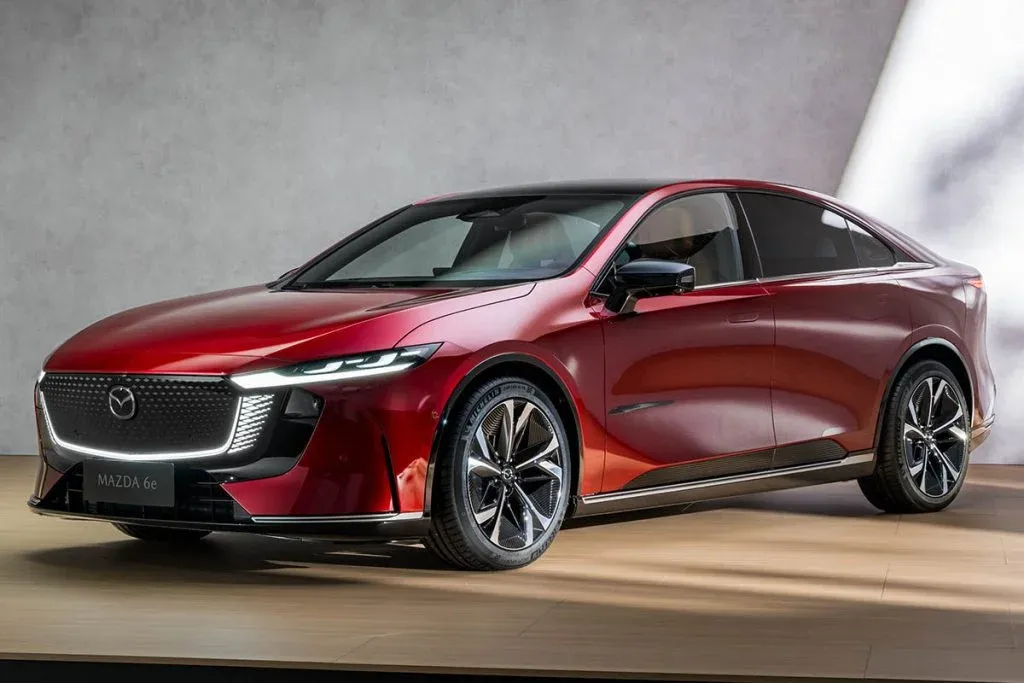
That advantage is no longer as clear as it once was. The latest challenger is the Mazda 6e, a new electric five-door hatchback that effectively fills the gap left when the petrol-powered Mazda 6 disappeared from Mazda’s UK line-up in 2022. Rather than returning as another conventional saloon or estate, the 6e reimagines Mazda’s family car as a battery-electric model built with help from China’s Changan Automobile.
That detail matters. The 6e is not simply a familiar Mazda formula with an electric drivetrain added. It reflects a wider industry shift: established Japanese and European brands are increasingly using Chinese platforms, factories and partnerships to move faster in the EV market.
Why the Model 3 remains the benchmark
The Model 3 is still the car many electric family cars are measured against. Its reputation rests on more than acceleration figures. For buyers, the appeal has been the whole package: a usable cabin, low running costs, strong efficiency, over-the-air updates and access to Tesla’s charging ecosystem.
It also became a fleet favorite because it made the transition to electric driving feel relatively low-risk. For company-car users covering regular motorway mileage, charging confidence and predictable running costs can matter as much as cabin trim or styling.
But the Model 3’s dominance has weakened as rivals have improved. Newer EVs now offer competitive ranges, quieter cabins, faster charging, better equipment levels and more conventional interior controls. Some buyers also prefer alternatives with dealer networks that feel closer to the traditional ownership experience.
The Model 3 has been updated during its life, but the broader electric market has moved quickly. Cars such as the Mercedes CLA EV and now the Mazda 6e show that Tesla is no longer competing mostly against early-generation electric cars. It is facing models designed with the benefit of years of lessons from Tesla’s success.
What the Mazda 6e brings to the fight
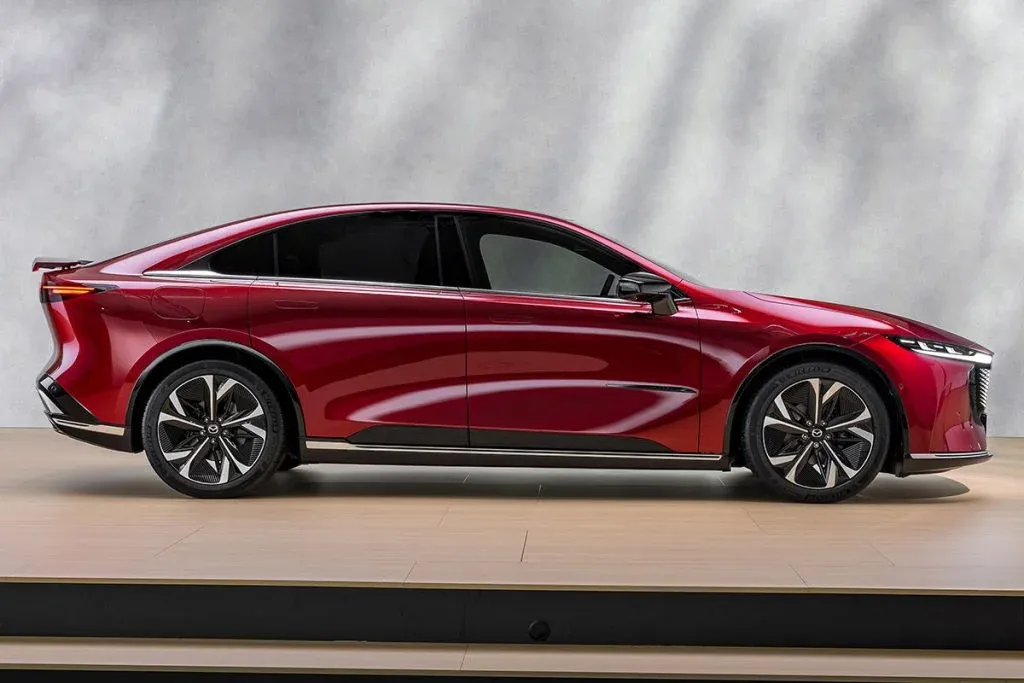
The Mazda 6e is important because it gives Mazda a fresh entrant in a part of the market where the brand had been absent. The old Mazda 6 appealed to drivers who wanted a family car with sharper styling and more engaging dynamics than the class norm. The 6e attempts to carry that idea into the EV age, but in a very different form.
Instead of a petrol saloon, the new model is an electric five-door hatchback. That body style should give it broader practicality than a traditional saloon, while keeping a lower, sleeker profile than an SUV. For buyers who do not want a high-riding crossover, that alone could be a selling point.
Mazda’s involvement with Changan has allowed the brand to bring the car to market more quickly than if it had developed every major component alone. The 6e is built in China, a fact that may shape both its cost base and its competitive positioning. It also underlines how much influence Chinese engineering and manufacturing now have on the global EV sector.
Available comparison details indicate that the 6e has range and performance figures close enough to put pressure on the Model 3. Exact trim-by-trim figures and a final test verdict were not included in the available material, so it would be premature to declare a winner here. Still, the matchup itself is revealing: Mazda believes it can place its new electric family car directly against one of the strongest names in the segment.
The driving question: can Mazda make an entertaining EV?
Mazda has long leaned on the idea that its cars should be enjoyable to drive, even when they are not sports cars. The MX-5 is the clearest expression of that philosophy, but the brand has also tried to bring responsive steering and balanced handling to its family models.
That creates a challenge for the 6e. Electric cars can be quick, smooth and quiet, but not all feel involving. Heavy battery packs, numb steering and aggressive driver-assistance tuning can make some EVs feel more like appliances than driver’s cars.
For enthusiasts, the key question is not whether the Mazda 6e can out-accelerate a Model 3 in a straight line. It is whether Mazda has managed to give the car the kind of steering feel, body control and brake consistency that would make it stand out from the expanding EV crowd.
That is also where Tesla is vulnerable. The Model 3 is quick and efficient, but not every buyer loves its minimalist cabin, touchscreen-heavy control layout or firm ride. A rival that feels more intuitive, more comfortable or more emotionally satisfying could win customers even if it does not dominate every data point.
Why this matters for buyers
For shoppers, the Mazda 6e expands choice in a segment that is becoming more mature. A few years ago, choosing an electric family car often meant accepting compromises in range, charging speed, interior packaging or price. Now the competition is deeper, and the differences are becoming more about personality, usability and value.
The Tesla Model 3 will still appeal to buyers who prioritize charging convenience, efficiency and a proven ownership base. It remains one of the safest reference points in the electric car market.
The Mazda 6e, meanwhile, may appeal to drivers who want a more traditional brand experience, distinctive styling and the promise of Mazda-like road manners. Its China-linked development could also help Mazda offer a stronger equipment list or sharper pricing, although final market positioning will be crucial.
Fleet buyers will watch this closely, too. Company-car decisions are heavily influenced by total cost of ownership, reliability, charging access, residual values and driver acceptance. If the 6e can deliver competitive range and a convincing cabin at the right monthly cost, it could earn attention from businesses that previously defaulted to Tesla.
A sign of the EV market’s next phase
The Mazda 6e versus Tesla Model 3 comparison is not just about two cars. It shows how the electric vehicle market is entering a more demanding phase. Tesla helped define what an electric family car could be, but legacy brands and Chinese-backed projects are now closing the gap.
That is good news for consumers. More credible alternatives should push manufacturers to improve efficiency, comfort, pricing, charging performance and equipment. It also means buyers no longer need to treat Tesla as the automatic answer.
Mazda’s challenge is to prove that the 6e is more than a fast-tracked EV developed through a partnership. It needs to feel like a Mazda, deliver the range and performance expected in this class, and offer the everyday practicality family buyers require.
If it does, the 6e could become one of the more interesting new electric family cars on sale. Even if the Model 3 remains the benchmark, the fact that Mazda now has a direct rival shows how quickly the balance of power is changing.