Mercedes-AMG C 63 Electric prototype points to the next super-saloon rivalry
A camouflaged AMG version of the new electric C-Class has begun public-road testing, previewing Mercedes’ answer to BMW’s upcoming iM3.

Mercedes-AMG’s next C 63 is moving toward an all-electric future, and the first public-road prototype gives a useful early look at how the brand plans to translate one of its best-known performance badges into the EV era.
The heavily camouflaged test car appears to be the AMG derivative of the recently revealed Mercedes C-Class Electric. Its production name has not been confirmed, but Mercedes’ long-running naming structure makes AMG C 63 Electric the most likely badge. The car is expected to sit above regular versions of the electric C-Class and serve as Mercedes-AMG’s direct rival to BMW’s upcoming iM3, which was previewed by the M Neue Klasse Concept shown during the 2026 Le Mans 24 Hours.
Even with most of the bodywork disguised, the prototype already shows several changes that separate it from the standard electric C-Class. The wheelarches are visibly broader, particularly at the front, giving the saloon a wider and more planted stance. The wheels and tyres also appear wider than those on mainstream versions, while larger brake discs and substantial calipers can be seen behind the camouflage-clad rims.
Those details matter because they point to the engineering priorities behind the car. High-performance EVs can deliver huge acceleration, but managing weight, heat and repeated braking loads is just as important as headline power. Bigger brakes and wider tyres suggest AMG is preparing the electric C 63 for sustained hard use rather than simply building a quick straight-line variant.
The front and rear bumpers remain well hidden, but the final car is likely to use more aggressive cooling and aero features than the ordinary C-Class Electric. Larger front openings would help feed air to the braking system and thermal management hardware, while the rear may adopt a diffuser-style treatment. The overall look, at least at this stage, appears more restrained than BMW’s recent M concept, which used a more dramatic wide-body design, splitter, rear spoiler treatment and vented bonnet. It is important to treat that comparison carefully: BMW’s car was a concept preview, while the Mercedes prototype is still disguised and may change before production.
Why this AMG matters
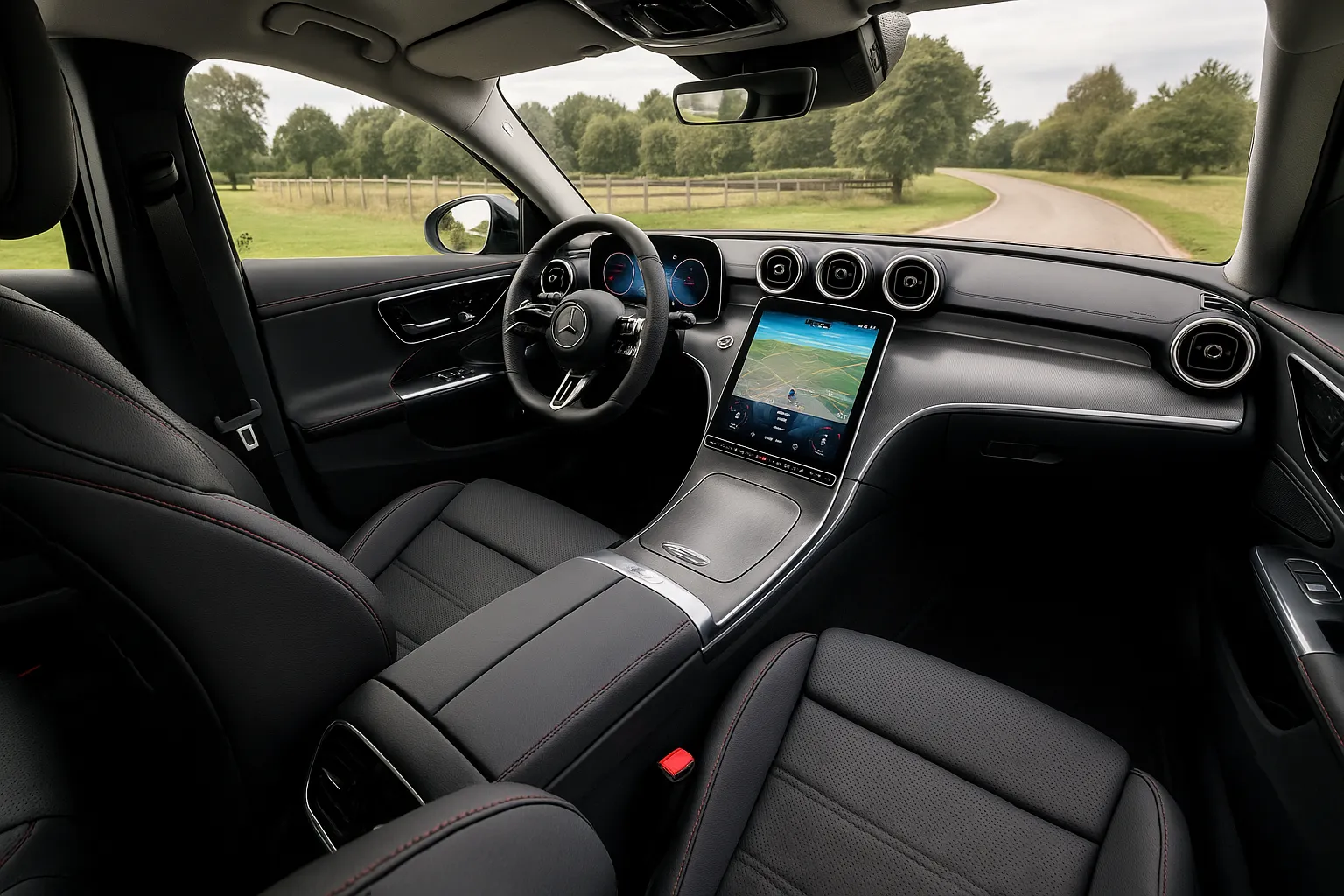
For years, the C 63 has been a defining compact executive performance car. Earlier generations built their reputation around large-capacity V8 engines, rear-drive attitude and a soundtrack that became part of the car’s appeal. The current plug-in hybrid C 63 shifted the formula dramatically, using an electrified four-cylinder powertrain instead. That move brought advanced technology and strong output, but it also changed the character of the car in a way that divided enthusiasts.
An all-electric C 63 would be an even bigger break from the past, but it could also give AMG a cleaner reset. Rather than trying to make a smaller combustion engine feel like a traditional AMG V8, the electric model can focus on the things EV performance cars do well: instant torque, precise torque distribution, rapid response and software-led driving modes. The challenge is ensuring it still feels like an AMG rather than simply a more powerful electric Mercedes.
That will be especially important because the competition is changing quickly. BMW is preparing its first electric M3 successor under the iM3 name, using the Neue Klasse design and technology direction. Audi, Porsche, Tesla, Hyundai’s N division and several Chinese brands are also pushing into high-performance EV territory. The next generation of premium sports saloons will be judged not only by horsepower, but also by battery performance, charging speed, thermal stability, chassis feel and how well the car maintains performance when driven hard.
What buyers should watch for
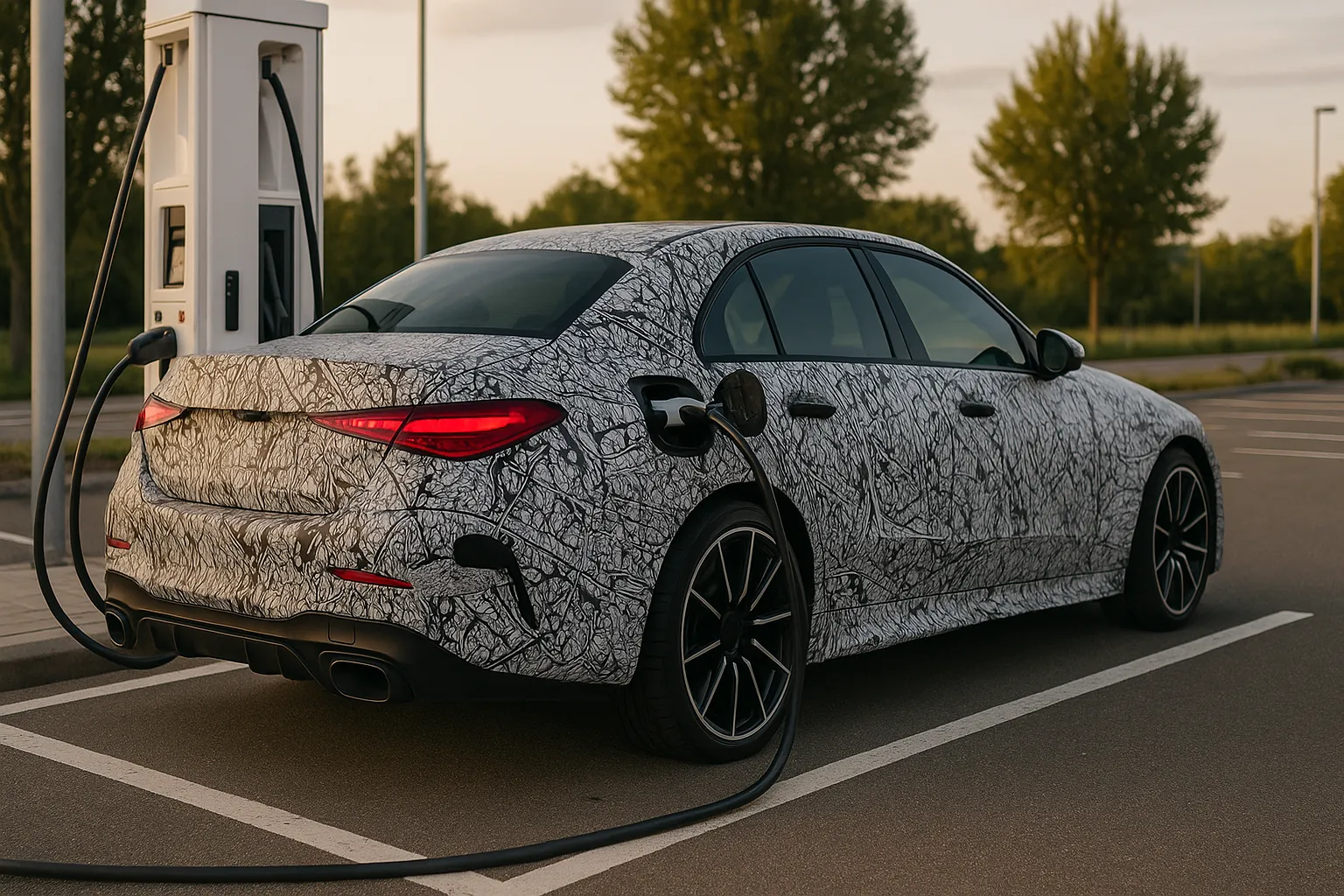
No official powertrain figures, battery capacity, range or charging details have been released for the AMG C-Class Electric. Until Mercedes-AMG confirms specifications, any output claims should be treated as speculation. Still, the prototype’s hardware gives buyers a few areas to monitor as the car develops.
The first is weight. Electric performance cars are often very quick, but battery mass can affect steering feel, braking distances and tyre wear. AMG’s job will be to make the car feel agile and repeatable, not just fast in a short burst. Wider tyres and larger brakes are encouraging signs, but suspension tuning, battery placement and torque control will be equally important.
The second is range versus performance. A C 63 Electric will need to satisfy two very different use cases: daily commuting in a premium saloon and enthusiastic driving on demanding roads. Buyers will want usable real-world range, fast charging and consistent performance when the battery is hot or partially depleted. A car that posts impressive acceleration figures but loses pace after repeated hard use would miss the point of the AMG badge.
The third is driver engagement. Electric motors can make immense power delivery feel effortless, but performance-car customers often want more than effortless speed. Steering calibration, brake-pedal feel, regenerative braking modes, stability-control tuning and sound design will all influence whether the electric C 63 feels special. AMG’s strongest products typically combine pace with a sense of occasion; carrying that into an EV saloon will be central to the car’s success.
A more measured design direction
The prototype also suggests Mercedes may be taking a relatively subtle visual approach. That would fit the C 63’s traditional role as a high-performance saloon that can still function as a daily driver or business car. The wider stance and larger wheels make the intent clear, but the test car does not currently appear as extroverted as some electric performance concepts.
That restraint could work in Mercedes’ favour. Many buyers in this segment want speed and technology without the visual drama of a track-special bodykit. Others may prefer BMW’s more expressive M design language. The contrast between these two German rivals could become one of the defining storylines of the electric sports-saloon market.
Industry significance
The AMG C 63 Electric is more than another fast EV. It represents the pressure facing legacy performance divisions as emissions rules, customer expectations and battery technology reshape their most important models. AMG, BMW M and Audi Sport all built their identities around combustion engines, but their future credibility will depend on whether they can make electric cars feel distinctive.
For owners and enthusiasts, that shift is emotional as well as technical. The next C 63 may not offer the engine note or mechanical character associated with older AMG models. In return, it has the potential to offer a different kind of performance: immediate response, advanced all-wheel-drive control and far more flexible software tuning.
The prototype does not answer every question, and Mercedes-AMG has not yet confirmed the final name, launch timing or technical specification. But it does show that the electric C 63 project is now moving beyond design studios and into real-world development. The next phase will determine whether AMG can turn one of its most famous badges into a convincing electric performance saloon for a market that is about to become far more competitive.