Nissan Pushes for Faster Vehicle Development as Competition Accelerates
Nissan wants to shorten the time it takes to bring new vehicles to market, a shift aimed at keeping pace with faster-moving Chinese rivals and rapidly changing buyer expectations.
Nissan is preparing to move faster. The automaker has made clear that its traditional product-development pace is no longer enough in a market where new rivals, especially from China, can turn fresh models around in a fraction of the time once considered normal.
The benchmark is uncomfortable for legacy manufacturers. German automakers have historically needed roughly seven years to take a new vehicle from early planning to production. Japanese automakers have often worked on a five- to six-year cycle, depending on the vehicle type and the amount of new engineering involved. Some Chinese manufacturers are now targeting about 24 months.
That difference is not just a scheduling issue. It affects what technology reaches buyers, how quickly automakers can respond to changing tastes, and whether a brand’s newest vehicle still feels new by the time it arrives in showrooms.
Why development speed now matters
For decades, long development cycles made sense. A vehicle program required major investment in engines, transmissions, platforms, crash structures, factory tooling, supplier contracts, emissions compliance, durability testing, and global homologation. Automakers could justify the time because product cycles were more predictable. A compact sedan, family SUV, or pickup could be designed for a five- to eight-year life with a mid-cycle update in between.
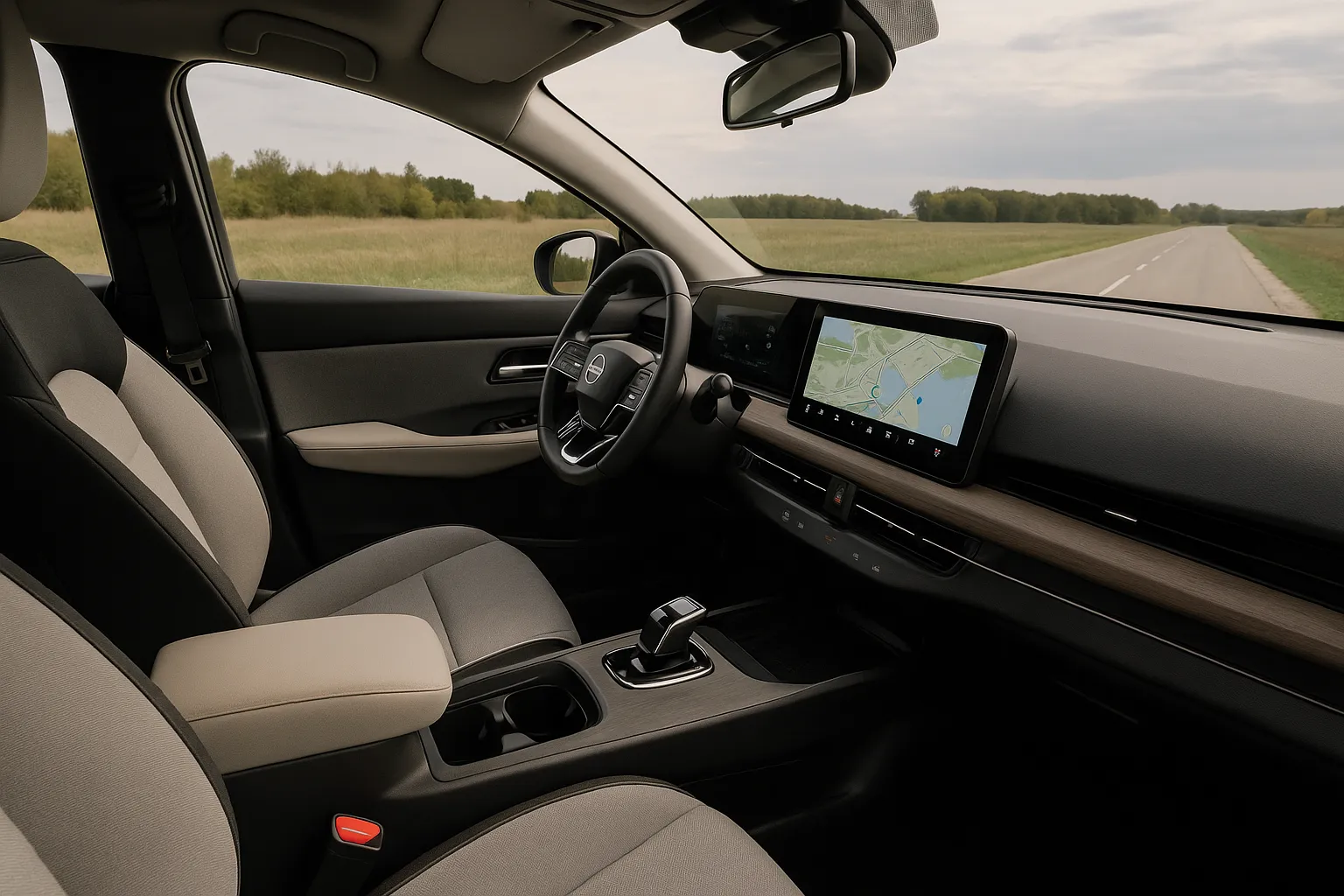
That rhythm is breaking down. Electric vehicles, advanced driver-assistance systems, connected-car features, battery chemistry, infotainment interfaces, and over-the-air software updates are evolving quickly. A vehicle that looked competitive at program approval can feel dated several years later if its screens, charging capability, driver-assistance features, or software ecosystem lag behind newer rivals.
Chinese automakers have used shorter development timelines to push frequent updates, aggressive pricing, and technology-heavy interiors. That has changed customer expectations in China, the world’s largest car market, and is increasingly influencing other regions as Chinese brands expand abroad.
For Nissan, faster development is not simply about chasing headlines. It is about staying relevant in segments where the company has major stakes: crossovers, compact cars, EVs, hybrids, and affordable global vehicles.
What Nissan has to balance

Speed can help, but rushing a vehicle to market is risky. Automakers still have to validate crash safety, reliability, battery durability, corrosion resistance, software stability, and real-world drivability. A faster program that creates quality problems can damage a brand more than a delayed launch.
That is the central challenge for Nissan. The company needs to shorten development without turning customers into beta testers. The likely path is not simply asking engineers to work faster. It means changing the way vehicles are planned, engineered, tested, and updated.
Several industry-wide tools can help. More shared platforms reduce the amount of engineering that must start from scratch. Digital simulation can identify issues earlier. Modular electrical architectures can allow more common hardware across models. Software teams can continue improving some features after launch. Supplier integration can begin earlier in the process. Regional development teams can be given more authority to tailor vehicles quickly for local buyers.
For Nissan, this could be especially important in China, where domestic automakers are setting a rapid tempo in EVs and plug-in hybrids. It also matters in the United States, where Nissan competes in core segments such as compact crossovers, midsize SUVs, pickups, and affordable cars. Buyers may not think about development cycles, but they notice when a vehicle’s cabin technology, fuel economy, charging speed, or safety features feel behind the market.
The buyer impact
If Nissan succeeds, shoppers could see newer designs arrive more frequently, with shorter gaps between concept, reveal, and sale. That could mean faster updates to infotainment systems, more competitive driver-assistance packages, improved electrified powertrains, and fresher cabin layouts.
It could also influence pricing. Automakers that reuse more components intelligently and reduce wasted engineering time can potentially control costs better. In a market where many buyers are sensitive to monthly payments, development efficiency can matter as much as horsepower or screen size.
For current owners, the implications depend on how Nissan handles software and parts commonality. A more modern electronic architecture could make future vehicles easier to update, diagnose, and service. But faster redesigns can also shorten the period during which a vehicle feels current. Owners may see newer versions arrive sooner than expected, which can affect perceived value and resale dynamics.
Enthusiasts will watch the move from another angle. Nissan has a history of building vehicles with strong identities, from the Z to the GT-R, as well as rugged SUVs and pickups in global markets. Faster development could help keep performance and specialty models technologically current, but only if the company preserves the engineering depth that gives those vehicles credibility.
The industry pressure behind the shift
Nissan is not alone. Most established automakers are being forced to rethink development as the industry moves from mostly mechanical products to vehicles that blend hardware, batteries, sensors, software, and digital services. The competitive clock is no longer set only by Detroit, Stuttgart, Tokyo, or Seoul. It is increasingly set by companies that operate more like consumer-electronics firms in their update cadence.
That does not mean every automaker can or should copy a two-year development target for every model. A low-volume sports car, a global pickup, and a mass-market EV each require different testing and certification work. Regulations also vary widely by market. What can be done quickly in one country may require more time elsewhere.
Still, Nissan’s message reflects a broader reality: the old product-planning calendar is under pressure. A five-year development program can be too slow when battery costs, charging expectations, software features, and competitors’ prices change rapidly.
What to watch next
The key question is how Nissan translates urgency into actual showroom products. Shorter development cycles would be most visible in new EVs, e-Power hybrid models, compact crossovers, and vehicles designed for China and other highly competitive markets. Watch for more shared architectures, quicker interior technology updates, and tighter links between concept vehicles and production models.
The company will also need to prove that faster does not mean cheaper in the wrong ways. Nissan’s long-term competitiveness depends on delivering vehicles that feel modern at launch while maintaining reliability, safety, and value over years of ownership.
For buyers, the takeaway is straightforward: the pace of vehicle change is accelerating. Nissan wants to close the gap with faster-moving rivals, and if it can do so without sacrificing quality, future models should feel more current when they reach dealers. For the industry, it is another sign that development speed has become a core competitive advantage, not just an internal engineering metric.