Porsche Says a Fully Electric 911 Is Not in Its Current Future Plan
Porsche has confirmed that its long-running sports-car icon will not become a pure EV under the company’s current strategy, with hybrid technology set to carry the 911 forward instead.
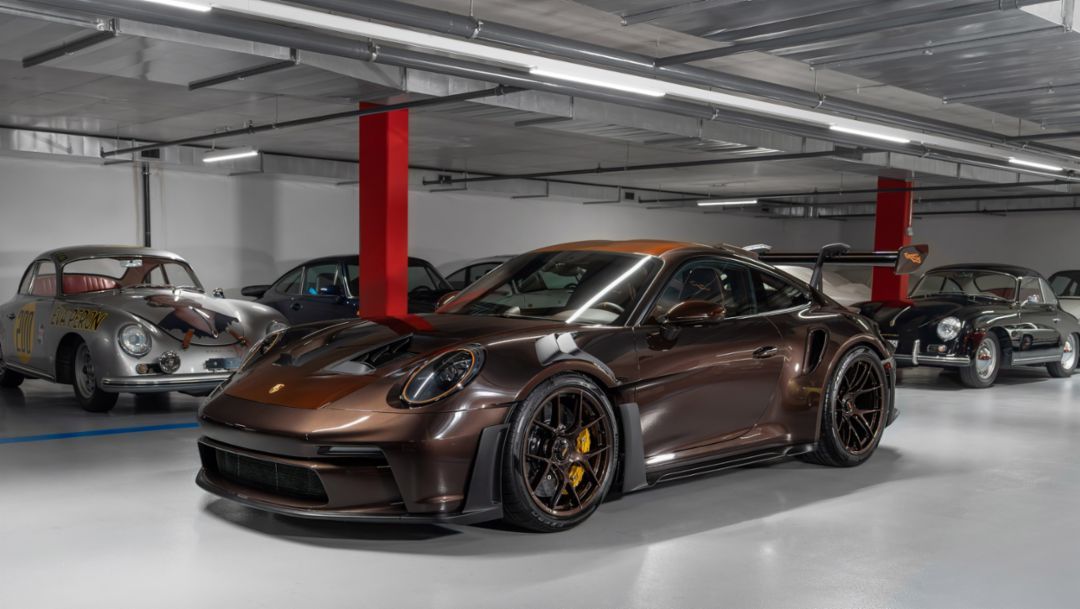
Porsche has put a clear boundary around the future of its most famous model: a fully electric 911 is not part of the company’s current plan.
The message, delivered as part of Porsche’s Strategy 2035 outline, does not mean the 911 will stand still. Instead, the company is pointing to performance hybrid technology as the route that keeps the rear-engined sports car viable as emissions rules tighten and customer expectations change. In practical terms, Porsche is preserving the 911’s combustion-engine identity while using electrification to improve performance, efficiency, and regulatory flexibility.
That distinction matters. Porsche is not rejecting electrification across its range. The Taycan remains a key electric model, the Macan has moved into a new electric generation, and the company has been preparing more battery-electric products. But the 911 sits in a different category within Porsche’s lineup: it is a brand-defining car with a layout, sound, weight balance, and driving character that buyers expect to evolve carefully rather than be reinvented abruptly.
The 911’s electric future is hybrid, not pure EV
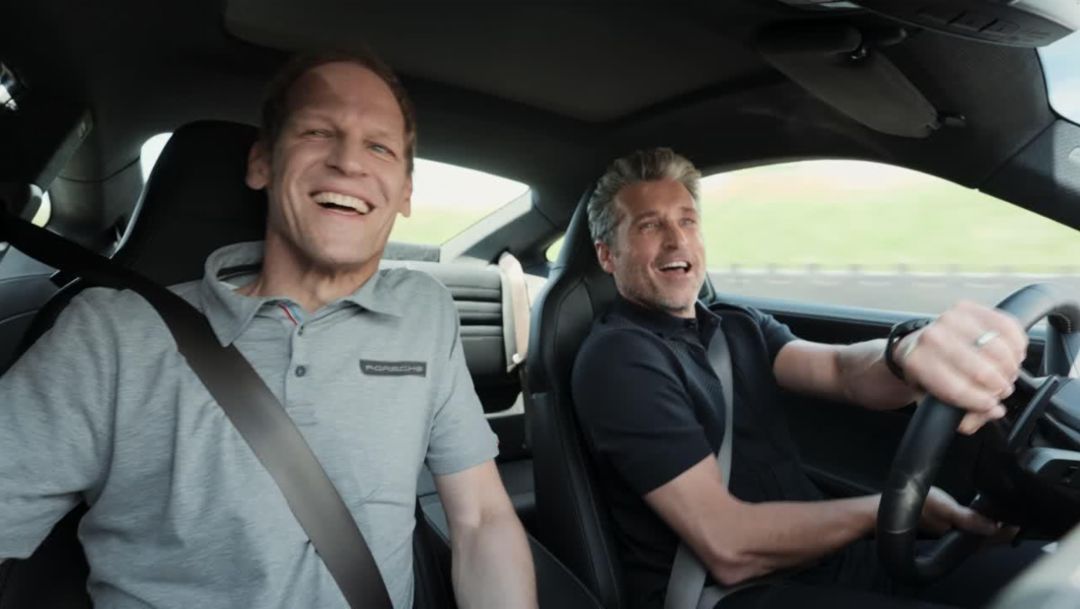
Porsche’s leadership described the 911’s dedicated performance hybrid system as a core part of the model’s future. That approach was previewed by the latest 911 GTS, which introduced hybrid assistance to the 911 range without turning the car into a plug-in hybrid or a silent EV.
The GTS system is designed around performance rather than electric-only commuting. It uses electrical assistance to sharpen response and support the combustion engine, including technology such as an electrically assisted turbocharger and an integrated motor. The point is not to make the 911 behave like a battery-electric car; it is to make a turbocharged flat-six respond more urgently while helping Porsche meet tightening technical demands.
For enthusiasts, this is the key takeaway: the 911’s flat-six engine remains central to the car’s identity in Porsche’s current product plan. The path forward is likely to involve more electrified hardware, not the immediate disappearance of pistons, exhaust sound, and fuel tanks.
That does not guarantee every future 911 variant will remain purely combustion-powered in the traditional sense. Hybrid systems may spread beyond the GTS over time, especially if they help deliver higher output, faster response, or lower fleet emissions. But the company’s current stance draws a firm line between electrified assistance and a full battery-electric 911.
Why Porsche is being cautious
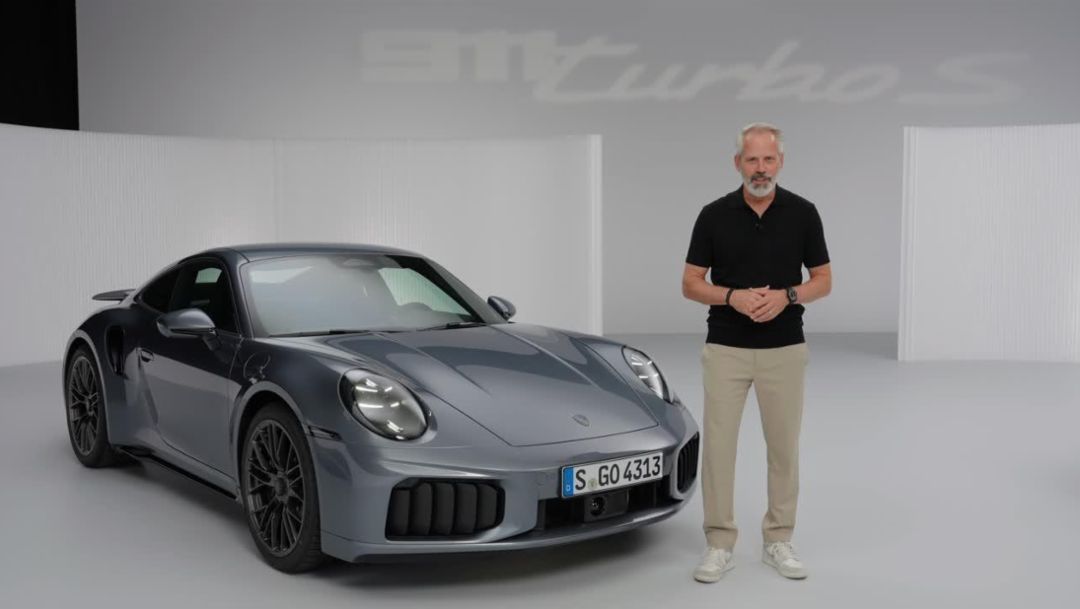
The 911 is not just another model line. It is Porsche’s emotional center and one of the few performance cars whose basic concept has survived for generations. Moving it to a pure EV platform would involve more than swapping engines for motors. It would affect mass, packaging, cooling, driving feel, sound, and the rear-biased character that defines the car.
Battery technology continues to improve, but a pure electric 911 would need to satisfy unusually difficult targets. It would have to deliver repeatable high performance, long-range usability, fast charging, low weight by EV standards, and the kind of steering and brake feel that customers expect from a 911. Porsche could engineer a fast electric sports car, but making it feel like a 911 is a different challenge.
There is also a business case. Porsche has faced a tougher financial backdrop, with operating margins falling sharply in 2025 compared with the previous year. The company has signaled expectations for a partial margin recovery in 2026, but the environment remains demanding. In that context, expensive product bets carry more risk, especially if they involve the brand’s most important nameplate.
A full EV 911 would require major investment and would need to land perfectly with buyers who are often deeply attached to the model’s mechanical character. A hybrid 911 gives Porsche a more flexible route: it can modernize the car while keeping the qualities that support pricing power, loyalty, and resale strength.
A simpler Porsche lineup may be coming
The same strategic update also pointed to a less complex product portfolio. Porsche has expanded into more body styles, powertrains, trims, special editions, and regional configurations over time. That complexity can help serve niche buyers, but it also raises engineering cost, production burden, and inventory challenges.
A slimmer range could mean fewer overlapping variants, more disciplined option structures, or a sharper focus on high-margin models. For buyers, that may bring clearer choices, but it could also reduce the availability of some niche combinations. For dealers and the industry, simplification can improve planning and profitability if it reduces slow-selling configurations.
The public strategy outline also leaves questions around other sports-car programs. The future of the Cayman and Boxster family has been widely tied to electrification, but the latest high-level messaging did not put an electric 718 successor at the center of the discussion. That does not confirm a cancellation or a change in direction; it simply means timing, positioning, and final product strategy remain areas to watch.
What this means for buyers
For shoppers considering a 911, the news reduces one major uncertainty. The current direction suggests Porsche is not about to replace the 911 with a battery-only successor. Buyers who want the traditional 911 formula can expect combustion power to remain part of the model’s appeal, although hybrid assistance is likely to become more important.
For owners, the decision may support confidence in recent and upcoming combustion 911s. Cars such as the latest GTS now look less like a short-lived bridge to an EV and more like the beginning of a longer hybrid chapter. That could matter for residual values and collector interest, particularly if future non-hybrid 911s become less common.
For EV buyers, the message is more mixed. Porsche will still sell electric vehicles, but the 911 will not be the company’s electric sports-car flagship in the near term. Anyone waiting for a direct battery-electric 911 may need to look elsewhere in the Porsche range or toward rival electric performance cars.
The bigger industry signal
Porsche’s position reflects a broader recalibration among premium performance brands. Electric vehicles remain central to the industry’s future, but the transition is becoming more selective. Some models are natural EV candidates because batteries improve refinement, packaging, and acceleration. Others depend on emotional and mechanical traits that are harder to reproduce with a large battery pack.
The 911 falls into the second group. Porsche’s current answer is not to freeze it in the past, but to electrify it carefully. That may prove to be a more durable solution than forcing the model into a technology shift before the product, the market, and the business case are ready.
For now, the clearest conclusion is simple: the 911 is moving into a hybrid era, not an all-electric one. Porsche is keeping its icon close to its roots while using electrification where it believes it strengthens the car rather than changes its basic identity.