Porsche Says the 911 Won’t Become Fully Electric
Porsche is continuing to invest in electric vehicles, but its defining sports car is set to remain tied to combustion power. That decision clarifies where the 911 fits as the rest of the lineup electrifies.
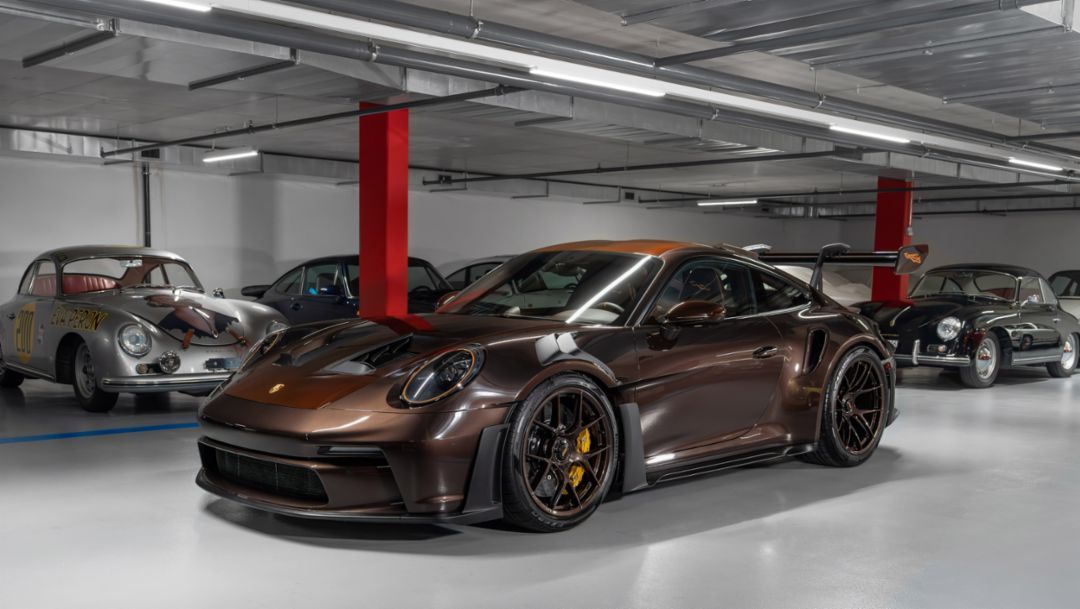
Porsche is drawing a clear line around its most famous model: the 911 is not being prepared for a fully electric future. The company’s latest position keeps the sports car attached to combustion power even as Porsche continues spending on electric vehicles across other parts of its business.
That distinction matters because the 911 is not just another nameplate in the Porsche range. It is the car that defines the brand’s identity for many buyers, collectors, racers, and engineers. Porsche can electrify SUVs, sedans, and crossovers while still treating the 911 as a special case — a model whose appeal is closely tied to sound, response, packaging, and mechanical continuity.
The 911 remains the exception in Porsche’s EV shift
Porsche has already shown that it is willing to move aggressively into electric vehicles. The Taycan established the brand’s first modern battery-electric production car, and the Macan has moved into an electric generation. More EVs are expected to remain part of the company’s long-term product planning, particularly in segments where buyers place a high value on refinement, daily usability, instant torque, and lower local emissions.
The 911 occupies a different role. It is a compact, rear-engine sports car with decades of development built around a flat-six engine mounted behind the cabin. Changing that formula into a battery-only layout would not simply mean replacing a fuel tank with a battery pack. It would affect weight, balance, cooling, body structure, emotional character, and the way the car communicates with the driver.
Porsche’s message is that electrification and a fully electric 911 are not the same thing. The brand can continue using hybrid technology, software, improved combustion systems, and possibly lower-carbon fuels while keeping the 911 from becoming a pure EV.
Hybrid technology is still part of the picture
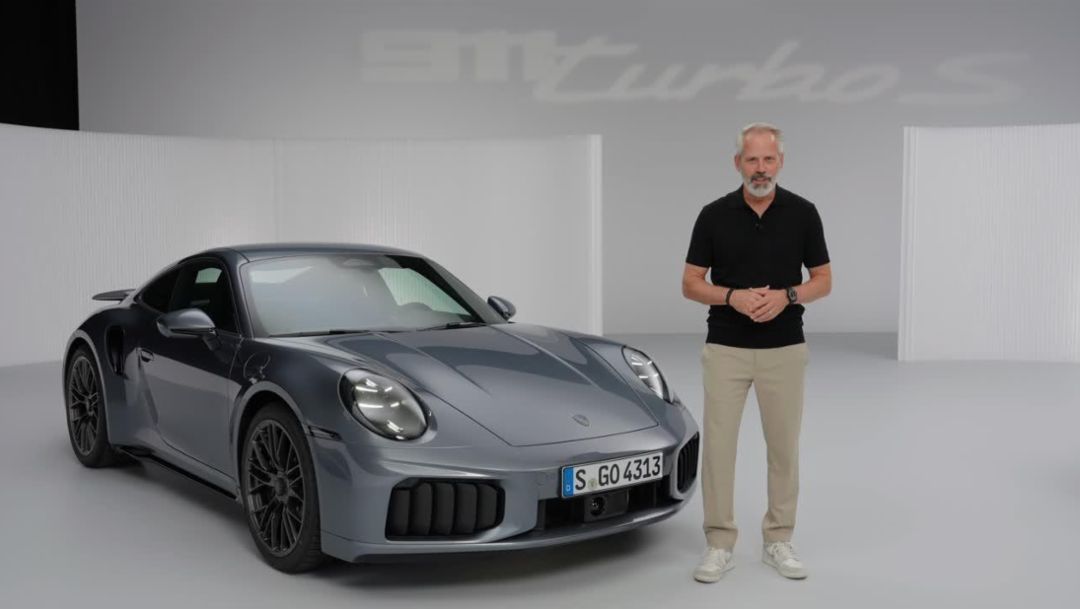
A decision against a battery-electric 911 does not mean the car will avoid electrification altogether. Porsche has already introduced hybrid assistance to the 911 family, most notably with the 992-generation update that brought the GTS T-Hybrid powertrain. That system was developed with performance in mind rather than plug-in electric range, using electrical assistance to improve response and output while preserving the combustion-engine character central to the model.
That approach gives Porsche a middle path. Hybridization can help manage emissions requirements, sharpen acceleration, reduce turbo lag, and support onboard electrical systems without turning the 911 into a silent, heavy grand tourer. For buyers, it means future 911s may become more technically complex, but not necessarily less recognizable.
This is an important distinction in the sports-car market. Many enthusiasts are not opposed to electrification on principle; they are concerned about losing the attributes that make a particular car special. In the 911’s case, those attributes include compact dimensions, traction from the rear-engine layout, steering feel, braking consistency, and the sound and response of a combustion engine working hard.
Why Porsche can electrify other models first
The broader Porsche lineup gives the company flexibility. SUVs and larger four-door models can accommodate battery packs more easily than a low, tightly packaged sports car. They also serve buyers who may prioritize comfort, commuting, and technology over lap-time feel or engine character. That makes models such as electric crossovers a more natural fit for full electrification.
The 911, by contrast, is bought in large part because of what it has historically been. Even customers who use one every day often expect it to feel connected to earlier generations. Porsche has modernized the car repeatedly — adding turbocharging across much of the range, dual-clutch transmissions, active aerodynamics, rear-wheel steering, digital displays, and hybrid assistance — but it has generally avoided breaking the model’s core identity.
A fully electric 911 would be a much bigger break. It could be extremely quick, as many performance EVs already are, but straight-line acceleration is not the only reason people buy a 911. The decision suggests Porsche believes the car’s long-term value depends on preserving more than just its badge.
What this means for buyers
For shoppers considering a 911, the statement provides a useful signal: Porsche does not appear to be planning a near-term replacement of the combustion 911 with a battery-only successor. That may reassure buyers worried that a current or upcoming gasoline-powered 911 will suddenly become the last of its kind in the immediate product cycle.
It could also support used values for certain models, especially naturally aspirated variants, manual-transmission cars, GT models, and limited-production versions. Collector demand is often strongest when a car represents a clear mechanical lineage. A continued commitment to combustion may make the 911’s future less abrupt, though values will still depend on mileage, condition, specification, production numbers, and broader market conditions.
There are tradeoffs. Future 911s may become more expensive and more complex as Porsche balances performance, emissions rules, and customer expectations. Hybrid components add engineering sophistication and potential service considerations. Owners who keep cars long-term will want to pay close attention to warranty coverage, battery-related components, cooling systems, and specialized maintenance requirements.
What this means for the industry
Porsche’s stance highlights a larger industry reality: the move toward electrification is not happening evenly across every vehicle type. Battery-electric power makes sense for many mainstream cars and luxury vehicles, but low-volume performance icons can follow a different path if brands can justify the investment and meet regulatory demands.
The challenge will be regional. Emissions rules vary by market, and long-term combustion sales may depend on legislation, synthetic fuels, fleet-average targets, exemptions, and customer demand. A company statement that the 911 will not become fully electric is a product philosophy, not a guarantee that every version will remain available in every country under every future rule.
Still, the direction is significant. Porsche is choosing to protect the 911’s combustion identity while continuing to develop EVs elsewhere. That is not a rejection of electrification; it is a segmentation strategy. Electric power will carry more of the brand’s volume and regulatory burden, while the 911 remains the emotional and mechanical anchor.
For enthusiasts, the message is straightforward: the 911’s future may include more hybrid assistance, more software, and more efficiency-focused engineering, but Porsche does not intend for its defining sports car to become a conventional battery-electric model. In an industry where many historic nameplates are being reinvented, the 911 is being positioned as one of the rare icons whose core formula is meant to endure.