Renault Megane E-Tech Facelift Brings LFP Battery and 310-Mile Range
Renault has updated the electric Megane with sharper styling, a larger 67kWh LFP battery, claimed 310-mile range, faster charging and new cabin tech.
Renault has given the Megane E-Tech Electric a mid-life update aimed at putting its family hatchback back into the conversation among mainstream EV buyers. The revised model brings a larger lithium-iron-phosphate battery, a claimed range of up to 310 miles, faster charging, updated styling and fresh cabin technology.
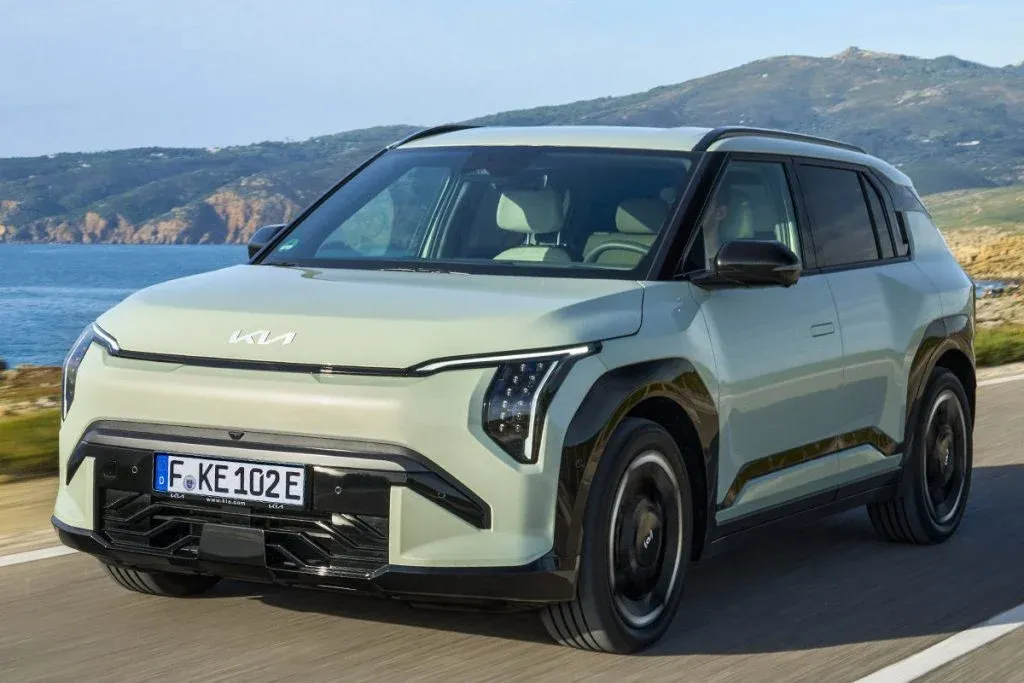
The facelift is important because the Megane E-Tech was one of Renault’s key post-Zoe electric cars, but it now sits in a more crowded market. Newer models such as the Renault 5 and Renault 4 have drawn attention at the smaller end of the range, while rivals including the Volkswagen ID.3 and Kia EV4 are fighting for buyers who want a compact electric car with enough range for family use.
Renault’s answer is not a full redesign, but the changes go deeper than a bumper-and-trim refresh.
Bigger battery, longer claimed range
The central mechanical change is the move to a 67kWh LFP battery pack. That replaces the previous 60kWh nickel-manganese-cobalt unit and lifts the Megane E-Tech’s claimed range to as much as 310 miles on the WLTP test cycle.
That is a 25-mile improvement over the outgoing version. In day-to-day use, the actual gain will depend on temperature, road speed, wheel choice, payload and driving style, but the headline figure makes the Megane more competitive on paper.
For comparison, a Volkswagen ID.3 Neo with a 58kWh LFP battery is rated at up to 307 miles, while the Kia EV4 is listed at 273 miles in Standard Range form and more than 380 miles when specified with larger battery options. That places the updated Megane in the middle of the compact EV field: stronger than many entry-level versions, but not intended to be a maximum-range flagship.
The battery chemistry switch is also significant. LFP batteries generally avoid nickel and cobalt, use materials that can be cheaper and more abundant, and are known for good durability and thermal stability. The trade-off is that LFP packs are usually less energy-dense than comparable NMC batteries, meaning packaging and weight can be more challenging.
That balance shows in the numbers. The new Megane’s official efficiency is listed at 4.6 miles per kWh, slightly below the 4.7 miles per kWh figure quoted for the previous NMC-equipped model. The longer range comes primarily from extra usable battery capacity rather than a major efficiency breakthrough.
For buyers, that distinction matters. A larger LFP pack may help with ownership costs and long-term durability, but it does not automatically mean lower energy consumption. Drivers doing mostly motorway miles will still want to look closely at real-world range tests once the updated car reaches customers.
Faster charging, but final numbers matter
Renault has also included faster charging as part of the update. Exact market-specific charge rates and charging-time claims will be important when order books open, because a useful EV is not judged by range alone.
A compact electric hatchback with around 300 miles of official range becomes much easier to live with if it can recover a meaningful amount of range during a short stop. This is especially relevant for family buyers who may not have the patience for long rapid-charging sessions on holiday journeys.
The Megane already competes in a class where software, route planning and battery preconditioning can matter as much as the raw peak charging number. Renault will need the facelifted car to feel simple and predictable at public chargers, not just improved in a specification table.
Sharper look, familiar proportions
Visually, the facelifted Megane E-Tech adopts a cleaner and sportier front-end treatment, with design links to the larger Scenic E-Tech and the next-generation Clio. The overall body shape remains that of a compact five-door electric hatchback, but the updated detailing is intended to bring it closer to Renault’s newest design language.
That matters because the Megane sits in an awkward but popular part of the market. It is more conventional than a small crossover, yet it must still appeal to buyers who increasingly choose SUVs for perceived practicality. A fresher face and a more assertive stance help keep the car relevant without changing its basic footprint.
The Megane’s size and hatchback format should continue to make it attractive to drivers who want a manageable urban car with genuine long-distance ability. It is not as small or retro-led as the Renault 5, and it is not as family-SUV oriented as the Scenic. Instead, it remains the brand’s electric alternative to a traditional Golf-sized hatchback.
Cabin tech includes MagSafe-style convenience
Inside, one of the notable updates is the addition of MagSafe-style phone mounting or charging functionality. That may sound minor compared with a new battery, but small usability upgrades can make a major difference in electric cars, where navigation, charging apps, media and smartphone integration are part of the daily routine.
Renault has already leaned heavily into Google-based infotainment in its newer vehicles, and the Megane’s update appears designed to keep the cabin feeling current rather than dated next to newer showroom siblings. For owners, the best technology changes are the ones that reduce friction: easier phone placement, better route planning, clearer charging information and fewer steps before setting off.
Why the facelift matters
The updated Megane E-Tech shows how quickly the mainstream EV market is evolving. A few years ago, a 60kWh battery and a range figure approaching 300 miles were strong selling points. Now, brands are chasing more range, faster charging and lower battery costs while trying to keep prices within reach of private buyers and company-car drivers.
Renault’s use of an LFP battery is part of a wider industry shift. Carmakers are adopting the chemistry across more volume models because it can reduce dependence on costly materials and suit everyday EV use. The challenge is to deliver that cost and durability advantage without making cars heavier, slower to charge or less efficient in cold conditions.
For prospective buyers, the facelifted Megane E-Tech looks like a more rounded proposition than before. The 310-mile claim gives it a stronger answer to range anxiety, the LFP battery may appeal to drivers thinking about long-term ownership, and the refreshed design helps it sit more naturally alongside Renault’s latest electric models.
Pricing, final charging figures, equipment levels and real-world efficiency will determine how persuasive it is when sales begin later in 2026. But the direction is clear: Renault is repositioning the Megane E-Tech as a practical, modern electric hatchback rather than letting it be overshadowed by newer arrivals in its own range.