Tesla Semi Production Begins Under Scrutiny After Fatal Nevada Crash
Tesla’s battery-electric Class 8 truck is moving into production as investigators review a fatal crash in Dayton, Nevada, an early test of safety, trust, and fleet confidence.

Tesla’s long-delayed Semi is entering production at the same time the electric Class 8 truck is facing a serious real-world safety review. A fatal crash involving a Tesla Semi in Dayton, Nevada, is under investigation, creating an early moment of scrutiny for one of the most closely watched electric commercial vehicles in the industry.
The crash is significant because it appears to be the first known fatal incident involving the Tesla Semi. The cause has not been publicly established, and there is no confirmed finding that the vehicle’s electric powertrain, driver-assistance systems, braking hardware, battery, software, road conditions, or driver behavior played a role. Until investigators complete their work, any conclusions about fault or vehicle performance would be premature.
Still, the timing matters. Tesla is moving the Semi from a prolonged development and limited-deployment phase into production nearly a decade after the truck was first shown. For fleet operators, regulators, insurers, emergency responders, and rival truckmakers, the investigation will be watched closely because heavy-duty electric trucks are now beginning to move from demonstration routes into regular freight work.
A long-awaited electric truck reaches a critical stage
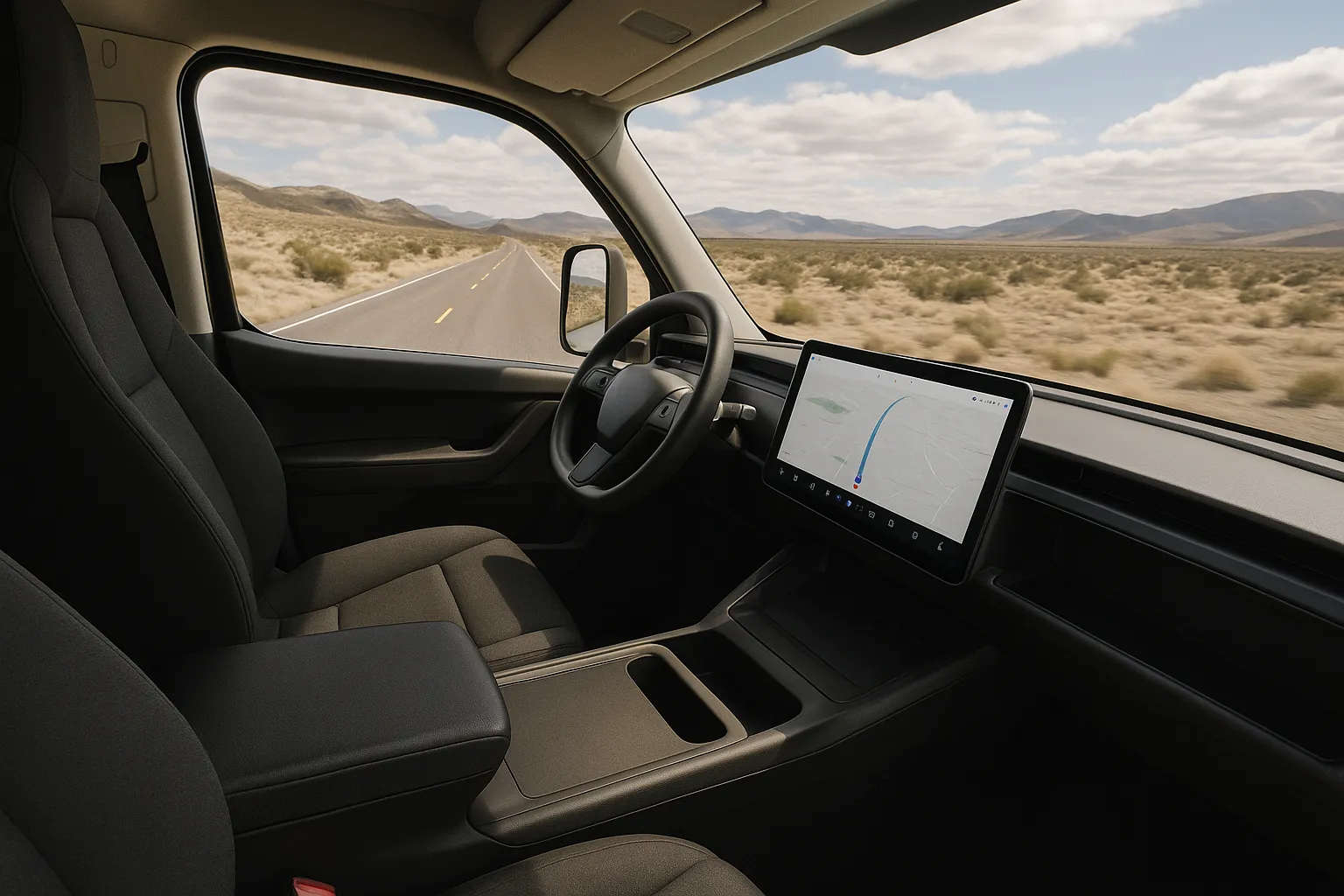
Tesla unveiled the Semi in 2017 with ambitious claims for range, acceleration, energy efficiency, and operating cost. The truck was pitched as a way to reduce diesel use in freight, cut maintenance through a simpler electric drivetrain, and give large fleets a path toward lower-emission logistics. Customer deliveries began on a limited basis years later, with early units placed into commercial service by select fleet partners.
Production is the more consequential milestone. Building a handful of trucks for closely managed customers is very different from producing vehicles at scale for varied routes, drivers, cargo weights, charging schedules, weather conditions, and duty cycles. Heavy trucks are business tools, and uptime is often more important than novelty. A Class 8 tractor must be dependable under loads that can approach 82,000 pounds in the United States, operate predictably in traffic, and integrate into depots where turnaround time is measured in dollars.
Tesla has previously promoted versions of the Semi with up to about 500 miles of range under loaded conditions, fast acceleration for a heavy truck, and lower energy cost than diesel. Those figures are central to the business case. But fleets do not buy trucks on specifications alone. They also look at service support, parts availability, warranty coverage, charging infrastructure, residual value, driver training, insurance costs, and safety record.
That is why the Nevada crash matters beyond a single incident. One fatal collision does not define a vehicle program, but it can influence the questions buyers ask before placing large orders.
What investigators are likely to examine
A fatal commercial-vehicle crash investigation typically focuses on a wide set of factors. Those can include vehicle speed, driver inputs, braking performance, steering behavior, road design, visibility, weather, cargo status, maintenance history, tire condition, electronic data, and whether any advanced driver-assistance features were active.
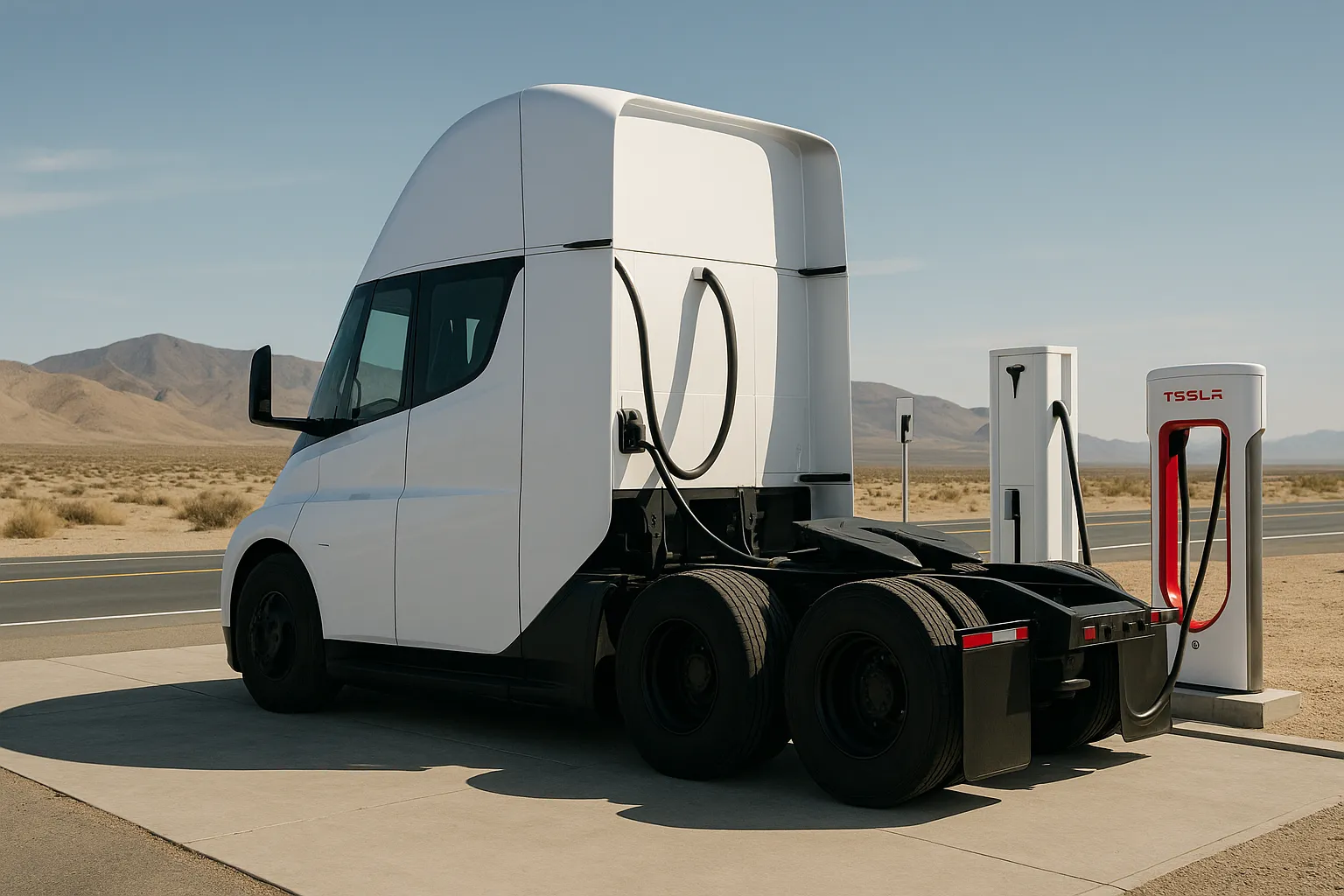
For an electric heavy truck, the review may also include high-voltage battery behavior, post-crash fire risk, emergency shutoff procedures, thermal events, and the response protocols used by first responders. Electric trucks introduce different hazards than diesel trucks, not necessarily greater ones, but they require training and equipment that some agencies are still building into standard practice.
The Tesla Semi’s design also makes it an important case study. Unlike a conventional diesel tractor, it uses an electric drivetrain and a large battery pack, with a cab and driving position that differ from many traditional highway tractors. If investigators recover useful data from the vehicle, that information could help clarify what occurred before impact and whether the truck performed as designed.
At this stage, the key point is uncertainty. The existence of an investigation does not indicate a defect. It also does not rule one out. The facts will depend on evidence from the crash scene, vehicle data, witness accounts, and technical examination.
Why fleets will be paying attention
Commercial fleets are practical buyers. They calculate total cost of ownership across fuel or electricity, maintenance, financing, incentives, driver retention, and downtime. Safety performance is part of that calculation because crashes can bring human consequences, legal exposure, cargo losses, vehicle downtime, and higher insurance premiums.
Electric semis have a strong argument in certain use cases. Depot-based routes, predictable daily mileage, regional haul, port drayage, and return-to-base operations can fit battery-electric trucks well. Charging can happen overnight or during planned dwell time. Regenerative braking can reduce wear on some components. Electric motors can provide smooth torque and strong acceleration, which may be useful when merging or climbing grades.
But long-haul freight is more complicated. Public megawatt-scale charging remains limited, heavy batteries can affect payload depending on configuration and regulations, and charging downtime must be managed carefully. If a fleet is already cautious about those operational questions, a fatal crash investigation may add another reason to wait for more field data before committing to large purchases.
That does not mean the Tesla Semi program is derailed. Diesel Class 8 trucks are involved in crashes every year, and investigations are a normal part of understanding severe incidents. What is different here is that the Semi is still a new entrant, and new technology often receives more scrutiny because there is less long-term operating history.
The broader industry impact
Tesla is not alone in electric heavy trucks. Established truck manufacturers and commercial-vehicle startups are also developing or selling battery-electric tractors for regional and vocational work. The market is being shaped by emissions rules, corporate climate targets, port regulations, fuel-cost volatility, and government incentives.
A high-profile investigation involving the Tesla Semi could affect the entire segment in two ways. First, it may reinforce the need for transparent safety data, clear emergency-response procedures, and rigorous driver training as electric trucks spread. Second, it may push fleets to compare electric truck programs more closely on service networks, diagnostic tools, battery safety, and manufacturer support rather than focusing mainly on range claims.
For Tesla, the production ramp will test whether it can bring passenger-EV manufacturing experience into heavy-duty trucking. The Semi is not simply a larger Model Y or Cybertruck. Commercial trucks have different duty cycles, customer expectations, regulatory requirements, and service economics. A fleet may forgive a delayed software feature less readily if a truck is needed to move freight every day.
What it means for everyday EV buyers
Most car shoppers are not cross-shopping a Class 8 tractor, but the Semi still matters to the consumer market. Heavy-duty EVs require advances in batteries, charging hardware, thermal management, power electronics, and high-voltage safety. Lessons from commercial vehicles can influence future pickups, vans, SUVs, charging stations, and service practices.
There is also a public-confidence angle. As electric vehicles expand into larger and more demanding roles, buyers will judge the technology not only by range and charging speed, but also by how manufacturers handle failures, crashes, investigations, recalls, and real-world transparency. The response to incidents can shape trust as much as the product itself.
A pivotal launch with unanswered questions
The Tesla Semi’s move into production is an important step for electric freight. If the truck delivers reliable range, manageable charging, and competitive operating costs, it could help accelerate the shift away from diesel on routes where battery-electric operation makes economic sense.
The fatal crash in Nevada adds a serious and unresolved issue at the start of that phase. The outcome of the investigation will determine whether this becomes a tragic but isolated incident, a prompt for procedural changes, or something with broader technical implications.
For now, the responsible takeaway is measured: Tesla’s electric truck program has reached a major production milestone, but its first known fatal crash will put safety, transparency, and fleet readiness under a sharper spotlight.