
Tesla Sets a Q2 Delivery Record Even as U.S. EV Demand Softens
Tesla delivered 480,126 vehicles in the second quarter of 2026, its strongest Q2 on record, but the result comes against a tougher U.S. backdrop after the federal EV tax credit expired.
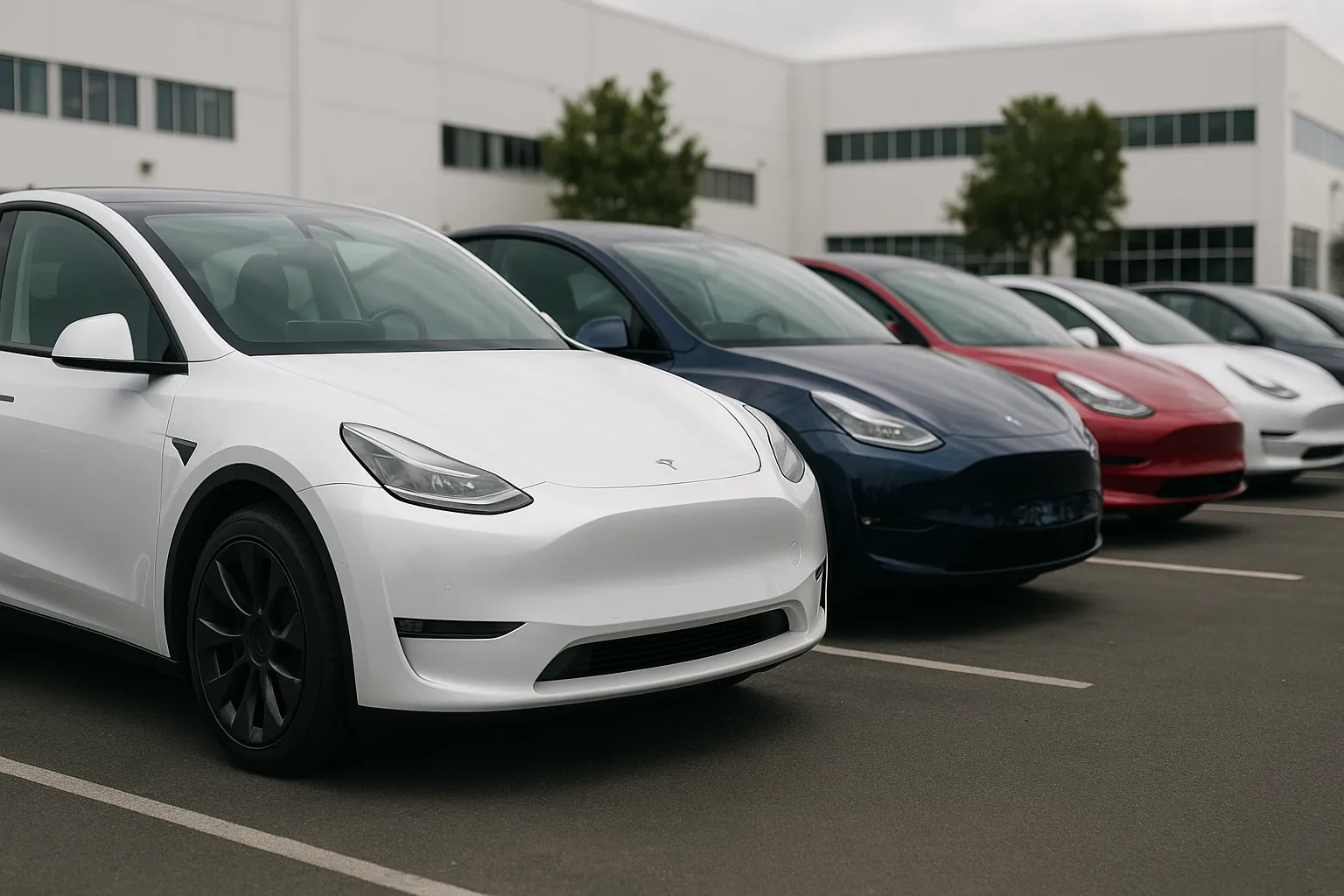
Tesla’s second-quarter delivery total gives the EV maker a clearer sign of momentum after a difficult stretch, though the picture is not uniformly strong across every market.
In the second quarter of 2026, Tesla delivered 480,126 vehicles worldwide. That is the company’s best second-quarter delivery result to date and represents a 25% increase from the same period a year earlier. The figure also came in above Wall Street expectations, making it an important data point for investors, competitors, suppliers, and shoppers watching the direction of the EV market.
The headline number is especially notable because it arrived while Tesla is facing a softer U.S. sales environment. The American market has become more challenging after the expiration of the $7,500 federal EV tax credit, which had been a major part of the ownership-cost calculation for many buyers. Losing that incentive effectively raised the transaction cost for eligible shoppers, even before factoring in financing rates, insurance costs, and charging access.
For Tesla, the result suggests that global demand, pricing strategy, production planning, or some combination of those factors helped offset the U.S. slowdown. Without a full regional and model-by-model breakdown, it is difficult to determine exactly where the strength came from. Still, a record Q2 delivery total shows that the company was able to move a large volume of vehicles despite a less favorable policy backdrop in one of its most important markets.
What the 480,126-delivery figure means

Automakers use deliveries as a key indicator because they represent vehicles that reached customers, not simply cars built at a factory. For Tesla, which sells directly to consumers in many markets and often adjusts prices quickly, delivery totals are closely watched as a measure of demand and execution.
A 25% year-over-year increase is a meaningful rebound signal. It indicates that Tesla sold far more vehicles than it did in the same quarter of 2025, reversing some of the pressure that had weighed on the company’s delivery comparisons in recent periods. It also shows that the company’s core products, particularly high-volume vehicles such as the Model Y and Model 3, remain capable of generating substantial global volume.
That does not mean every underlying issue has disappeared. Delivery totals do not reveal average selling prices, profit margins, incentive spending, trade-in values, or whether growth was concentrated in certain regions. If a company sells more cars by cutting prices or increasing incentives, revenue and profit may not rise at the same pace as deliveries. Those details matter for the industry because Tesla’s pricing moves often influence the broader EV market.
The U.S. tax-credit effect

The end of the federal EV tax credit changed the math for many American buyers. A $7,500 incentive can be the difference between choosing an electric vehicle and sticking with a gasoline or hybrid model, especially in the compact crossover and sedan segments where monthly payment sensitivity is high.
When incentives expire, sales patterns can become uneven. Some buyers move quickly before the deadline, creating a short-term rush, followed by a softer period once the benefit disappears. Others delay purchases to see whether automakers respond with discounts, lease support, lower financing rates, or new lower-cost trims.
Tesla has historically been willing to adjust pricing more quickly than traditional automakers. That flexibility can help protect volume, but it also creates challenges for existing owners when resale values move with new-car prices. For shoppers, the end of the credit makes it more important to compare total cost of ownership rather than focusing only on sticker price. Electricity costs, home-charging access, insurance premiums, maintenance, depreciation, and available state or local incentives all affect the real cost of driving an EV.
Why buyers should care
For car buyers, Tesla’s record quarter has several practical implications.
First, strong global deliveries suggest that Tesla still has scale working in its favor. High production and delivery volume can support better parts availability, more service experience, and a broad used-vehicle market. Buyers considering a Model Y, Model 3, or another Tesla product may view that as a sign of continuing ecosystem strength.
Second, a weaker U.S. market could create opportunities. If demand is softer in the absence of the federal credit, buyers may see more aggressive lease deals, inventory discounts, or financing offers. Those opportunities can vary by region and change quickly, so shoppers should compare the final out-the-door price rather than assuming national trends apply locally.
Third, buyers should pay attention to timing. If Tesla or rivals use incentives to stimulate demand, prices can move within a quarter. That can reward patient shoppers, but it can also frustrate owners who bought shortly before a price reduction. Anyone trading in an EV should check recent used values carefully, because new-car discounts can pressure resale prices.
What it means for current Tesla owners
Existing owners may read the delivery result in two ways. On one hand, strong volume supports Tesla’s long-term service network, software ecosystem, charging network usage, and parts pipeline. A large installed base also gives Tesla more incentive to continue improving vehicles through software updates where hardware allows.
On the other hand, volume growth in a tougher market can come with pricing pressure. If Tesla leans on discounts to sustain deliveries, used values may remain volatile. Owners planning to sell or trade should track local market conditions and compare private-sale values with dealer and online-buying offers.
Charging remains another factor. More Tesla vehicles on the road can increase demand at busy Supercharger locations, especially during holiday travel periods. At the same time, high vehicle volume gives the company a reason to continue expanding and maintaining the network.
The broader industry signal
Tesla’s Q2 result matters beyond one company. For traditional automakers and EV startups, Tesla remains the benchmark for high-volume electric-vehicle sales. A record quarter shows that EV demand is not simply disappearing, even if the U.S. market has become more difficult without federal support.
That is important because automakers are currently balancing expensive EV investments with consumer uncertainty. Some buyers remain concerned about charging access, battery range, winter performance, and resale value. Others are cross-shopping hybrids, plug-in hybrids, and efficient gasoline vehicles as incentives and energy prices shift.
If Tesla can continue growing deliveries without the federal credit, it may pressure rivals to improve cost structures, simplify trim lines, or sharpen lease programs. If the growth required heavy discounting, however, it could add pressure to industry margins and make profitability harder for less efficient EV programs.
A strong quarter, with questions still open
The second-quarter delivery record is a clear positive for Tesla: 480,126 vehicles delivered, up 25% year over year, in a market environment that is not universally favorable. That is not a minor achievement.
The next questions are about quality of growth. Regional performance, average transaction prices, margins, order backlog, and model mix will determine whether this was a broad-based demand recovery or a volume result helped by pricing and market timing. For buyers, the main takeaway is straightforward: Tesla remains a major force in EVs, but the best deal may depend heavily on location, incentives, financing, and timing.