Tesla Sues Supplier Over Tooling Said to Be Needed for Cybertruck Production
Tesla has filed suit against supplier Angstrom Automotive Group, alleging that production tooling tied to the Cybertruck is being withheld amid a payment dispute.
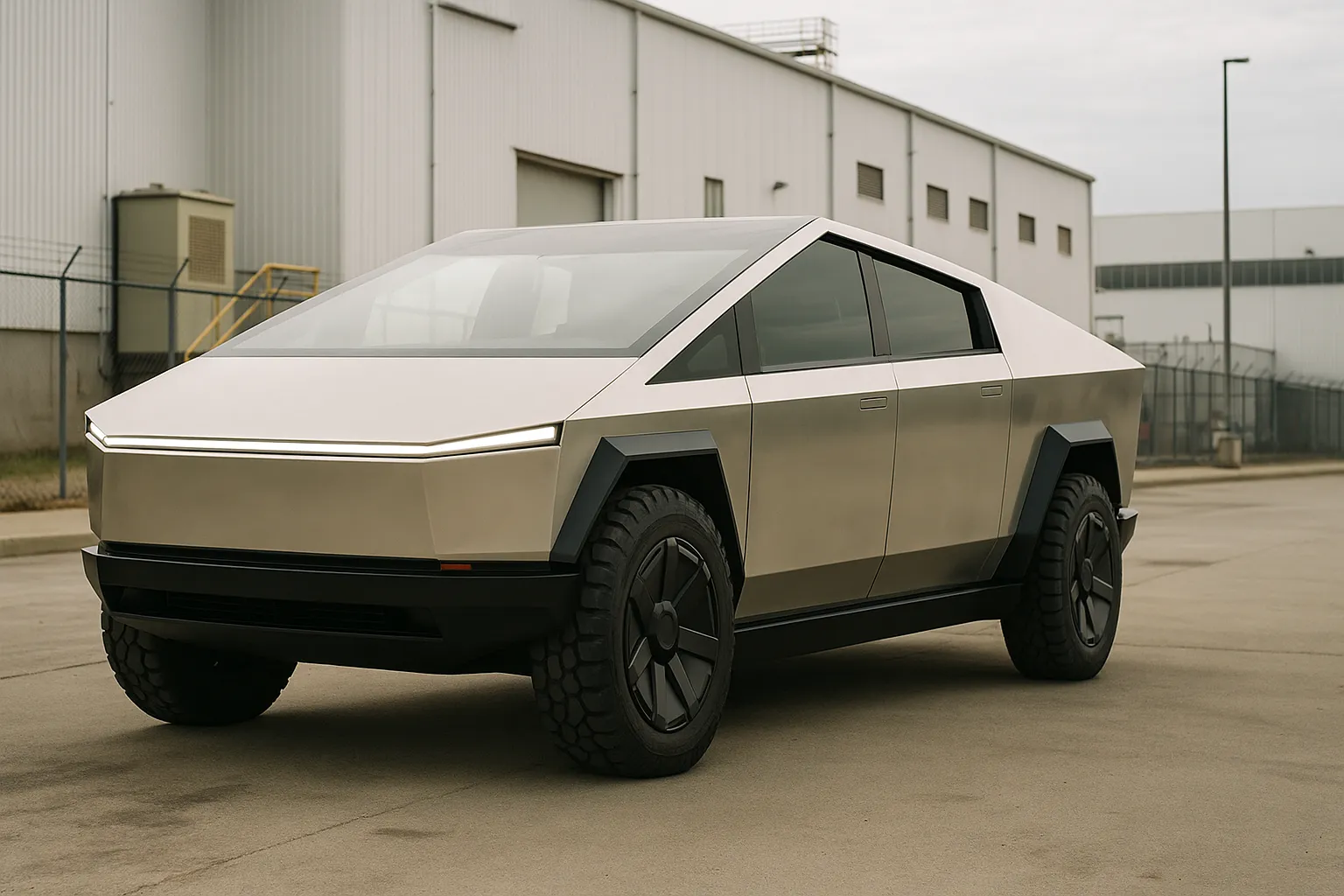
Tesla has taken a supplier dispute to court, alleging that Angstrom Automotive Group LLC is withholding production tooling the automaker says is needed for the Cybertruck.
The case centers on a familiar but often invisible part of vehicle manufacturing: the specialized equipment used to make components at scale. Tesla’s complaint alleges that Angstrom, described as a supplier involved with Cybertruck production, is refusing to release tooling and is demanding a $250,000 payment. The automaker argues that the equipment is critical to its ability to build the electric pickup.
The allegations have not yet been tested in court, and the available public details do not establish whether the dispute has already affected Cybertruck output, deliveries, service parts, or customer timelines. But the lawsuit is notable because it exposes one of the pressure points in modern vehicle production, especially for a vehicle as unusual as the Cybertruck.
Why tooling matters
In automotive manufacturing, “tooling” is a broad term. It can include molds, dies, fixtures, jigs, gauges, stamping tools, robotic end-of-arm equipment, and other production-specific hardware. These items are often custom-built for one vehicle program and sometimes for one exact component. Without the right tooling, a supplier may not be able to produce parts at the required quality, speed, or repeatability.
That makes tooling different from ordinary inventory. A missing pallet of parts can sometimes be replaced with another shipment. Missing tooling can stop a production step altogether unless an automaker can recover the equipment, build duplicate tools, move work to another supplier, or redesign the process. Each option can be expensive and time-consuming.
Tooling ownership can also be complicated. Automakers frequently pay suppliers to create production tools, and contracts typically spell out who owns the equipment, where it can be stored, how it must be maintained, and what happens if a commercial relationship breaks down. Disputes over payment, purchase orders, engineering changes, or insolvency can quickly become disputes over access to the physical tools.
That appears to be the central issue in Tesla’s lawsuit: not just money, but control over equipment the company says it needs for an active vehicle program.
Why the Cybertruck adds complexity
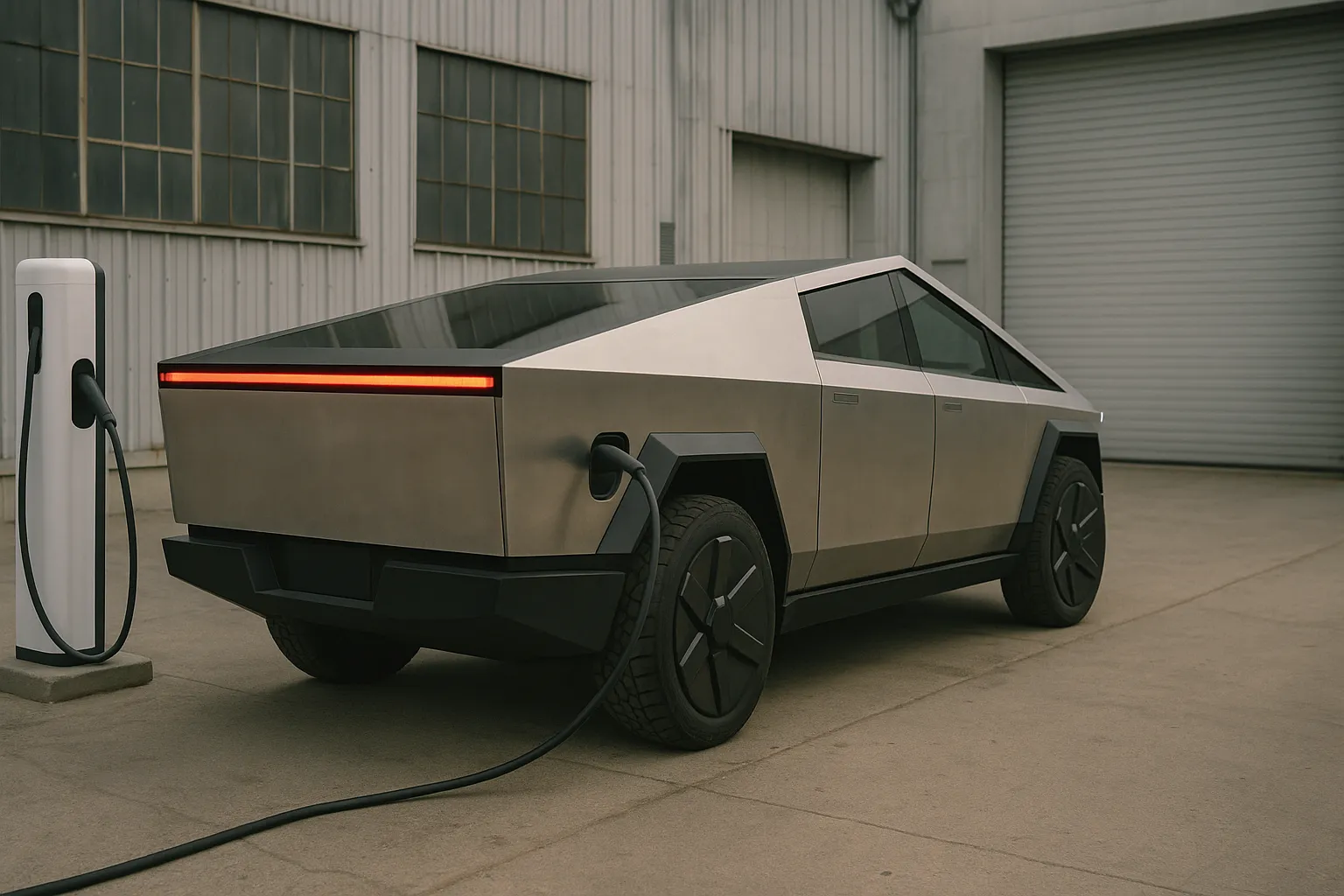
The Cybertruck is not a conventional pickup. Its angular stainless-steel body, large castings, unusual exterior geometry, and relatively new production process make it less interchangeable with traditional truck programs. A supplier making Cybertruck-specific components may be using equipment that has little or no use outside that single model.
That specificity can be efficient when everything works. It can also raise risk when a supplier relationship fails. For a high-volume internal-combustion pickup, an automaker may have a deeper bench of suppliers and decades of carryover process knowledge. For a newer electric truck with nontraditional materials and manufacturing methods, the supplier network can be narrower and the tooling more specialized.
Tesla began Cybertruck customer deliveries in late 2023 after a long development period, and the vehicle has remained one of the most closely watched products in the EV market. Its production ramp has been important not only to Tesla’s pickup ambitions but also to the company’s broader effort to show it can industrialize more complex, lower-volume vehicles beyond the Model 3 and Model Y.
A tooling dispute does not automatically mean a factory shutdown. Automakers often carry some inventory, use workarounds, adjust build sequencing, or resolve supplier conflicts before customers notice. Still, if the disputed equipment is truly essential and cannot be quickly replaced, it could put pressure on output or parts availability.
What it could mean for buyers and owners
For shoppers considering a Cybertruck, the immediate takeaway is uncertainty rather than a confirmed change in availability. The lawsuit itself does not prove that deliveries will slow, pricing will change, or configurations will be delayed. Buyers should watch for practical signals: delivery estimate changes, inventory movement, configuration availability, and communication from Tesla about order timing.
For current owners, the more relevant question may be service parts. Production tooling can be tied not only to new-vehicle assembly but also to replacement components. If a disputed tool makes a part that is also needed for repairs, access could matter for collision work or warranty service. There is no confirmed evidence from the filing details currently available that owner repairs are being delayed because of this dispute, but it is a reasonable area to monitor.
For enthusiasts, the case is a reminder that vehicle innovation is not only about batteries, motors, software, or headline specifications. Manufacturing discipline matters. A distinctive design can generate attention, but it also creates a production ecosystem that must be robust enough to handle supplier failures, commercial disagreements, and quality demands.
A broader supplier-chain lesson
The lawsuit also fits a larger industry pattern. Automakers are asking suppliers to invest in new EV-related processes while simultaneously managing cost pressure, fluctuating demand forecasts, and rapid engineering changes. Smaller suppliers can face cash-flow strain when tooling, design revisions, or launch delays raise expenses before volume production fully materializes.
That tension is not unique to Tesla. The shift to electrification has rearranged supplier relationships across the industry. Some companies that historically supplied engine, exhaust, or transmission components are seeking new business in EV structures, battery enclosures, thermal systems, electronics, and body assemblies. Others are taking on launch programs with unfamiliar materials or tighter tolerances.
When a supplier dispute becomes a tooling fight, it can reveal weaknesses in contract structure and contingency planning. Automakers want assurance that mission-critical tools can be accessed even if there is a disagreement. Suppliers want assurance they will be paid for equipment, engineering changes, and carrying costs. Courts are often asked to sort out those competing claims after negotiations fail.
What happens next
The next steps will depend on how the court handles Tesla’s request and how Angstrom responds. The parties could settle, the tooling could be returned under agreed terms, or the dispute could continue through litigation. The court may also need to consider contract language, payment history, ownership records, and whether the supplier has any legal basis to retain the equipment.
Until more details emerge, the most important point is that this is an allegation in an active legal dispute, not a final ruling. For customers, the practical impact remains unclear. For the auto industry, the message is already visible: as vehicles become more specialized and production systems more tightly integrated, control over tooling can be just as important as control over parts.