Toyota, Lexus and Subaru EVs Recalled Over Power-Loss Risk
The 2026 Toyota bZ, Lexus RZ and Subaru Solterra are subject to a safety recall because a fault could cause the vehicles to stop delivering drive power while in motion.
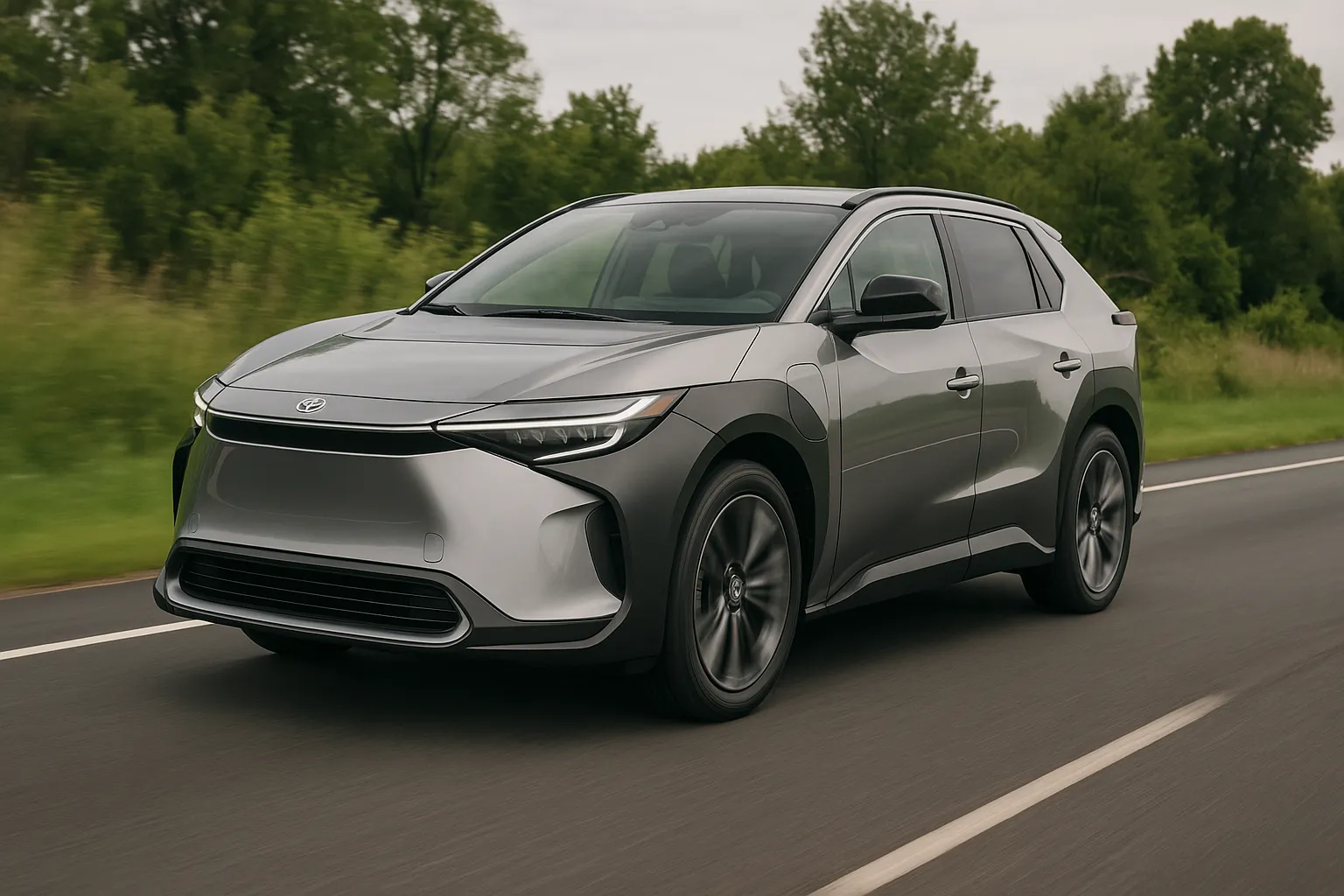
Toyota, Lexus and Subaru EVs recalled for potential loss of drive power
A new safety recall affects three closely related electric SUVs: the 2026 Toyota bZ, the 2026 Lexus RZ and the 2026 Subaru Solterra. Federal safety regulators have flagged a defect that could cause the vehicles to lose motive power while driving, creating a risk that a driver may be unable to maintain speed or move the vehicle out of traffic normally.
The recall is notable because these models sit at the center of Toyota, Lexus and Subaru’s current battery-electric lineups in the U.S. The Toyota bZ and Subaru Solterra are platform siblings, while the Lexus RZ uses related electric-vehicle architecture in a more premium package. A shared technical issue across the trio is therefore significant not just for current owners, but also for shoppers evaluating the maturity of mainstream EVs from brands known for reliability.
What the recall covers
The recall applies to the 2026 Toyota bZ, 2026 Lexus RZ and 2026 Subaru Solterra. The concern is a possible sudden interruption in propulsion. In practical terms, the vehicle could stop delivering drive power even though the driver has not intentionally shut it down.
A loss of propulsion is different from a conventional engine stall in some ways, but the safety concern is similar: if an EV can no longer maintain speed, surrounding traffic may not have enough time to react. The risk depends heavily on where and when the issue occurs. A low-speed incident in a parking lot may be manageable, while a power loss on a freeway, during a merge or while crossing traffic can be far more serious.
The currently available public information does not provide every technical detail behind the defect, the total number of vehicles involved or the full repair procedure. Owners should rely on the official recall notice tied to their vehicle identification number for the most precise information, including whether their specific vehicle is included and when a remedy is available.
What owners should do now
Owners of a 2026 Toyota bZ, Lexus RZ or Subaru Solterra should check their VIN through the federal recall database or the automaker’s owner portal. A VIN check is the most reliable way to confirm whether a particular vehicle is part of the campaign, because recalls are often limited by build date, component batch or production plant.
If the vehicle is included, owners should schedule service with an authorized dealer when the remedy becomes available. Safety recalls are performed at no cost to the owner. If the repair is not immediately ready, the automaker or dealer may provide interim instructions. Those instructions matter; they can include software updates, inspection steps or advice on how to respond if warning lights or drivability symptoms appear.
Drivers should also pay attention to any unusual alerts, propulsion warnings or abrupt changes in acceleration behavior. If an EV loses drive power while moving, the safest response is to signal, maintain control, coast if necessary and move to a safe location as traffic permits. Drivers should not continue using a vehicle that repeatedly displays serious propulsion warnings without having it inspected.
Why this matters for EV buyers
For shoppers, the recall is a reminder that electric vehicles are not mechanically simple in the way they are sometimes described. EVs have fewer traditional wear items than gasoline vehicles, but they still depend on complex high-voltage hardware, software, control modules, sensors and thermal-management systems. A problem in one part of that chain can affect how power is delivered to the wheels.
That does not mean buyers should assume these models are unsafe or unreliable. Recalls are a normal part of the modern auto business, and early identification of a safety issue is preferable to leaving a defect unresolved. What matters is how quickly the manufacturer defines the problem, communicates with owners and completes repairs.
For Toyota and Lexus, the recall arrives as the brands work to expand their EV credibility beyond hybrids, plug-in hybrids and fuel-efficient gasoline models. Toyota’s reputation has long been built on durability and low ownership costs. Lexus has a similar image in the luxury market. A propulsion-related EV recall is not catastrophic, but it does place pressure on both brands to show that their electric models can meet the same ownership expectations as their conventional vehicles.
For Subaru, the Solterra remains an important bridge into battery-electric vehicles. Subaru buyers often prioritize all-weather confidence, safety and long-term dependability. A recall involving loss of drive power will understandably draw attention from owners who use these vehicles for commuting, family duty or travel in remote areas.
The shared-platform issue
The overlap among the Toyota bZ, Lexus RZ and Subaru Solterra is important. Automakers increasingly share EV platforms, software systems and components across brands to control development costs and speed up model launches. That strategy can make new vehicles more affordable and help manufacturers scale production faster.
The trade-off is that a single defect can spread across multiple badges. A component or software logic problem that appears in one vehicle may affect several related models. This is not unique to EVs; gasoline vehicles have long shared engines, transmissions and electronics. But EV architectures can concentrate many critical functions into integrated control systems, making software and electronics quality especially important.
For the industry, recalls like this one underline the need for robust validation before launch and fast over-the-air or dealer-installed fixes after launch. If the remedy can be handled with software, the repair process may be simpler than replacing hardware. If hardware inspection or replacement is required, service capacity and parts availability become more important. The repair path has not been fully detailed in the information currently available.
Should owners keep driving?
Unless an official stop-drive notice is issued for a specific vehicle, recalls do not automatically mean every affected model must be parked immediately. However, owners should not ignore the campaign. A propulsion-loss recall involves a core driving function, so it deserves prompt attention.
Owners who have experienced warning messages, reduced-power mode, hesitation or a sudden loss of acceleration should contact a dealer as soon as possible. If a vehicle behaves unpredictably, it may be safer to have it towed rather than driven to the service department. Owners who have not experienced symptoms should still complete the recall repair once contacted or once their VIN shows an open campaign.
Prospective buyers considering one of these EVs should ask the selling dealer to confirm recall status before delivery. New vehicles with open safety recalls are typically addressed before being handed to customers, but buyers should verify this rather than assume. Used-vehicle shoppers should be especially careful, because recall completion can vary from vehicle to vehicle.
Bottom line
The 2026 Toyota bZ, Lexus RZ and Subaru Solterra recall centers on a potentially serious fault: a possible loss of drive power while the vehicle is in motion. The issue affects three related electric SUVs from brands with strong safety and reliability reputations, making the response especially important.
For owners, the immediate steps are straightforward: check the VIN, watch for official owner notifications and arrange dealer service when instructed. For buyers, the recall is a reminder to verify open campaigns before purchase. For the broader EV market, it highlights the growing importance of software, electronics and shared-platform quality as automakers push deeper into electric vehicles.