Toyota Plans to Bring Tacoma Production Back to the U.S.
Toyota is preparing to build the Tacoma in San Antonio alongside the Tundra and Sequoia, returning U.S. assembly capacity to its best-known midsize pickup.
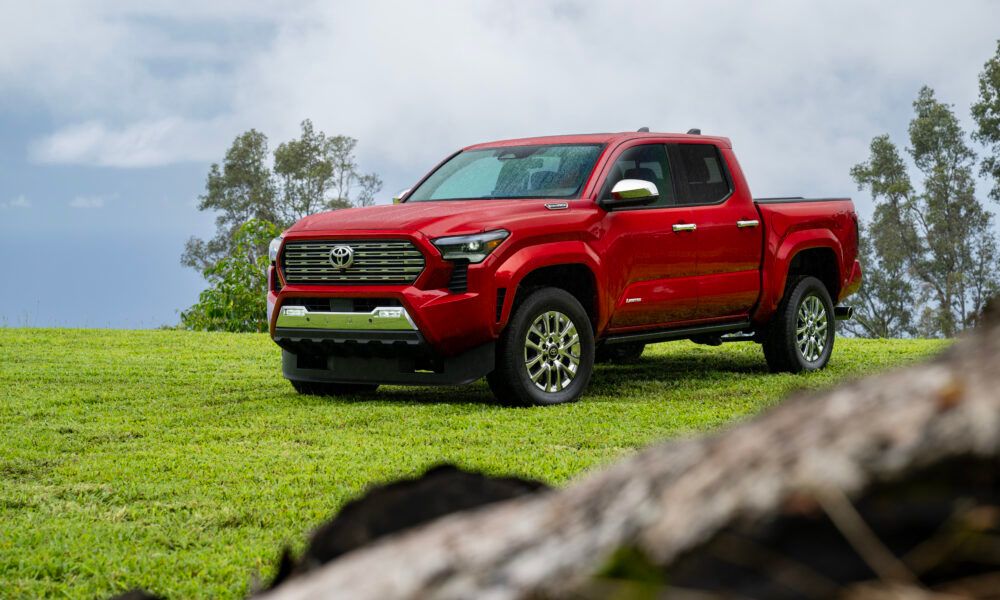
Toyota is preparing to move Tacoma production back into the United States, adding the midsize pickup to its truck manufacturing footprint in San Antonio, Texas. The Tacoma is expected to be built alongside the full-size Tundra pickup and Sequoia SUV, both of which are already assembled at Toyota’s Texas truck plant.
The decision is notable because the Tacoma has spent recent years as a Mexico-built model for the U.S. market. Its return to American assembly would reconnect one of Toyota’s most important nameplates with a U.S. production base and give the company more North American flexibility at a time when pickup demand, trade policy, logistics costs, and electrified powertrain planning are all shaping manufacturing decisions.
Toyota has not yet provided every operational detail publicly, including how much Tacoma volume will shift to Texas, whether production in Mexico will continue in parallel, or how soon buyers will see Texas-built trucks at dealerships. The key point is clear, however: Toyota intends to add Tacoma assembly capacity at the same facility that handles its larger body-on-frame vehicles.
A return for a key Toyota truck
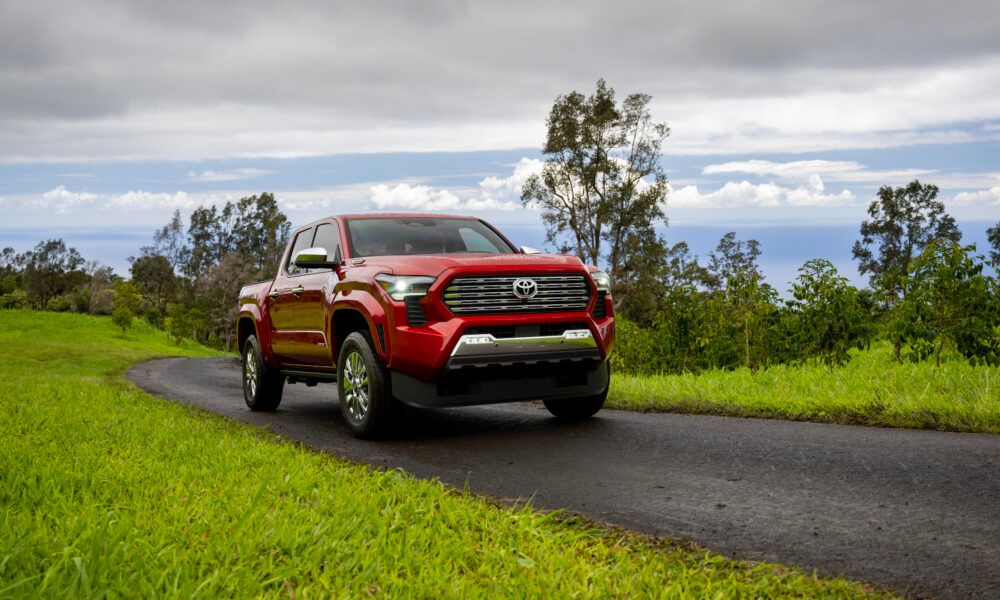
The Tacoma has long been one of the defining vehicles in the midsize truck market. It has a reputation built around durability, resale value, off-road capability, and a broad lineup that stretches from relatively simple work-oriented trims to more specialized models such as TRD Off-Road, TRD Pro, and Trailhunter.
The current-generation Tacoma is also a more complex product than earlier versions. It uses Toyota’s newer truck architecture and offers turbocharged four-cylinder power, including an available hybrid setup on select models. That makes manufacturing planning more complicated than simply allocating space for a single cab-and-engine combination. Modern Tacoma production has to support different cab styles, bed lengths, drivetrains, suspension packages, technology content, and powertrain configurations.
Bringing the Tacoma into the San Antonio plant therefore suggests Toyota sees value in grouping more of its truck and SUV operations together in the U.S. The Tundra and Sequoia share Toyota’s body-on-frame truck strategy, and adding Tacoma production could help the company align suppliers, labor, logistics, and technical expertise around its pickup portfolio.
Why San Antonio matters
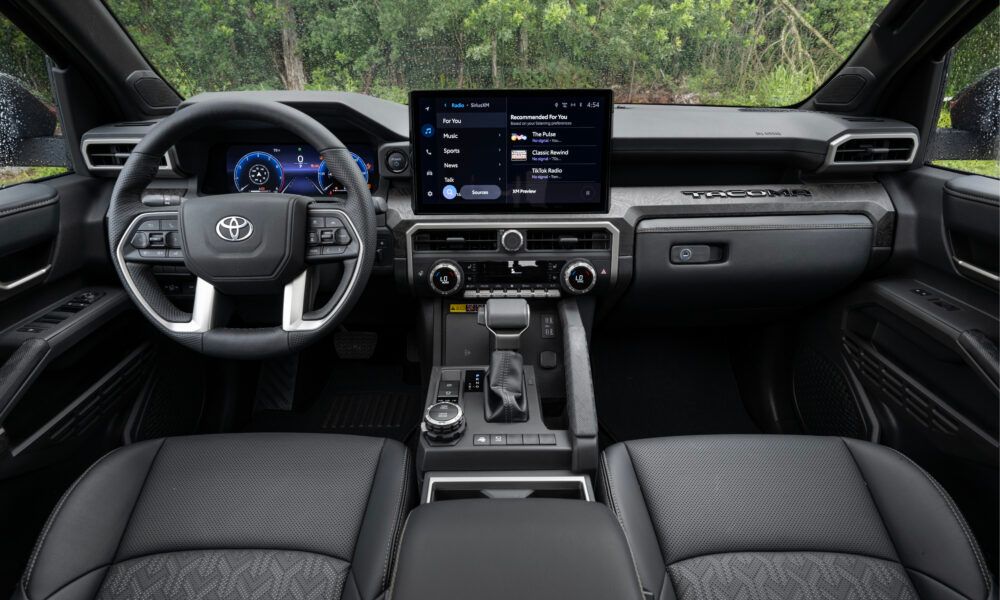
Toyota’s Texas plant is already central to the company’s U.S. truck business. It builds the Tundra and Sequoia, two larger vehicles aimed at buyers who need towing capability, family space, or full-size truck utility. Adding the Tacoma would make the site even more important, effectively putting Toyota’s U.S.-market truck lineup under one roof for at least part of its production.
That does not automatically mean every Tacoma sold in the U.S. will come from Texas. Automakers commonly use multiple plants in North America for high-volume vehicles, and Toyota has relied heavily on Mexican assembly for the Tacoma. Without a firm production split, it is safest to view the move as an addition of U.S. capacity rather than a confirmed end to Mexican-built Tacomas.
For the industry, this is the important distinction. A new U.S. production allocation can help reduce exposure to cross-border uncertainty, but it does not necessarily replace an existing manufacturing base. Toyota may use the added flexibility to balance demand, shorten some shipping routes, manage currency or tariff risk, or support future product changes.
What it could mean for Tacoma shoppers
For buyers, the biggest possible benefit is availability. The Tacoma has often been a high-demand truck, especially in popular off-road trims and new-generation configurations. Additional U.S. assembly could help Toyota supply dealers more consistently if production ramps smoothly.
That does not mean prices will fall. Vehicle pricing is influenced by demand, equipment levels, incentives, interest rates, dealer inventory, and production costs. A Tacoma built in Texas is still likely to carry the same broad market positioning as one built elsewhere. Buyers should not assume that a manufacturing shift will translate directly into lower MSRPs or immediate discounts.
It could, however, affect wait times and allocation patterns. If Toyota can build more Tacomas closer to major U.S. markets, some dealers may eventually receive steadier inventory. That would matter most for shoppers looking for specific combinations, such as a hybrid powertrain, four-wheel drive, off-road suspension, or a particular cab and bed configuration.
Owners and enthusiasts may also care about plant origin for personal reasons. Some truck buyers place value on U.S. assembly, particularly in segments where domestic manufacturing has cultural weight. A Texas-built Tacoma could strengthen the truck’s appeal among buyers who want a midsize pickup assembled in the U.S. while still choosing a Toyota product.
Competitive pressure in midsize trucks
The move comes as the midsize pickup segment has grown more competitive. The Tacoma faces renewed pressure from the Ford Ranger, Chevrolet Colorado, GMC Canyon, Nissan Frontier, and Jeep Gladiator. Several of those rivals emphasize off-road variants, turbocharged engines, towing capability, and lifestyle-oriented accessories, all areas where the Tacoma has traditionally been strong.
Toyota’s manufacturing decisions matter because midsize trucks are no longer niche products. They serve buyers who want useful beds and towing capacity without stepping up to a full-size truck. They also attract enthusiasts who care about trail capability, overlanding equipment, and aftermarket support.
The Tacoma remains one of the segment’s most influential models, so any change to its production base can ripple through dealer inventory, supplier planning, and competitive strategy. If Toyota can improve production flexibility, it may be better positioned to respond to trim-level demand and keep popular versions flowing to showrooms.
A broader manufacturing signal
The Tacoma decision also reflects a wider trend in the auto industry: automakers are rethinking where they build high-volume vehicles for North American buyers. Supply-chain disruptions, changing trade rules, electrification, and labor planning have made manufacturing location more strategically important than it was a decade ago.
Pickup trucks are especially sensitive to those pressures because they are profitable, parts-intensive, and often configured in many different ways. They also rely on supplier networks for frames, driveline components, interiors, electronics, and specialized trim content. Locating production near established suppliers and an experienced truck workforce can be a meaningful advantage.
For Toyota, adding Tacoma production in Texas strengthens a facility that already plays a major role in its U.S. lineup. It also gives the company another lever as it manages demand for gasoline and hybrid trucks, particularly as buyers weigh capability, fuel economy, and price.
The bottom line
Toyota’s plan to bring Tacoma production back to the U.S. is more than a symbolic manufacturing move. It has practical implications for one of the most important midsize trucks on the market, from dealer supply to long-term production flexibility.
For shoppers, the immediate takeaway is not that the Tacoma will become cheaper or dramatically different overnight. The more realistic expectation is that Toyota is positioning itself to build more of its truck lineup in the U.S., with the Tacoma joining the Tundra and Sequoia in San Antonio.
Until Toyota confirms timing, output, and the future role of its Mexico operations, some details remain open. Even so, the direction is clear: the Tacoma is set to regain a U.S. manufacturing presence, and that matters in a truck market where supply, location, and flexibility can be just as important as horsepower and trim badges.