UK Announces £130 Million Boost for EV and Autonomous Vehicle Production
A new matched-funding package from government and industry will support UK electric and autonomous vehicle projects, with Nissan, Bentley and technology firms among the beneficiaries.
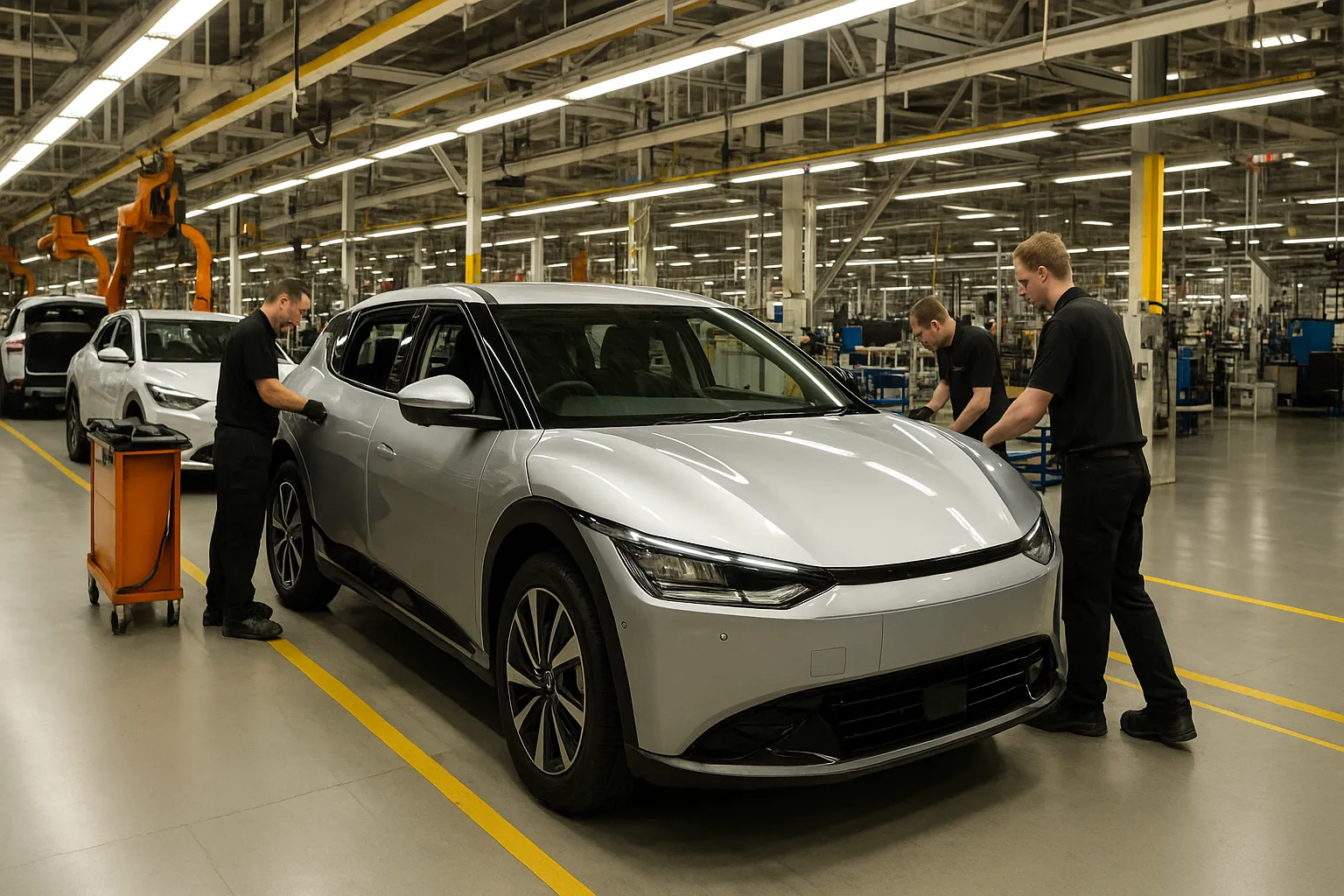
The UK’s electric and autonomous vehicle sector is set to receive a fresh £130 million funding package, with the money intended to support domestic manufacturing, protect skilled jobs and strengthen the supply chain needed for the next generation of vehicles.
The package will be funded jointly by the state and the automotive industry, with each side contributing half of the total. It will be distributed through Drive35, a programme designed to encourage investment in zero-emission vehicle development and production in Britain. The announcement follows earlier funding linked to the wider £2 billion Automotive Transformation Fund, which has been used to help the sector move from combustion-engine production toward electrified vehicles and related components.
More than 1,800 jobs are expected to be safeguarded by the new round of support. Nissan and Bentley are among the carmakers named as beneficiaries, alongside a group of automotive technology companies. Full project-by-project details have not been set out publicly, so the precise split between vehicle assembly, components, software, and autonomous-driving hardware is not yet clear.
Why this funding matters

For buyers, the announcement will not translate into immediate discounts on new electric cars. This is industrial funding, not a consumer incentive scheme. Its importance is more likely to be felt over several years, through the availability of UK-built EVs, the resilience of parts supply, and the ability of manufacturers to keep engineering and production work close to home.
The UK car industry is facing a difficult transition. Electric vehicles require different supply chains from petrol and diesel models, including batteries, power electronics, electric motors, thermal-management systems, control software and charging-related technology. At the same time, manufacturers are being asked to invest heavily while overall production volumes remain under pressure.
A matched-funding approach is intended to reduce some of that risk. If public money helps unlock private spending, manufacturers and suppliers may be more willing to commit to UK plants instead of shifting future vehicle programmes elsewhere. That is especially important as carmakers decide where to build their next electric models, and where to locate the component networks that support them.
Support for EVs and autonomous technology
The reference to autonomous vehicles should not be read as a promise that self-driving cars are about to flood UK roads. In this context, autonomous technology covers a broad range of systems, from advanced driver-assistance features to sensors, software, test equipment and production engineering. The manufacturing base for these technologies matters even before fully driverless vehicles become mainstream.
Modern cars increasingly depend on cameras, radar, processors, over-the-air software systems and electronic control units. Supporting companies that design or manufacture those systems could help keep more of the value of future vehicles within the UK, rather than limiting domestic plants to final assembly.
For owners, this matters because cars are becoming more software-defined. The aftersales experience, availability of replacement parts, diagnostic capability and long-term support all depend on a strong technical ecosystem. A country that builds and develops the technology behind its vehicles is better placed to support them throughout their life cycle.
Nissan and Bentley highlight different sides of the transition
The inclusion of Nissan and Bentley underlines how broad the EV transition has become. Nissan is a mass-market manufacturer with a long-established UK production presence, while Bentley sits at the luxury end of the market. Both face the same strategic challenge: future products must meet tightening emissions rules and changing customer expectations, while remaining profitable to build.
For mainstream brands, the priority is producing EVs at a scale and price point that works for private buyers, fleets and leasing companies. For luxury manufacturers, electrification has to be integrated without losing brand identity, craftsmanship or performance appeal. In both cases, the business case depends on investment in factories, workers and suppliers.
The funding announcement does not confirm new model launches by itself. It is better understood as part of the background infrastructure that makes future model decisions easier. Carmakers still need to judge market demand, battery costs, export conditions and regulatory requirements before committing to specific products.
A response to declining production pressure
The UK has a long history of vehicle manufacturing, but recent output has been far below historic highs. That has increased pressure on policymakers and industry leaders to secure future production before the shift to electric vehicles redraws the global manufacturing map.
Vehicle exports remain valuable to the UK economy, with cars and other vehicles worth tens of billions of pounds shipped overseas in the year to May 2026. However, the sector no longer occupies the same unchallenged position it once did among the country’s leading exports. That makes the competition for future investment more urgent.
Other countries are also offering incentives to attract battery plants, EV assembly lines and technology suppliers. In that environment, manufacturers will look closely at energy costs, labour skills, logistics, trade access and government support before allocating future programmes. A £130 million package will not solve every challenge, but it signals that the UK wants to remain a production base rather than simply a market for imported EVs.
What buyers should and should not expect
The practical benefits for car buyers are likely to be indirect. Stronger domestic production can help improve model availability, reduce exposure to overseas supply disruption and support a wider choice of vehicles built for local and European requirements. It can also help preserve dealer, servicing and technical training networks around UK-built models.
What it will not do is immediately make EVs cheaper. Purchase prices are still driven by battery costs, finance rates, manufacturer pricing strategy, taxation, charging access and consumer demand. Buyers considering an EV today should continue to compare total running costs, charging options, insurance, warranty cover and expected depreciation rather than assuming factory investment will quickly change showroom prices.
For enthusiasts, the funding is another sign that the character of the UK car industry is changing rather than disappearing. Engineering know-how, performance development and manufacturing skill are being redirected toward batteries, software, electric drivetrains and automated systems. The key question is whether that transition can happen quickly enough to keep major vehicle programmes in the country.
The £130 million package is not a complete rescue plan for UK car manufacturing. It is a targeted investment in the areas where the industry must compete next: electric vehicles, advanced technology and the supply chains behind them. If it succeeds, the result should be more than protected jobs. It should give manufacturers stronger reasons to design, develop and build future vehicles in Britain.