Volkswagen ID. Buzz Good-Night Package Turns the Electric Van Into a Light Camper
Volkswagen’s new Good-Night package gives the ID. Buzz a removable bed, blackout covers, ventilation and campsite-friendly power features, but stops short of a full California-style camper conversion.
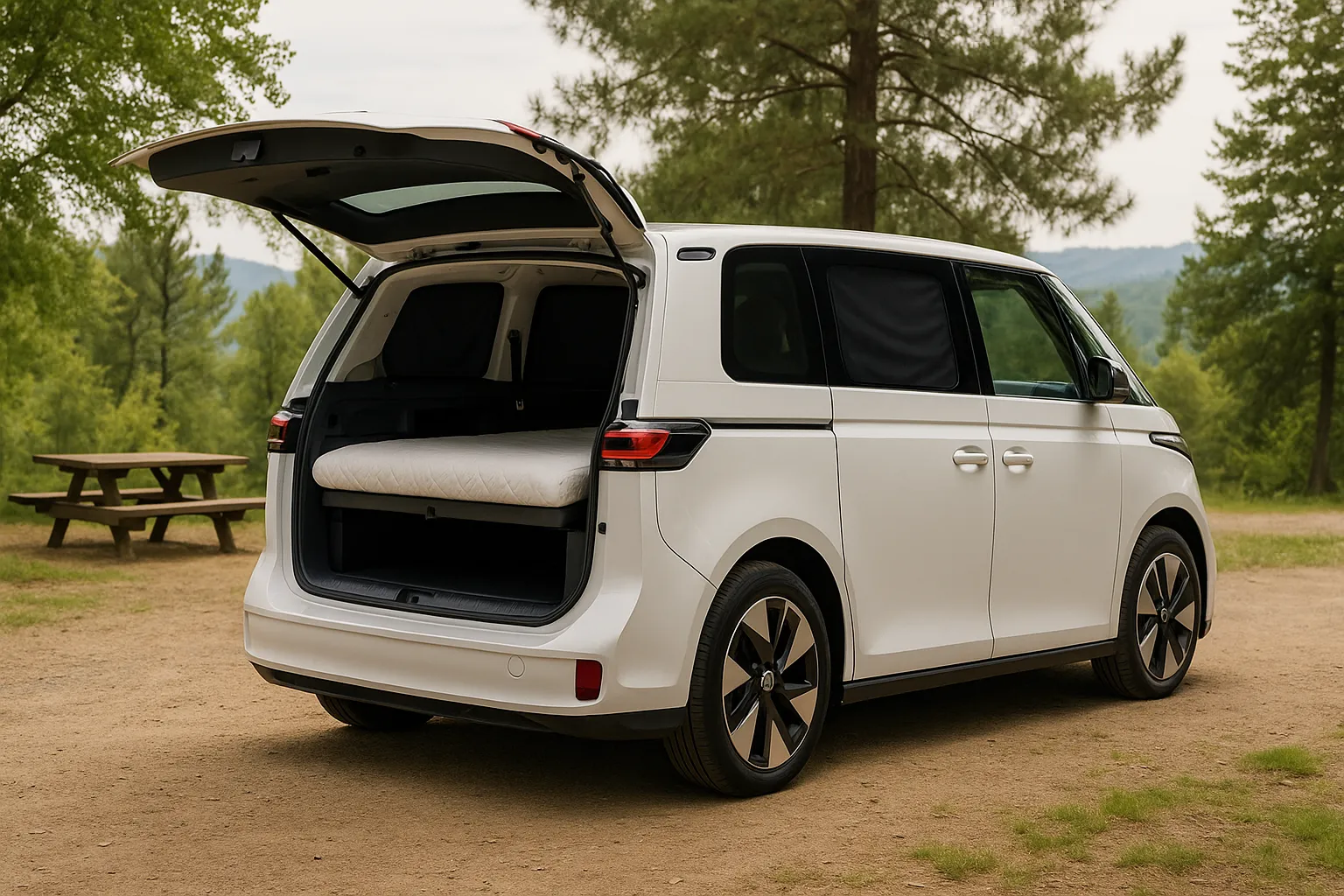
Volkswagen has taken a step toward the electric camper van many ID. Buzz fans have been waiting for, though it is not a full modern successor to the California. The new Good-Night package adds overnight camping hardware and software features to the electric van, giving owners a factory-backed way to sleep in the vehicle without committing to a permanent conversion.
For now, the package is available in Germany as an accessory for existing ID. Buzz variants. Wider-market availability and pricing have not been detailed, so buyers outside Germany should treat this as a regional launch until Volkswagen confirms more.
What the Good-Night package includes
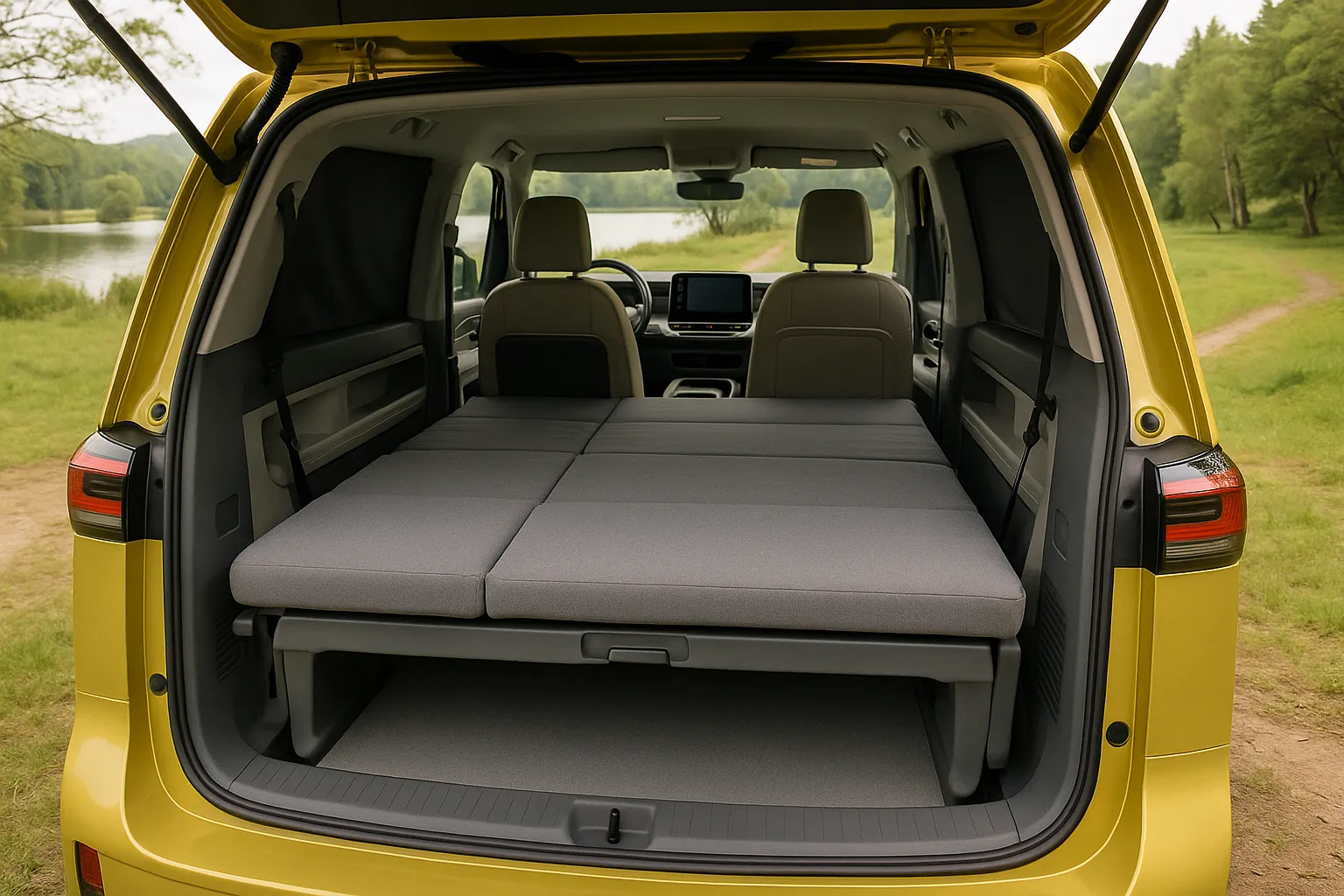
The core of the kit is a bedframe designed to sit over the rear seats, paired with a custom mattress measuring about two metres long. That turns the rear cabin into a sleeping area while preserving the ID. Buzz’s basic vehicle layout when the equipment is not in use.
Volkswagen has also included a foldable table and chairs, internal blackout covers for the windows and ventilation grilles for the front doors. Those details matter more than they might sound. A flat sleeping surface is only one part of overnight usability; keeping light out, allowing fresh air in and having somewhere to sit or prepare simple items outside the vehicle are what make a van practical for short camping stops.
The setup is intentionally removable and relatively light-touch. There is no pop-top roof, no fixed kitchen, no built-in cabinetry and no major alteration to the body structure. That places the Good-Night package closer to a weekend accessory kit than a dedicated camper conversion.
Not a full California replacement
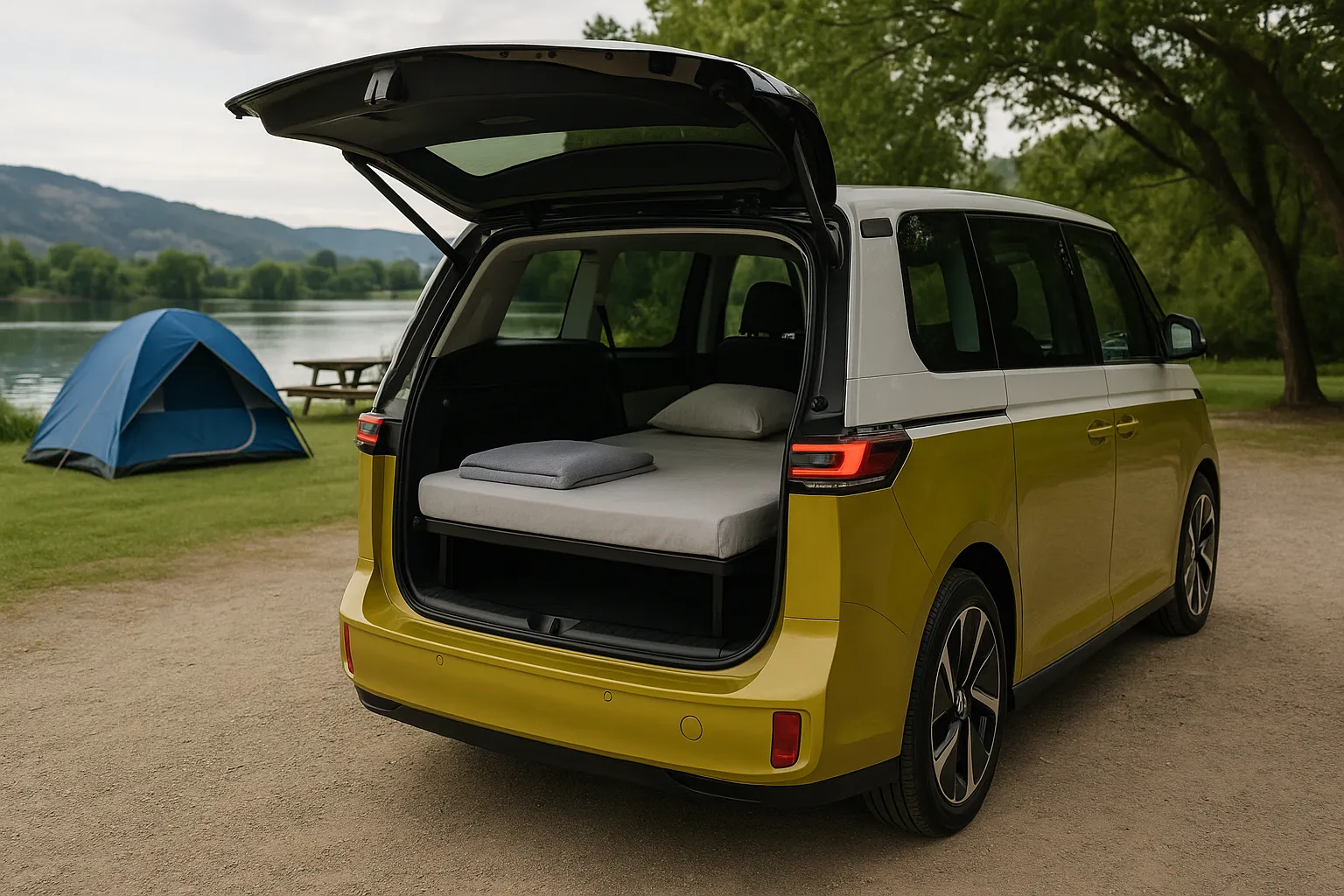
Volkswagen is being careful with the positioning. The ID. Buzz Good-Night package is best understood as an occasional camper setup rather than a fully equipped motorhome. That distinction is important for shoppers who may be comparing it with traditional Volkswagen California models or aftermarket camper conversions.
A California-style vehicle typically adds standing room, integrated storage, cooking equipment, water systems and sleeping arrangements designed around longer trips. The Good-Night package does not attempt to replicate that formula. Instead, it gives the ID. Buzz a more flexible camping role while avoiding the cost, weight and permanence of a full conversion.
For some buyers, that will be an advantage. A family using the ID. Buzz as a daily people carrier may not want cupboards, plumbing or a fixed bed taking up space all year. A removable kit allows the van to remain a practical EV most of the time, then become a basic camper for festivals, overnight trailheads, beach weekends or road-trip stops.
For others, the lack of built-in camper equipment will be a limitation. Anyone planning extended touring will still need to think about cooking, water, storage, charging logistics and campsite facilities.
The EV hardware gives it a camping advantage
The most interesting part of the Good-Night package is not just the bed. It is how Volkswagen uses the ID. Buzz’s electric platform to support overnight use.
The vehicle’s battery can run the climate control for up to 48 hours, allowing the cabin to be heated in cold conditions or cooled in warm weather. That could be a major benefit compared with combustion vans, where idling an engine for cabin comfort is noisy, inefficient and often restricted or discouraged at campsites.
Volkswagen has also adjusted the interior lighting so it can be dimmed more precisely for nighttime use. That is a small but meaningful feature in a sleeping space, especially for families or couples trying to use the cabin after dark without flooding it with bright light.
The package also takes advantage of vehicle-to-load capability. The ID. Buzz can supply 230-volt power, effectively acting as a mobile energy source for campsite equipment. Volkswagen highlights uses such as powering a cool box, a coffee machine or charging an electric bike. For owners who already camp with battery packs and adapters, having power drawn directly from the vehicle can simplify packing and reduce reliance on separate portable power stations.
Why this matters for buyers
The ID. Buzz has always traded heavily on Volkswagen’s heritage. Its shape and personality invite comparisons with the classic Microbus, and the idea of an electric camper version has been an obvious next step since the model was introduced. The Good-Night package does not deliver the comprehensive camper some enthusiasts may have imagined, but it does make the production van more aligned with the lifestyle image that helped create its appeal.
For buyers, the key question is whether this lighter approach is enough. The package should appeal to people who want an EV that can handle normal family duties during the week and occasional overnight escapes on weekends. It also gives existing owners in Germany a way to add camping functionality without replacing the vehicle or sending it to a third-party converter.
The accessory-based approach may also help with resale and flexibility. A removable bed system and camping accessories are easier to live with than permanent modifications, especially if the vehicle later needs to return to passenger-carrying duty.
Still, the absence of a kitchen or pop-top means expectations need to be realistic. This is not an all-electric camper van in the full touring sense. It is an ID. Buzz with a sleeping system, privacy equipment, ventilation and power support.
A sign of where electric leisure vehicles are heading
The Good-Night package also shows how automakers are experimenting with EV-specific camping features. Electric vans can support quiet overnight climate control, onboard power export and software-controlled cabin settings in ways that suit outdoor use. Those advantages are likely to become more important as more buyers consider electric vehicles for recreation rather than just commuting.
The challenge remains range, charging access and energy management. Running climate control and external devices uses battery power, so owners will need to plan trips around charging opportunities, especially in remote areas. Volkswagen’s claim of up to 48 hours of climate operation is useful, but real-world use will depend on temperature, battery state of charge and other loads.
Even with those caveats, the Good-Night package is a meaningful addition. It gives the ID. Buzz a practical camping role without turning it into a dedicated motorhome, and it hints at how future electric camper products could blend daily usability with weekend travel.
For now, the package is a Germany-market accessory with limited confirmed rollout details. If Volkswagen expands availability, it could become one of the more accessible ways for ID. Buzz owners to turn the retro-styled EV van into a genuine overnight companion.