Volkswagen Weighs Future of Audi’s Historic Neckarsulm Plant
Audi’s Neckarsulm assembly operations are under review as Volkswagen pushes deeper restructuring, raising questions about jobs, future model allocation, and Germany’s manufacturing footprint.
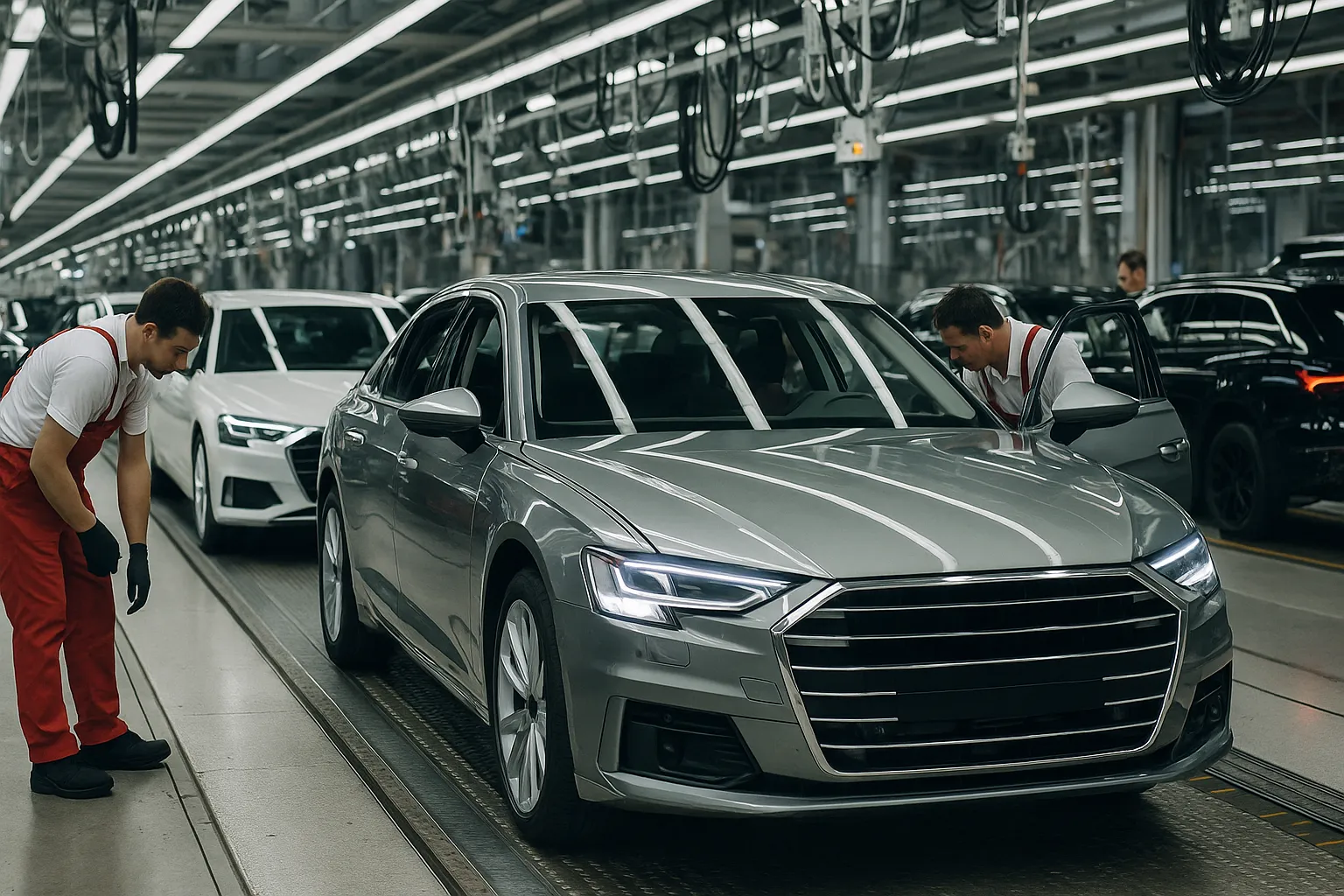
Volkswagen is reviewing the future of Audi’s long-running Neckarsulm manufacturing site in Germany, with vehicle assembly at the plant facing an uncertain outlook around the end of the decade. The review comes as the wider Volkswagen Group continues to cut costs, simplify its industrial footprint, and redirect investment toward electric vehicles, software, and more profitable model lines.
No final shutdown decision has been announced. The current concern centers on whether Audi will continue assigning enough future products to Neckarsulm to sustain full-scale assembly beyond roughly 2030. That timing is especially sensitive because Audi workers have a job guarantee that runs until 2034, creating a complicated overlap between labor protections and the company’s need to reshape production capacity.
The uncertainty has already brought a strong response from employees, with thousands of workers taking part in protests over the plant’s future. For the local region, this is not an abstract corporate planning exercise. Neckarsulm is one of Audi’s most historically important manufacturing bases and a major employer in Baden-Württemberg.
Why Neckarsulm matters
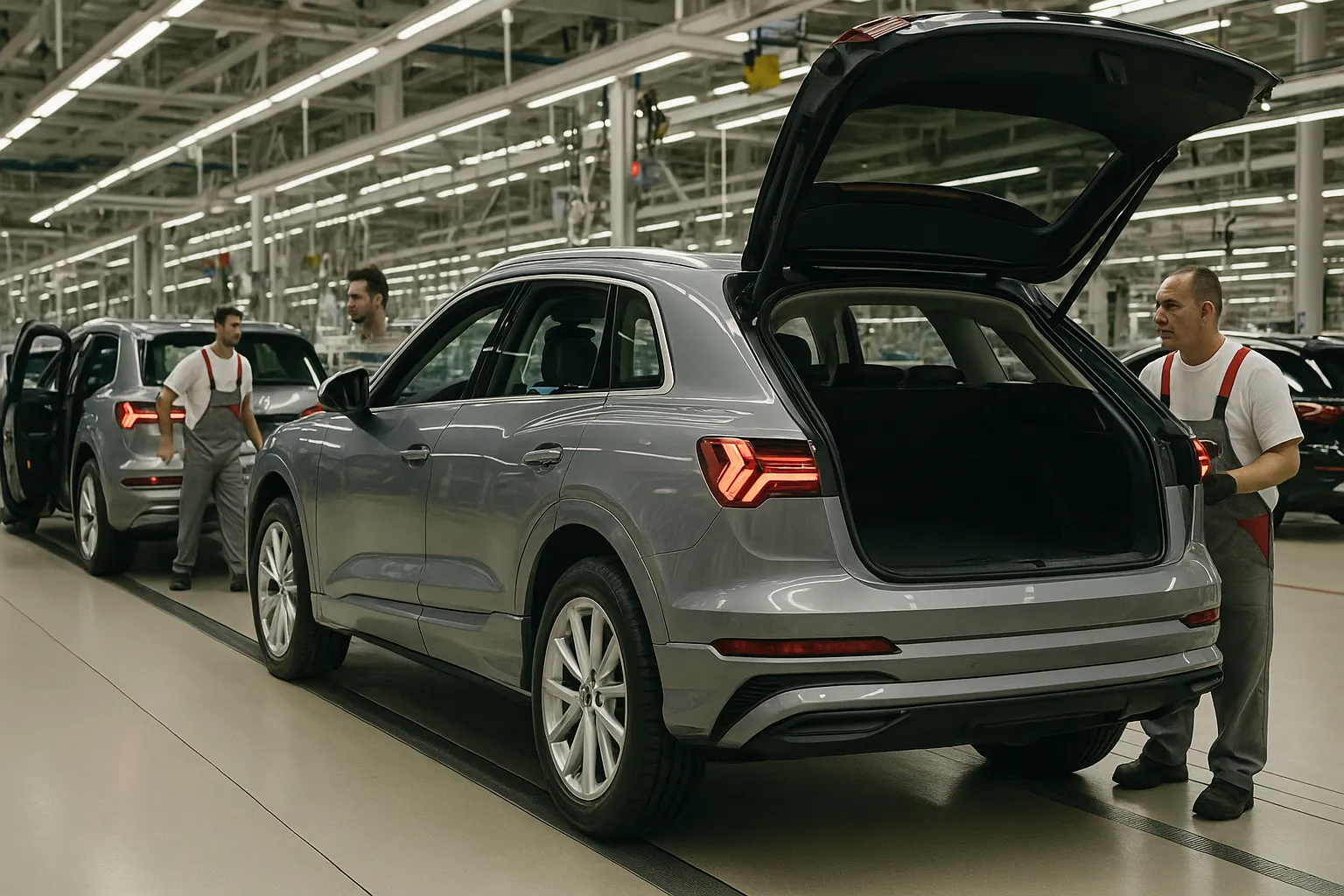
Neckarsulm is more than just another assembly plant in the Volkswagen Group network. The site has deep roots in German automotive history, including the legacy of NSU, and has long been associated with higher-end Audi production, specialized manufacturing, and engineering expertise. Over time, it has played a role in building premium Audi models and performance-oriented vehicles, making it significant not only for employment but also for the brand’s identity.
That history, however, does not make the site immune to the same forces reshaping the entire auto industry. Premium brands are under pressure to fund the transition to electric cars while maintaining margins in a market where demand has become less predictable. At the same time, European manufacturers face high labor and energy costs, intense competition from China, and the expense of developing new vehicle architectures and digital systems.
For Volkswagen Group, the strategic question is whether every existing factory can be kept busy as internal-combustion models phase down and electric model plans evolve. A plant can be highly skilled and still face risk if it does not have enough future products assigned to it.
The job guarantee does not end the debate
The reported risk to Neckarsulm assembly appears to conflict at first glance with a job security arrangement running to 2034. In practice, labor guarantees and factory product plans are not always the same thing.
A job guarantee may limit forced layoffs, but it does not necessarily guarantee that the same workers will build the same cars on the same lines for the full period. Companies can negotiate redeployments, shift work to other activities, offer early retirement, retrain employees, or change plant missions. Those options are politically and operationally difficult, especially at a site with deep community ties, but they are part of how large automakers manage restructuring.
That is why the distinction between closing a plant, ending assembly, reducing capacity, and changing a factory’s role matters. Neckarsulm could face several possible outcomes: it could receive new models and continue broadly as it does today; it could be scaled down; it could shift toward more specialized production; or, in a more severe scenario, final vehicle assembly could wind down around 2030 while other operations continue. The available information points to risk and internal evaluation, not a completed closure plan.
A broader Volkswagen problem
Volkswagen Group’s restructuring is not limited to Audi. The company is trying to improve competitiveness across brands while coping with slower-than-expected electric-vehicle growth in parts of Europe, tougher emissions regulation, and rising price pressure from newer EV competitors. German factories are particularly exposed because they combine advanced capability with high fixed costs.
Audi’s challenge is sharpened by its position in the premium market. The brand must keep investing in electric vehicles while also selling enough profitable combustion and hybrid models during the transition. If a future product cycle concentrates EV production at certain sites, other plants can be left vulnerable unless they secure replacements.
That is why product allocation has become one of the most important issues in the modern car business. A factory’s future depends less on nostalgia and more on whether it wins the next generation of vehicles, battery systems, platforms, or high-value components.
What it means for buyers and owners
For car buyers, the immediate impact is likely limited. A review of Neckarsulm’s future does not mean current Audi models will suddenly disappear from showrooms, nor does it imply a near-term disruption to parts support or warranty coverage. Automakers plan production years in advance, and any major change would require a managed transition.
Still, plant decisions can eventually influence what vehicles reach the market. If Audi consolidates production, it may reduce complexity, cut lower-volume variants, or prioritize models with stronger margins. Buyers could see a narrower mix of body styles, powertrains, or trim combinations over time if cost pressure continues. Conversely, a successful restructuring could help Audi fund more competitive EVs and updated premium products.
Owners should not view the Neckarsulm debate as a reason to worry about service support. Audi’s obligations to customers continue regardless of where a car was built. The more relevant concern is long-term brand direction: which models Audi chooses to keep, electrify, or discontinue as it balances tradition against profitability.
For enthusiasts, Neckarsulm’s uncertain future carries emotional weight. Plants like this are tied to the character of a brand, especially when they have produced distinctive luxury and performance cars. Losing or shrinking assembly at such a site would mark another step away from the old European manufacturing map that defined much of the 20th-century auto industry.
Industry stakes
The Neckarsulm discussion reflects a larger reality: the EV transition is not simply about swapping engines for batteries. It is reorganizing where cars are built, how many workers are needed, which regions attract investment, and how legacy automakers compete with lower-cost rivals.
Germany remains one of the world’s most important automotive manufacturing centers, but its plants must now justify themselves in a global contest for future products. That creates tension between industrial policy, labor agreements, shareholder expectations, and brand strategy.
The next key question is whether Audi and Volkswagen Group can define a sustainable role for Neckarsulm before the 2030 risk window becomes a firm deadline. A new product assignment, a revised factory mission, or a negotiated restructuring plan could still change the outcome. For now, the plant’s future is uncertain, and the debate highlights how difficult the next phase of the auto industry’s transformation will be for even its most established names.