XPeng L03 Coupe-SUV Revealed With UK Launch Planned
XPeng’s new L03 is a coupe-SUV aimed at mainstream electric family crossovers, with a UK launch due next year and both EV and range-extender versions planned.

XPeng’s next UK model takes aim at the electric family SUV class
XPeng has revealed the L03, a new coupe-SUV that is due to join the brand’s UK line-up next year. The model is positioned below the larger G6 but is clearly designed to compete in one of the busiest and most valuable parts of the new-car market: family-sized electric crossovers with a premium-leaning image.
The L03 will be offered with both battery-electric and range-extender hybrid powertrains. Final UK specifications, battery sizes, motor outputs, driving range and pricing have not yet been confirmed, so it is too early to judge how it will compare on cost or performance. Even so, the model gives a clear signal of XPeng’s strategy: bring more technology-led, design-focused SUVs to Europe while offering buyers a choice between pure EV running and an extended-range alternative.
That matters because many buyers like the refinement and low running costs of an EV but still worry about charging access, longer trips and resale uncertainty. A range-extender version could appeal to drivers who want daily electric driving but are not ready to depend entirely on public charging. The pure-electric version, meanwhile, will be the one to watch for company-car drivers and households already set up for home charging.
Coupe-SUV shape with a focus on efficiency
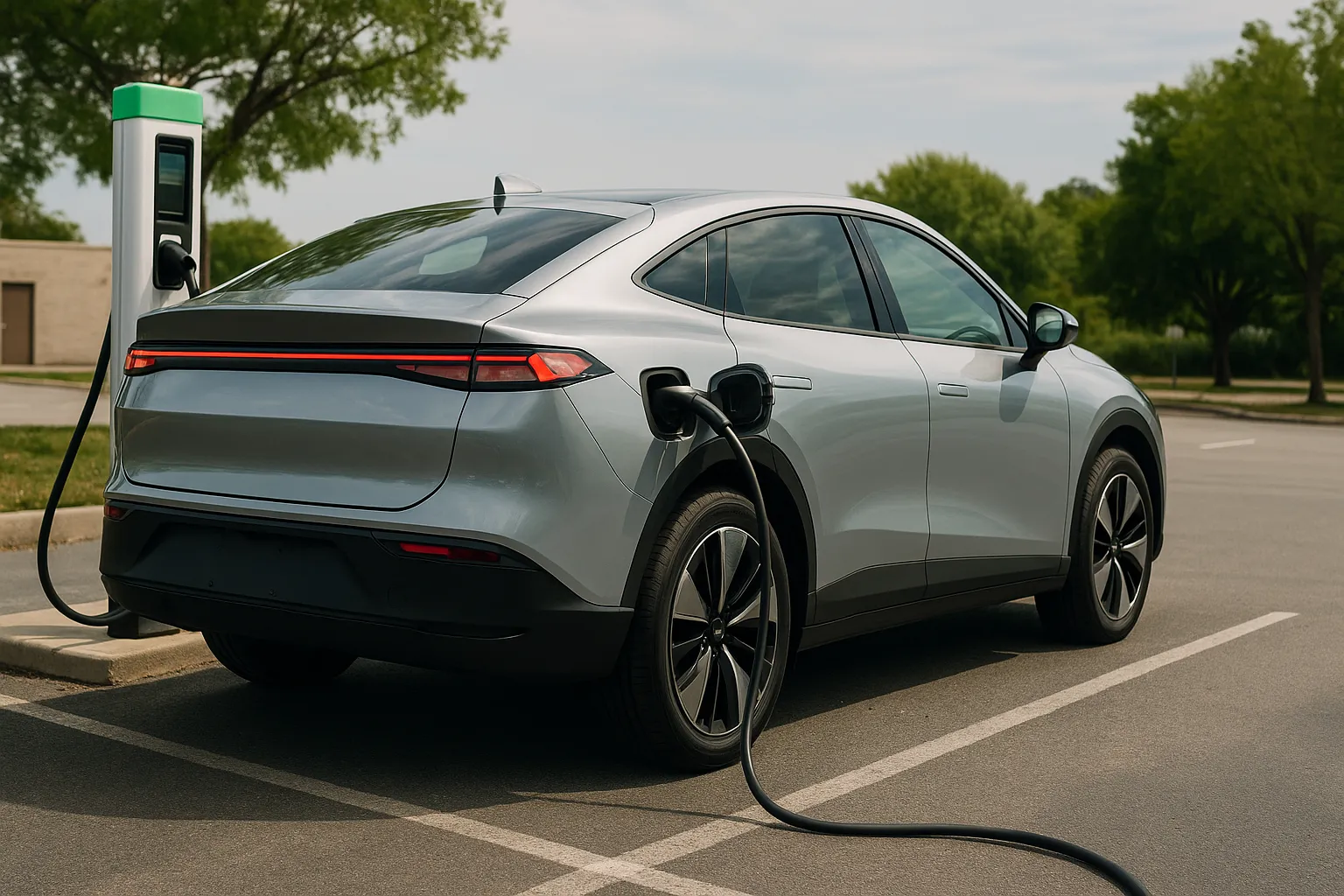
The L03 follows the now-familiar coupe-SUV formula: a raised body, relatively long wheelbase proportions and a roofline that slopes more aggressively than a traditional SUV. The result is a more style-led alternative to boxier family crossovers, with obvious rivals including the Tesla Model Y and Skoda Enyaq Coupe. Its size has not been officially locked down for the UK, but current expectations put it at roughly 4.65 metres long. If that figure proves accurate, it would make the L03 slightly shorter than the XPeng G6 and broadly in line with several European-market electric coupe-SUVs.
Aerodynamics are a major part of the pitch. XPeng lists a drag coefficient of 0.228Cd for the L03, a strong figure for an SUV-shaped vehicle. Lower drag can help improve motorway efficiency, reduce wind noise and make better use of the battery at higher speeds. It does not guarantee class-leading real-world range, because weight, tyres, battery capacity and drivetrain efficiency all play their part, but it is a useful indicator that the body has been shaped with more than styling in mind.
The exterior design uses a smooth front end, slim lighting and a relatively clean surfacing approach. At the rear, the L03 has a pronounced deck and bumper treatment that underline its coupe-like stance. It is a modern, deliberately tech-heavy look rather than a rugged SUV one, which should suit buyers cross-shopping newer EV brands rather than traditional off-road-inspired crossovers.
Interior led by a large central display
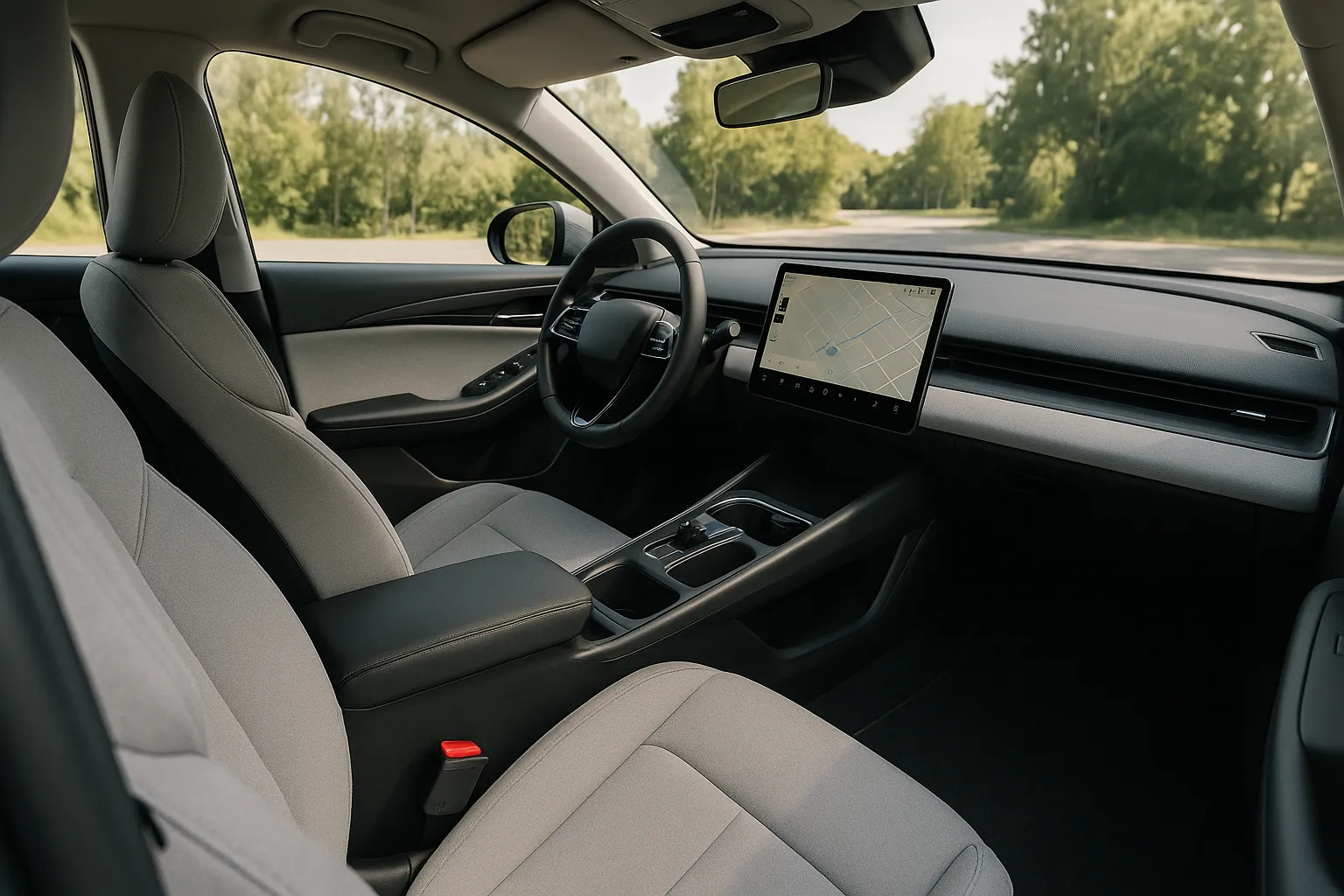
Inside, the L03 takes a minimalist approach. The dashboard is built around a 15.6-inch central infotainment screen, with the cabin layout appearing to reduce the number of conventional physical controls. That will be familiar to anyone who has considered a Tesla, Polestar or many of the latest Chinese-market EVs.
For buyers, the benefit is a cleaner cabin and potentially easier software updates over time. The trade-off is usability. A large touchscreen can work well when menus are clear and core functions remain easy to access, but climate controls, driver-assistance settings and media shortcuts need careful design if they are not backed up by enough physical switches. The L03’s success in Europe will depend not only on screen size, but also on software responsiveness, navigation quality, smartphone integration and how naturally the interface handles right-hand-drive markets.
XPeng is also highlighting everyday practicality. The L03 is said to include 37 separate storage areas, while the company is promoting a roomy cargo area and lounge-style seating. Exact boot volume, rear legroom and seat-folding details remain to be confirmed, so family buyers should wait for full measurements before assuming it can replace a conventional SUV. Still, the emphasis on cabin storage suggests XPeng is trying to make the L03 more than a style-first crossover.
Driver-assistance technology will be central to the pitch
The L03 will arrive with a package of intelligent driving and assistance features. XPeng has built much of its brand identity around software, sensors and advanced driver-assistance systems, and the L03 is being framed as a technology-led SUV coupe rather than simply a lower-priced alternative to established models.
For UK buyers, the key question will be what functions are enabled at launch and how they are presented. European regulations, local road conditions and consumer trust all shape how advanced assistance systems are deployed. Features that sound similar on paper can vary significantly in performance, driver monitoring, lane-change behavior and ease of use.
This is important for owners because driver-assistance technology is increasingly part of the ownership experience, not just a showroom headline. Well-calibrated systems can reduce fatigue on long motorway journeys. Poorly tuned ones can be intrusive or inconsistent. XPeng will need to demonstrate that the L03’s software is polished for UK roads, not merely adapted from another market.
Why the L03 matters
The L03 gives XPeng another entry point into the European EV market at a time when Chinese brands are moving beyond budget positioning. Instead of relying only on low prices, the L03 leans on design, aerodynamics, cabin technology and flexible powertrain options. That makes it relevant to buyers considering a Tesla Model Y, Kia EV5, Hyundai Ioniq 5, Volkswagen ID.5, Skoda Enyaq Coupe or other family EVs.
Pricing will be decisive. If XPeng can position the L03 below key rivals while offering competitive range, fast charging and strong standard equipment, it could become a serious value proposition. If it moves too close to established premium models, buyers may look harder at brand familiarity, dealer coverage, resale values and aftersales support.
There is also a broader industry point. The arrival of another coupe-SUV with both EV and range-extender options shows how quickly the market is shifting. Carmakers are no longer treating electric family SUVs as niche products. They are now the battleground for software, cabin design, charging performance and brand perception.
For now, the L03 is a promising but incomplete picture. Its styling, claimed aerodynamic performance and technology-led interior give it a clear identity, and the UK launch timing puts it into a segment with strong demand. The unanswered questions — price, battery capacity, range, charging speed, equipment grades and real-world software performance — will determine whether it becomes a genuine alternative for mainstream buyers or simply another entrant in an increasingly crowded EV field.